
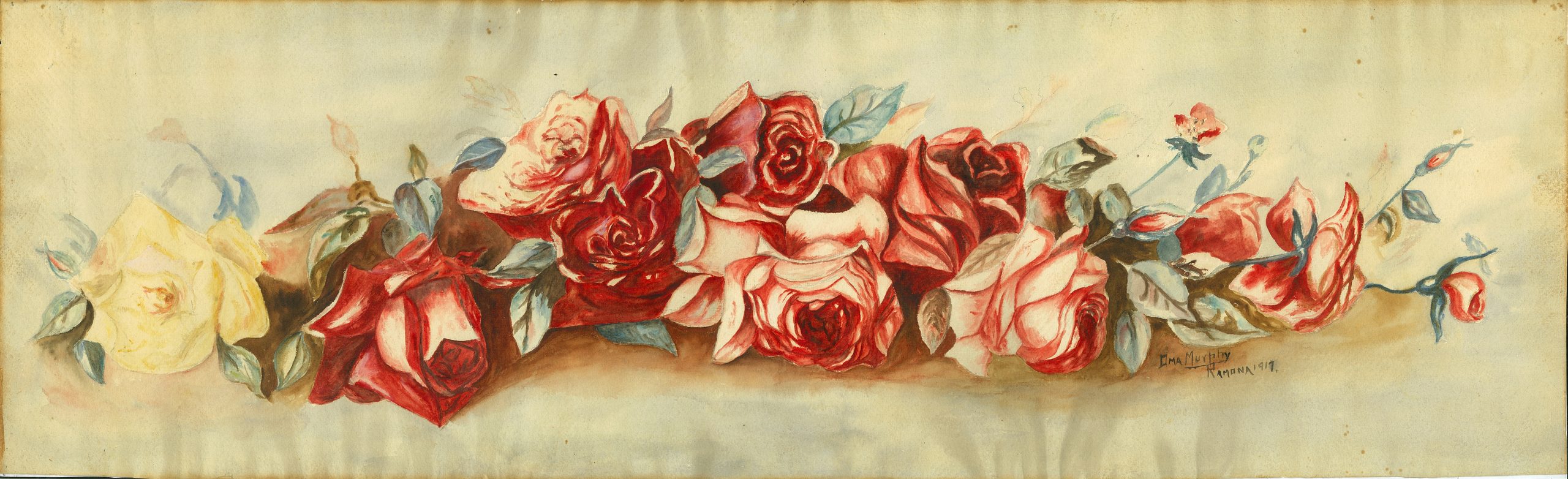
Some artists spend their lives chasing galleries, exhibitions and good reviews. Others create simply because something inside them needs to, and their work ends up hanging in family homes or tucked away in boxes where only a few people ever see it.
Oma RLena Murphy Faulk was one of those artists. Her name will never appear in a history of American art. Yet the paintings and drawings she left behind show a genuine gift, an observant eye and a delicate touch that still speak for themselves more than a century later.
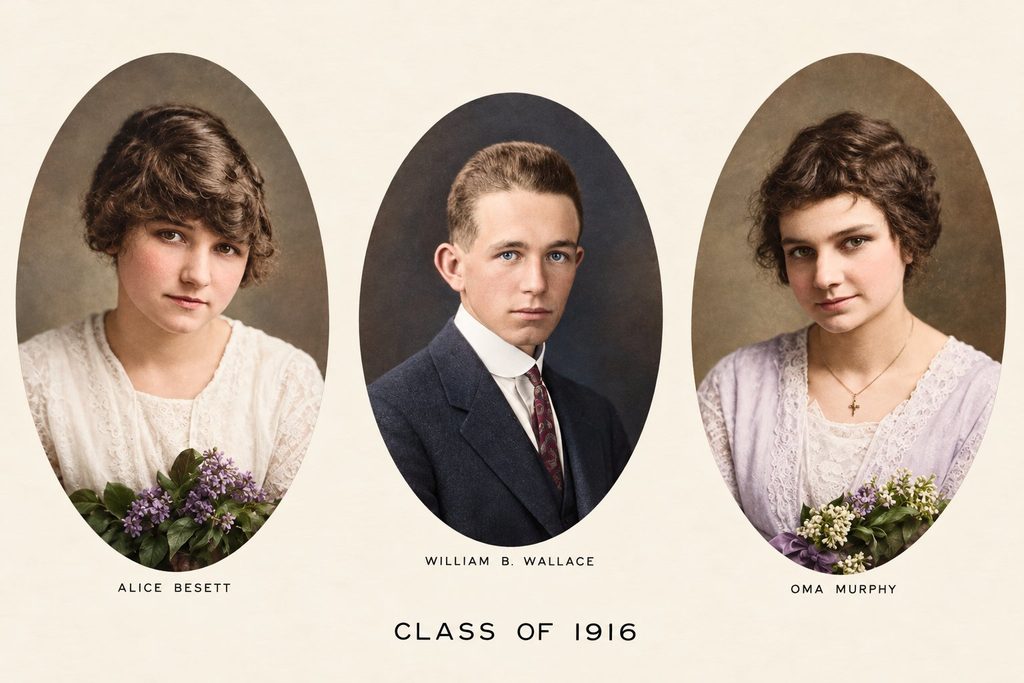
RLena Murphy, at right, with the rest of the Ramona High School Class of 1916. There were only three of them.
RLena was born on January 28, 1898, in Ramona, Oklahoma. Her father, Albert Lee Murphy, ran a bakery there, and she grew up in a small town surrounded by oil leases, farms, churches and families who had known one another for years.
She loved school, which was not true of every student in those days. In 1985 she wrote an article for The Collinsville News that called Ramona “the best school in the county.” The Prairie Oil and Gas Company had a large tank farm north of town. The taxes it paid meant that every student was given books, pencils, paint and art paper free of charge. There were teachers for music, penmanship, history and foreign language. There was even a teacher for art.
RLena played the clarinet in the school band and the mandolin in the orchestra. A young man named Joseph Faulk played the cornet and lined up at right guard on the 1917 football team. Joseph would later become her husband.
In that same article she told a small story that says a great deal about her. She liked to paint so much that she would put water in the inkwell of her desk and paint where the teacher could not see her. That worked until the day she was caught and scolded for it. Later, that same teacher smacked her hands with a hard ruler several times, so she could not draw or write for days. Because she felt embarrassed and ashamed, she never told anyone about it except me, many years later.
That little confession tells more about her than any record could. Long before anyone thought of her as a wife, mother or grandmother, she was a schoolgirl at a wooden desk who could not keep her paint brush still.
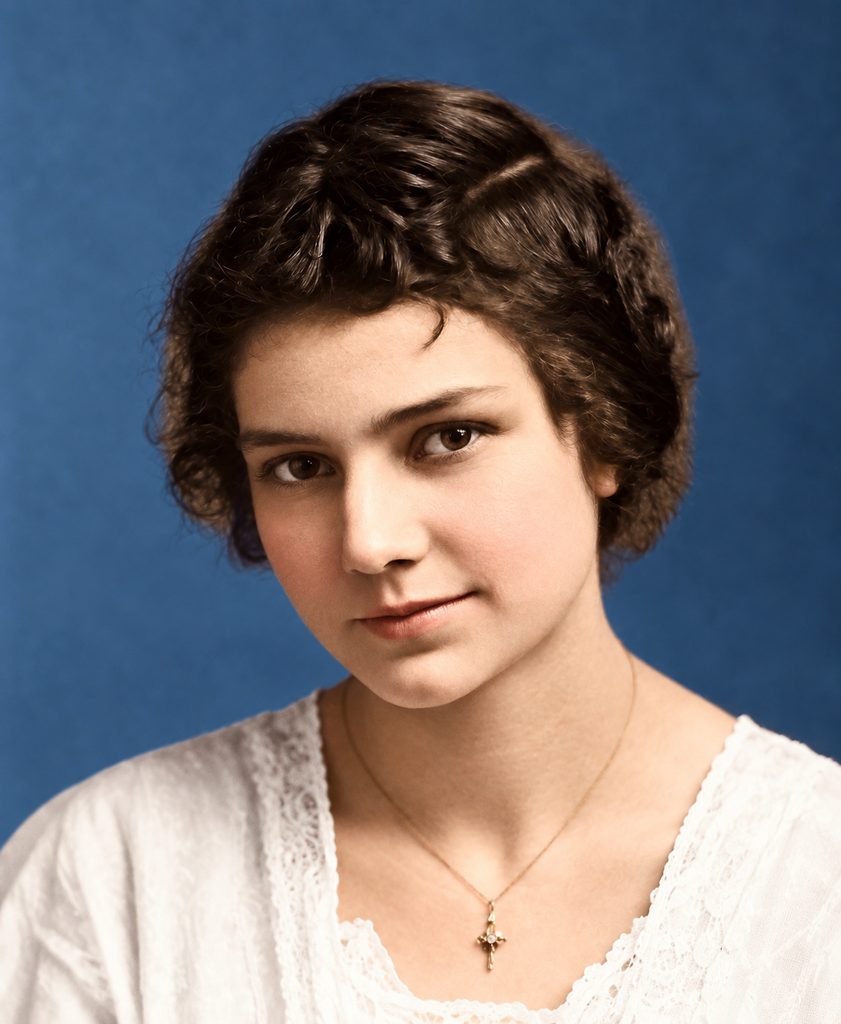
RLena Murphy as a young woman, about 1917.
She studied German, bookkeeping, typing, sewing and cooking at Ramona High School, but art was the subject that stayed with her. A newspaper profile written in her later years noted that she won prizes for some of her pencil drawings and oil paintings while she was a student. She still treasured two of them more than sixty years later.
Those two paintings mattered to her. She carried them through marriage, moves, the Depression, a war and old age, which shows she understood they held an important part of who she was.
Looking at this photograph of her as a young woman, with her dark hair and thoughtful expression, it is hard not to wonder what she imagined her life would become. She could not have known that the years ahead would bring the Great Depression, a world war, a family bakery business, teaching, newspaper writing and factory work, yet the artist was already there.
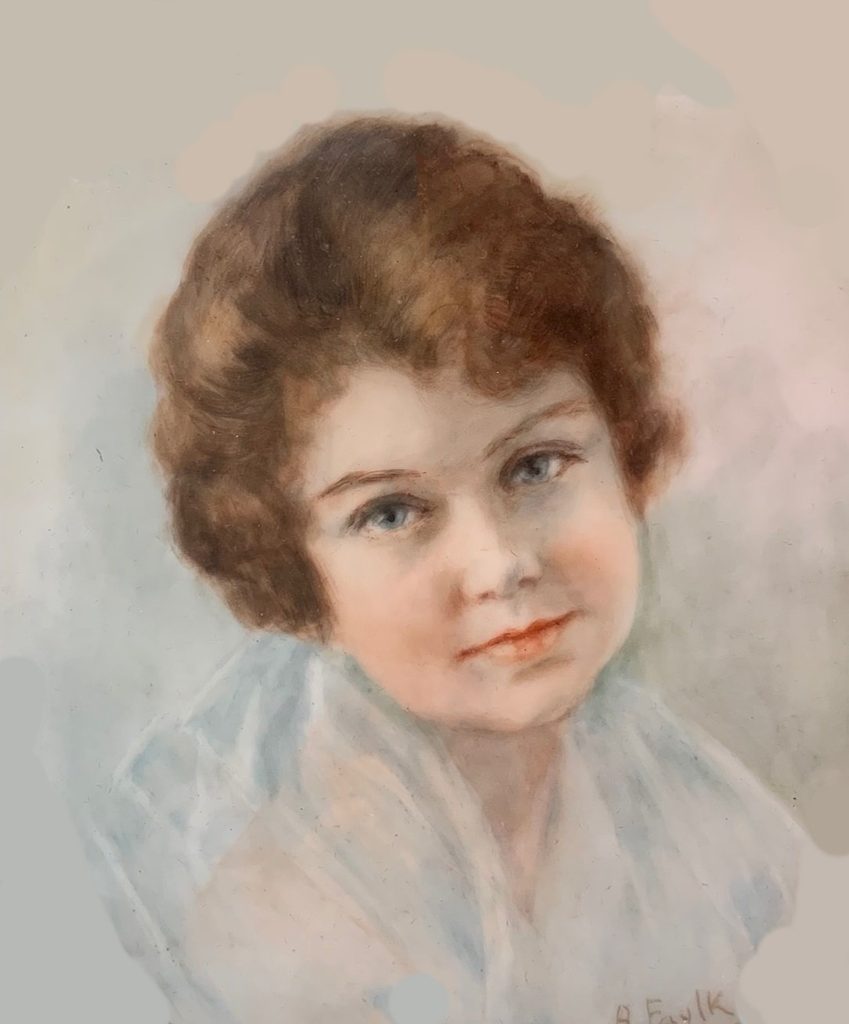
RLena’s self-portrait, dated 1918.
One of the most beautiful pieces she left is this self-portrait from 1918. The face is softly modeled, the eyes are clear and expressive, and the hair is drawn with a warmth that is very hard to teach. Technique can be learned in a classroom, but the ability to give a drawing a sense of life is something more rare. She had it.
She painted herself more than once. Another self-portrait shows her as a young woman in a white dress with long braids, holding a small bouquet of flowers. Today it is kept in an oval gold frame.
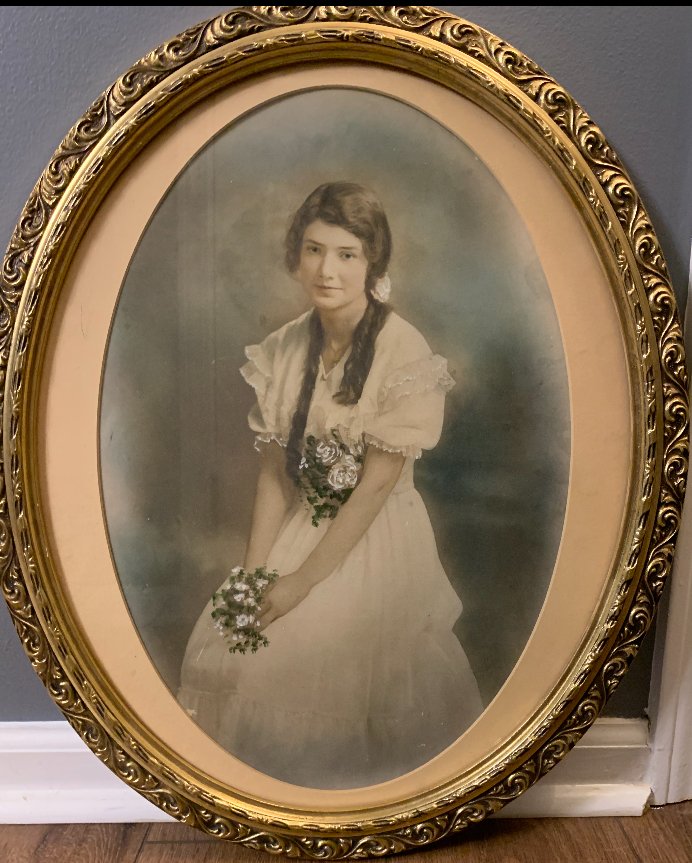
Another of RLena’s self-portraits, in its oval gold frame.
Her surviving work shows a surprising range. There are charcoal studies of a pail and a bowl, an apple beside an overturned dish, and a pitcher set in front of a large plate. Each one is built carefully out of light and shadow until the ordinary objects have weight and depth.
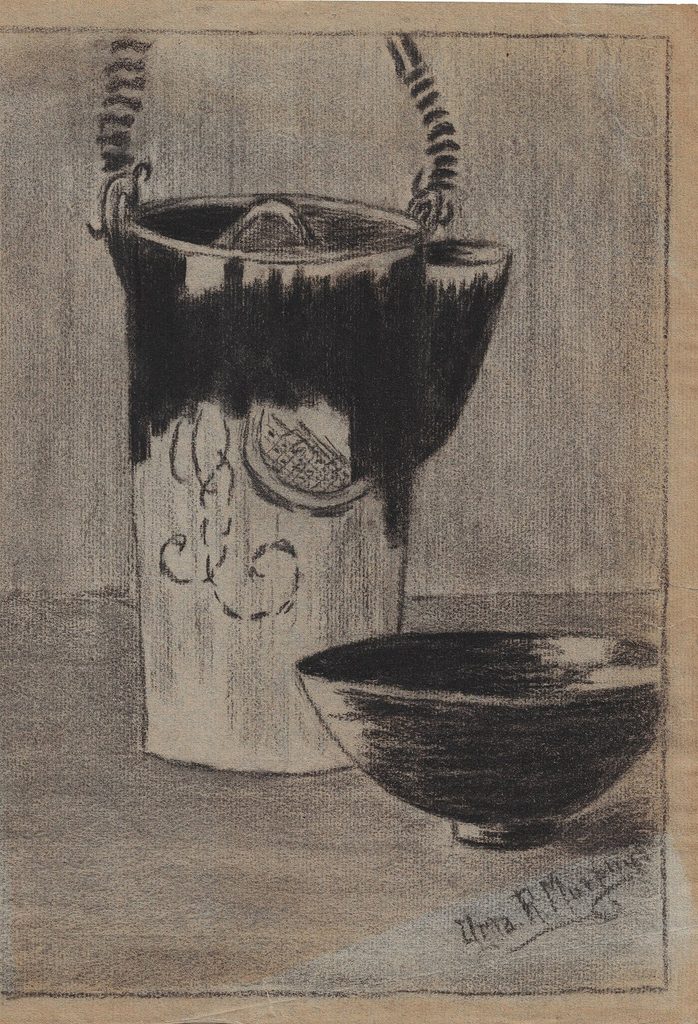
A charcoal study of a pail and a bowl, signed Oma R. Murphy.
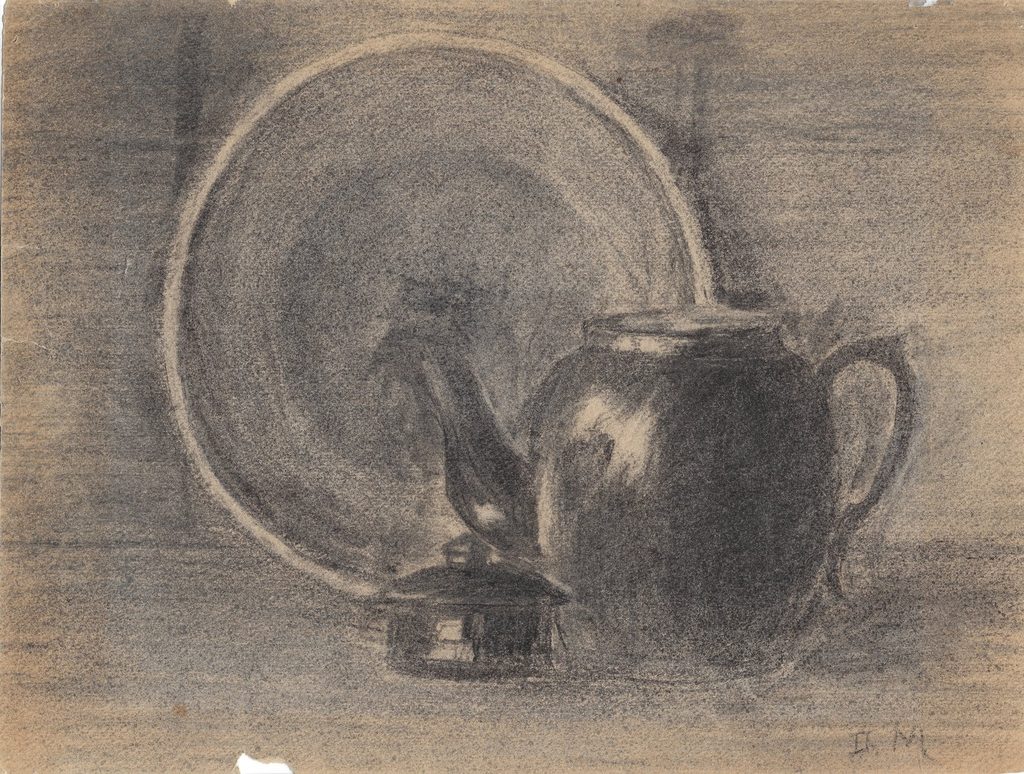
A charcoal study of a pitcher and plate, initialed by RLena.
These are the careful studies of a young woman teaching herself to see. Some of them are signed in her own hand as Oma R. Murphy.
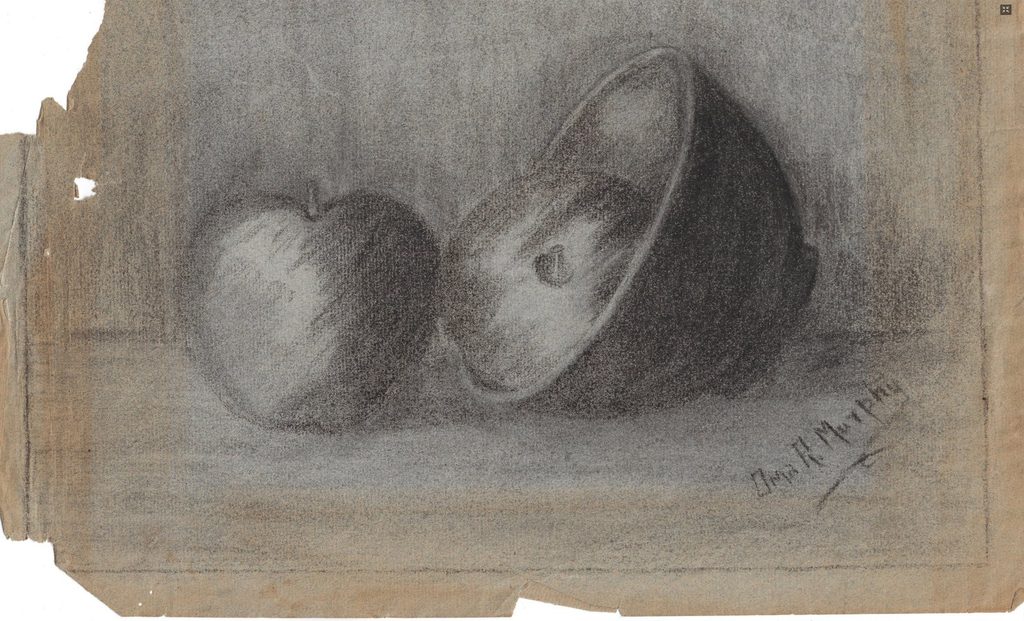
An apple and an overturned bowl, drawn by RLena and signed Oma R. Murphy.
Her gift shows most clearly in her flowers. A long painting of roses has survived in remarkable condition, with red, pink, cream and pale yellow blossoms stretched across the canvas among delicate leaves and stems. The flowers each have their own shape and personality. The painting as a whole has an elegance that feels timeless.
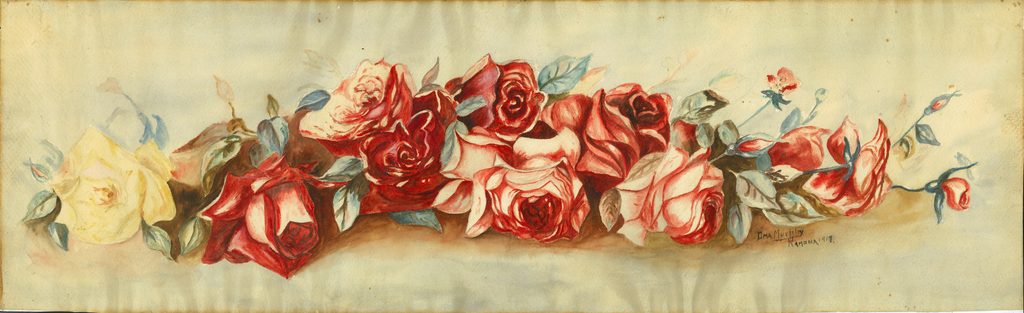
Roses, painted by RLena Murphy Faulk.
It is easy to imagine a painting like this hanging in a home for decades, admired every day by people who know who painted it without ever stopping to think about how good she was. That happens to many talented people. It happened to her. One day someone looks at the painting again with fresh eyes and realizes that the woman who made those roses was extraordinarily gifted.
Another painting shows bright red cherries spilling from a basket against a cool blue and green background. The red fruit catches the eye immediately while the cooler colors behind it give the picture depth. The cherries tumble down the canvas with a natural looseness that makes the whole scene feel alive.
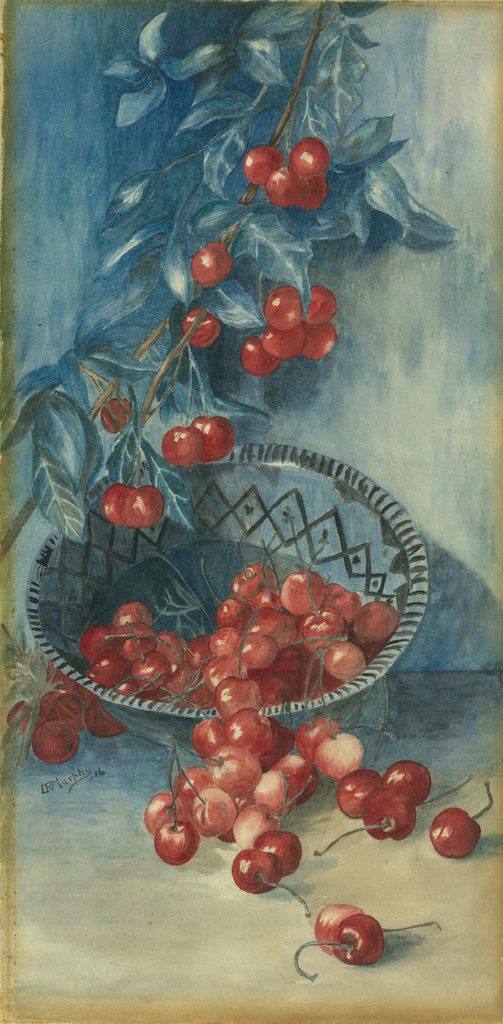
Cherries, painted by RLena.
She also drew and painted the outdoors. There are trees sketched in pencil with loose, confident lines, a snowy winter woodland in soft color, and a quiet forest scene with a stream running through it.
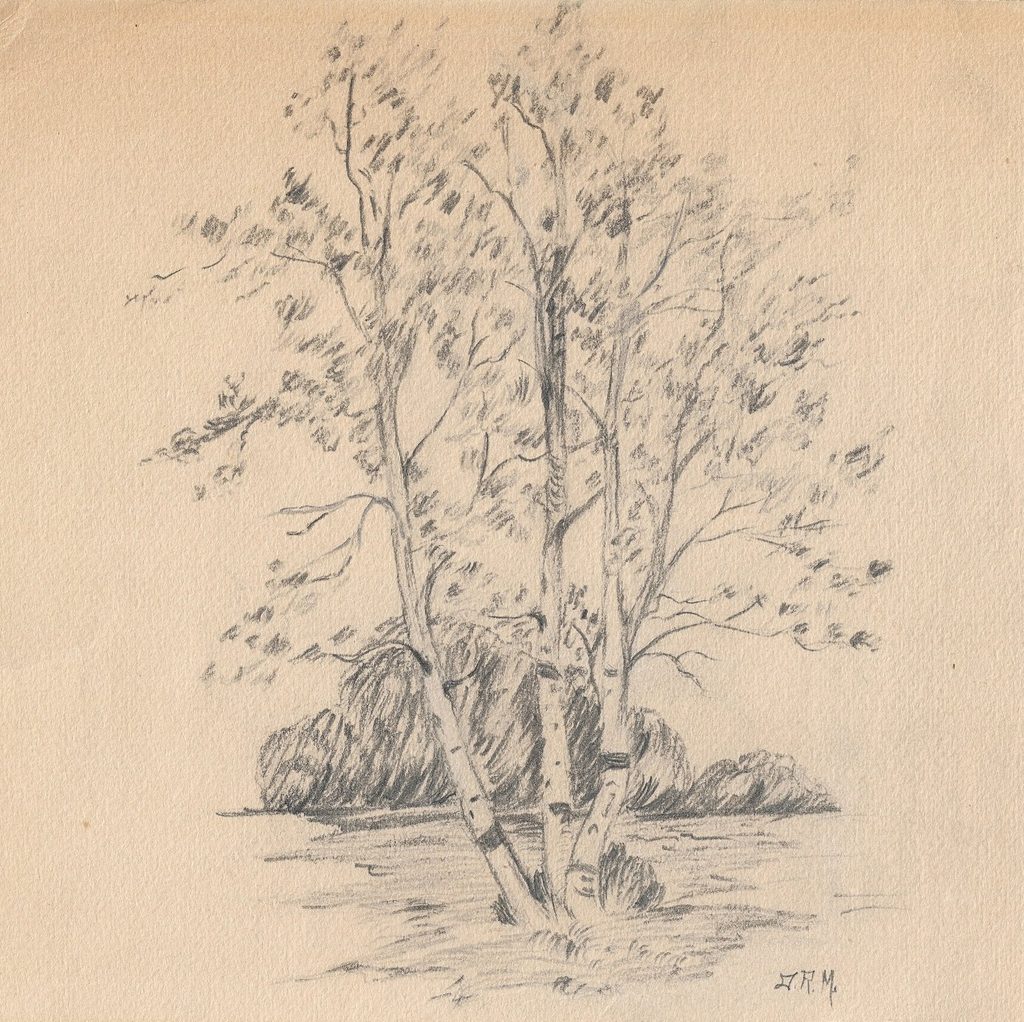
A pencil study of trees, initialed by RLena.
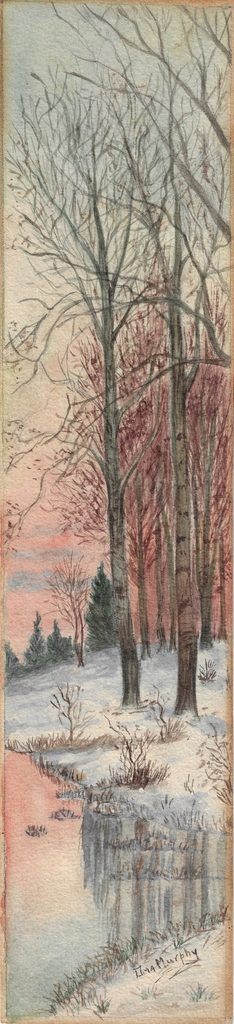
A snowy winter woodland in soft color by RLena.
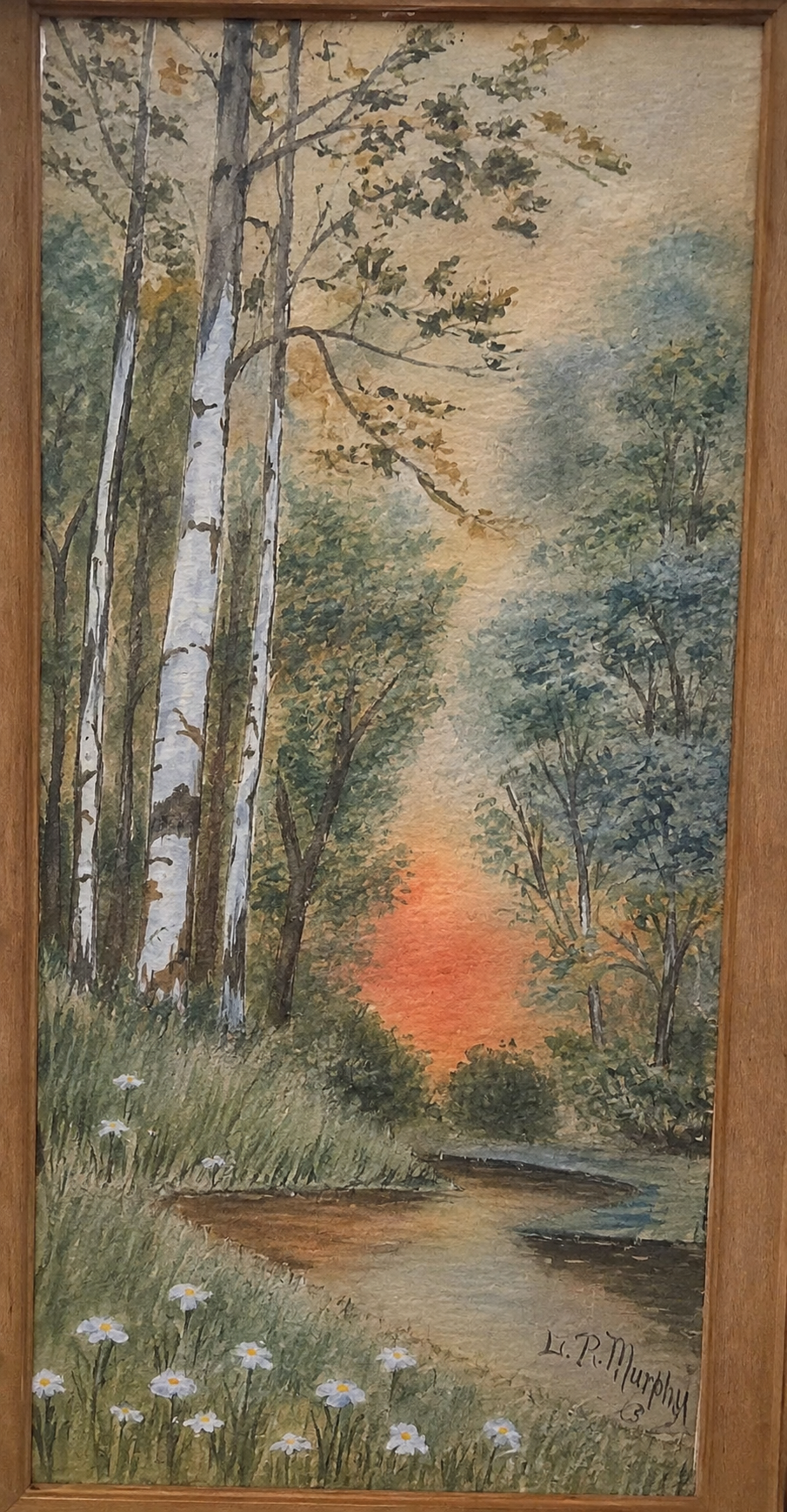
A woodland scene by RLena.
Her art was only one part of a much larger life. After graduating in 1916 she stayed on for postgraduate courses at the school, did some substitute teaching while she was still a student, and later taught at the Quaker Mission School in Hillside, north of Skiatook. She also worked in Bartlesville for the Empire Oil and Gas Company as a cartographer and interpreter for foreign dignitaries and workers for what was later to be known as Phillips 66.
She married Joseph Faulk in Bartlesville on November 11, 1919. Together they took over the bakery from her father in Ramona. Over the years they also ran bakeries in Barnsdall, Skiatook and Collinsville, until the Depression and the arrival of larger grocery stores made it impossible for small family bakeries to survive.
During the war years she did something that made her especially proud. While living in Collinsville she went to work on the aircraft assembly lines at the Tulsa bomber plant, where B-24 bombers were built. She rode the train from Collinsville to the plant and back six days a week. There was a train station on the south side of the plant just for the workers.
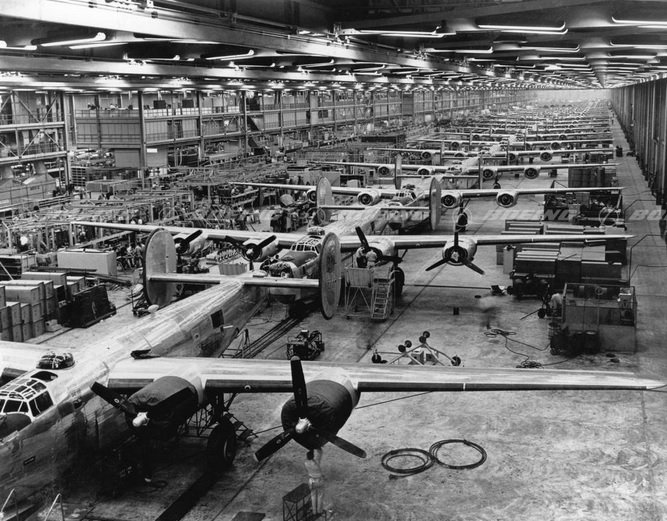
B-24 bombers on the assembly floor at the Tulsa bomber plant, where RLena worked.
It is hard to picture the gentle woman of her later years working on an aircraft assembly line, and maybe that is exactly why her story is so moving. Human lives rarely fit into a single description, and hers certainly did not.
She was an artist, a teacher, an interpreter, a baker’s daughter and a baker herself, an aircraft worker, a writer and a gardener. She was also a homemaker who canned what her husband grew and embroidered in her spare time. Through all of it she kept that same creative eye.
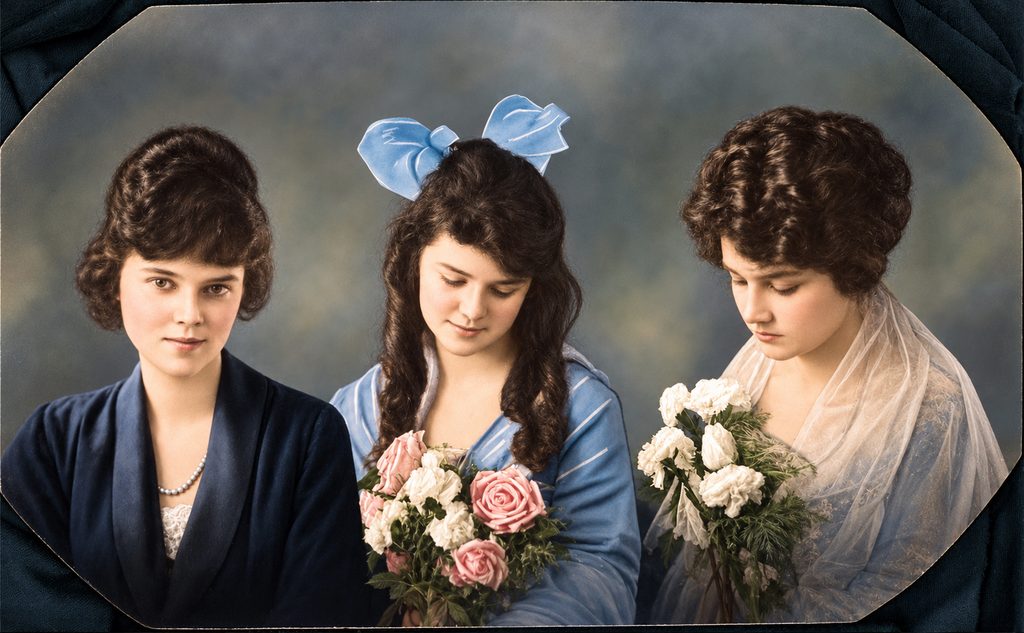
RLena with her sisters Georgia and Leona.
Family meant everything to her, and she was proud of every one of her brothers and sisters. Many photographs of her as a young woman have survived, along with self-portraits, often showing her with her sisters. Together they show a lively young woman who loved drawing and painting the people closest to her.
She also cared deeply about history. In her later years she wrote articles for The Collinsville News and the Skiatook Journal about early Ramona, Barnsdall, Hillside, Skiatook and Collinsville. Her memories of teachers, neighbors, school parties and the early oil days preserved details that could easily have been lost with her generation.
There is something fitting about an artist becoming a keeper of history, because both require the same kind of attention. An artist notices the shadow beneath a bowl or the curl of a rose petal, and a historian notices the small things everyone else forgets. RLena did both.
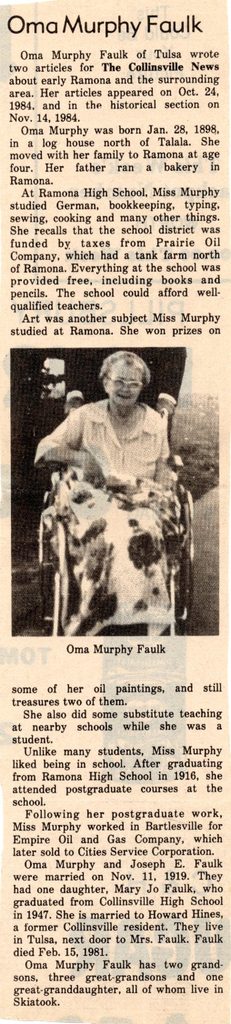
A newspaper profile of Oma Murphy Faulk, which noted her art prizes and the two early oil paintings she still treasured.
Those who knew her in her later years remember a quiet, gentle woman, small in stature, who almost always wore an apron around the house. There was usually something cooking or baking, and the smell of fresh bread seemed to belong to her home. She never acted like someone who expected recognition, which is likely a big reason her artistic talent stayed largely unknown outside her family.
She painted for the simple joy of it, the way a girl in a small Oklahoma town paints when she has a gift and loves using it. She kept that joy long after most people would have put the brushes away.
Time has not been equally kind to every piece. Some of the drawings have faded, the paper has yellowed and some of the corners have worn away. Yet the images remain, and with them remains something of the woman who made them.
That is one of the more remarkable things about art. A voice eventually goes silent, memories grow less clear, and the towns we knew change until we hardly recognize them, but the mark a hand once made on paper with a simple pencil or a handmade brush is still there.
More than a hundred years later we can still look at her work and see the choices she made, where she darkened a shadow, softened a face, shaped a flower or placed a tree. For a moment the distance between her world and ours becomes very small.
RLena passed away on December 27, 1988, in Collinsville, Oklahoma, at the age of eighty-nine. She rests at Ridgelawn Cemetery beside her husband, Joseph, and their daughter, Mary Jo.
Her paintings may never hang in a major museum, and they do not need to. They are still here, more than a century after she first picked up a pencil and brush. She felt the pain of doing so, yet she was determined to continue, and perhaps the greatest tribute we can give an unknown artist is simply to look again.
I have looked at her paintings and drawings many times, and I will keep looking for as long as I can. Oma RLena Murphy Faulk was my grandmother, and she was truly an angel to me in my life, a bright, shining light just as her name was meant to say. I hope that some of her artistic talent, and a little of her DNA, has been passed down to the generations of our family who come after me. Grandma, I wish I had told you more often while you were here just how much I loved you and how proud I was of you. I hope you somehow know that now.
You would be so proud of your grandchildren and of the families they have built. Your love, your strength, your talent and the life you created continue through all of them. I know you would be, as I am, proud of the people they have become and the generations that will follow.

Leave a Reply