Palm Beach Notes

From the writing desk of Howard Mark Hines

Author: Howard Mark Hines

  • U-Boats in Paradise

    U-Boats in Paradise

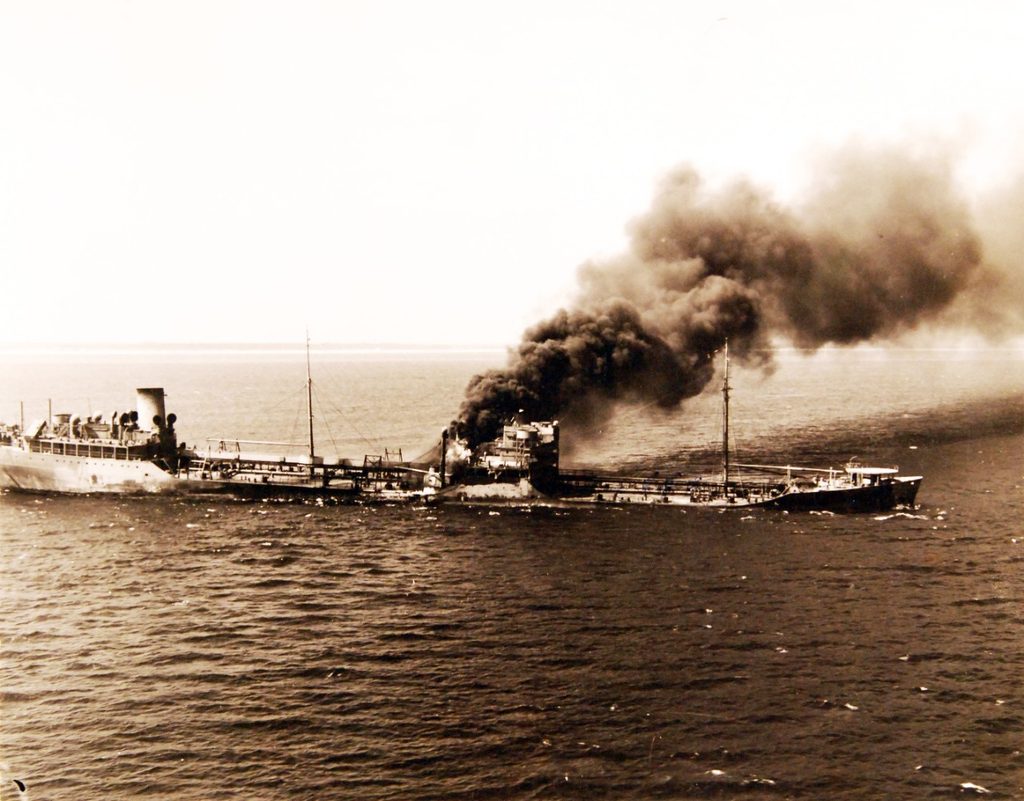
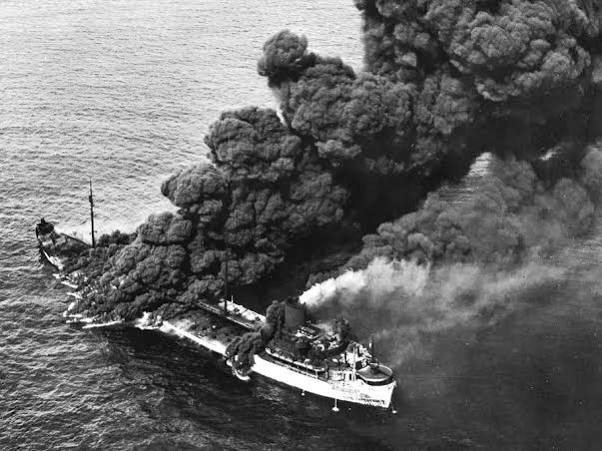
    Burning Tanker Ship from the air near Jupiter Inlet

    In the spring of 1942, the war came so close to Palm Beach County that people could watch it from their own beaches. German submarines, called U-boats, slipped through the dark water just offshore and sank ship after ship. Families stood on the sand at night and watched tankers burn on the horizon. In the morning oil and wreckage washed up with the tide.

    Why the U-Boats Came Here

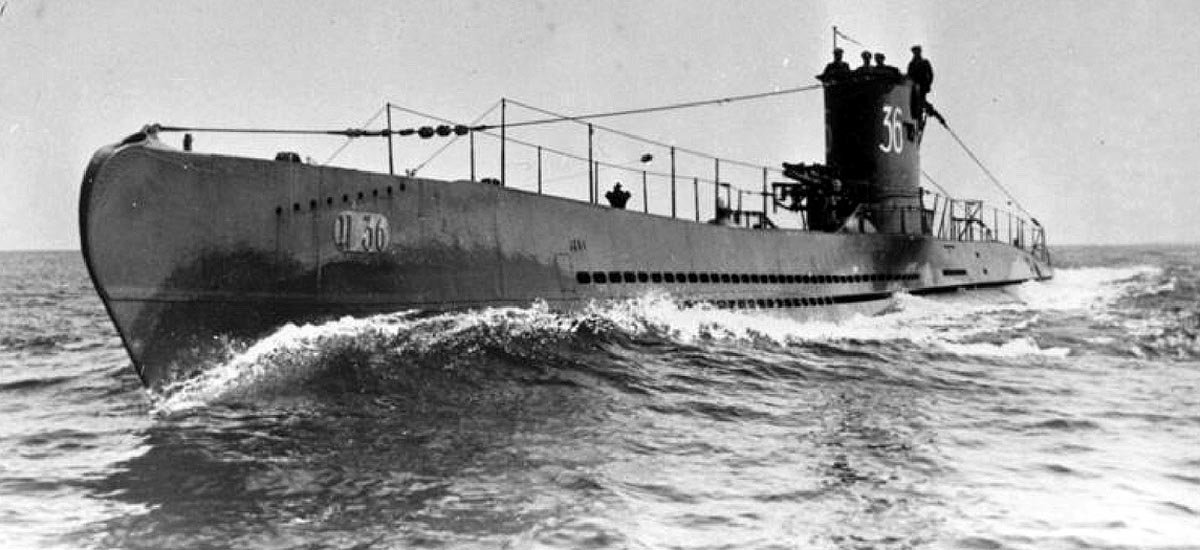
    Not long after Pearl Harbor, Germany sent its submarines across the Atlantic to attack ships along the American coast. The Germans called it Operation Drumbeat, and for the U-boat crews those first months were almost too easy. Many American ships were sailing alone with no escort. Some of them still burned their running lights at night. Big supply submarines, nicknamed milk cows, met the boats far out in the Atlantic to refuel them so they could stay on our coast longer.
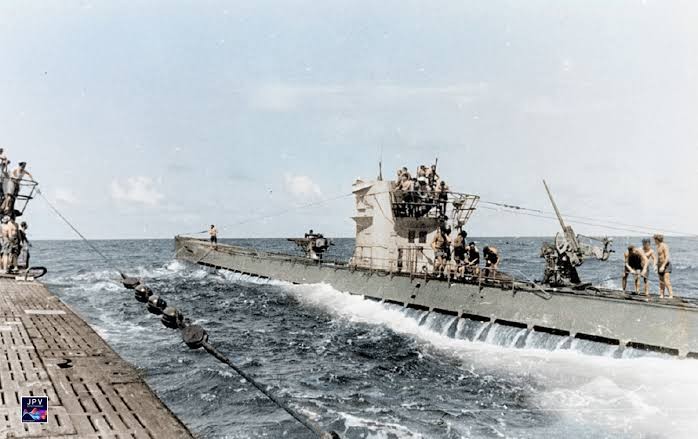
    U-Boat takes on fuel from a supply submarine 27 miles east of Palm Beach.

    Our stretch of coast was one of the best hunting grounds of all. Near the Palm Beach Inlet, the easternmost point in Florida, the Gulf Stream runs closer to shore than almost anywhere else. Ships heading north rode the current just a few miles off the beach, while ships heading south hugged the coast to stay out of it. Either way they passed within easy reach of a submarine waiting in the dark.

    The numbers are hard to believe. In the first seven months of 1942, U-boats sank nearly 400 ships along the American coast. Twenty-four of them went down in Florida waters, with eight off Palm Beach County alone. Half of those sank near the Jupiter Inlet.

    Lit Up Like a Stage
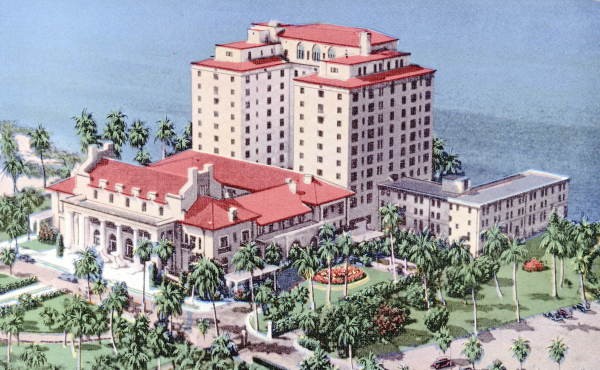
    The Whitehall Hotel, with Henry Flagler’s grand home Whitehall in front, on the Lake Worth Inlet with its hotel tower behind it, always stayed brightly lit during the war. (Photo courtesy of Flagler Museum)

    The biggest help the U-boats had was us. The hotels, homes and streetlights along the coast glowed all night long. To a U-boat commander looking through his periscope, every ship that passed in front of those lights stood out like a cutout against a bright window. The winter season was in full swing, so many business owners did not want anything to spoil it.

    It took a burning tanker to change that. On the night of April 10, 1942, the U-123 torpedoed the tanker Gulfamerica off Jacksonville Beach while crowds on the shore watched her burn. The next day Governor Spessard Holland ordered a blackout of lights that could be seen from the ocean. Even then, in much of Florida the lights were only dimmed rather than put out.
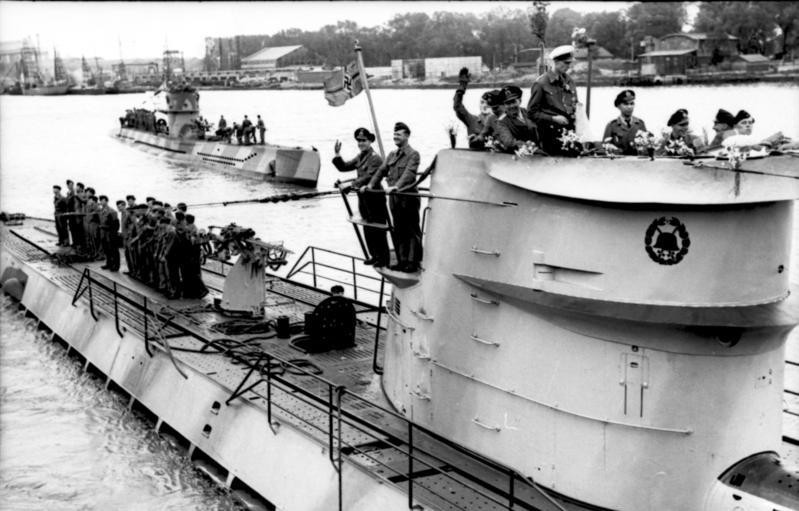
    U-123 comes home to a hero’s welcome. This U-Boat is the one that sank the SS Gulfamerica off Jacksonville Beach.

    The Ships That Burned

    Black smoke pours from a torpedoed tanker off the Palm Beach County coast.

    One of the first to die off our coast was the tanker W.D. Anderson, torpedoed near Jupiter by the U-504 in late February 1942. Her commander, Fritz Poske, saw so many ships passing that he let some of them go by. In his log he called them tasty morsels.
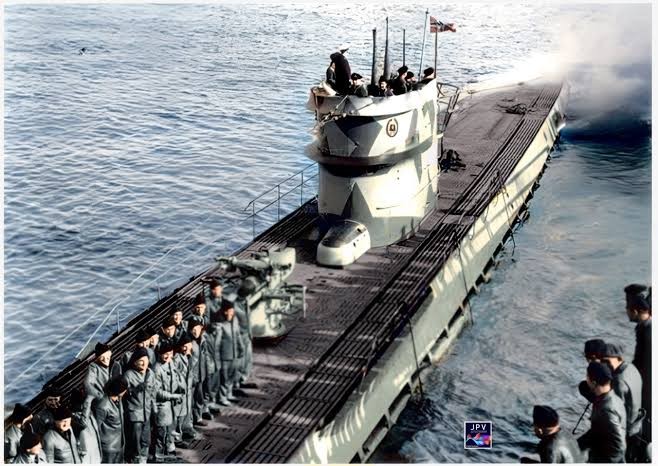
    U-504, the U-Boat that torpedoed the SS W.D. Anderson off the coast of Jupiter.

    In the first days of May 1942, ships went down all along our coast. Off Cape Canaveral the U-109 sank the Dutch freighter Laertes along with the Ocean Venus. On May 4 the U-564 hit the tankers Eclipse and Delisle. Before dawn on May 6 the U-333 sank the little Dutch steamer Amazone off Fort Pierce, then torpedoed the tanker Halsey off Jupiter Inlet. Two days later the U-564 sank the freighter Ohioan off Boynton Beach.
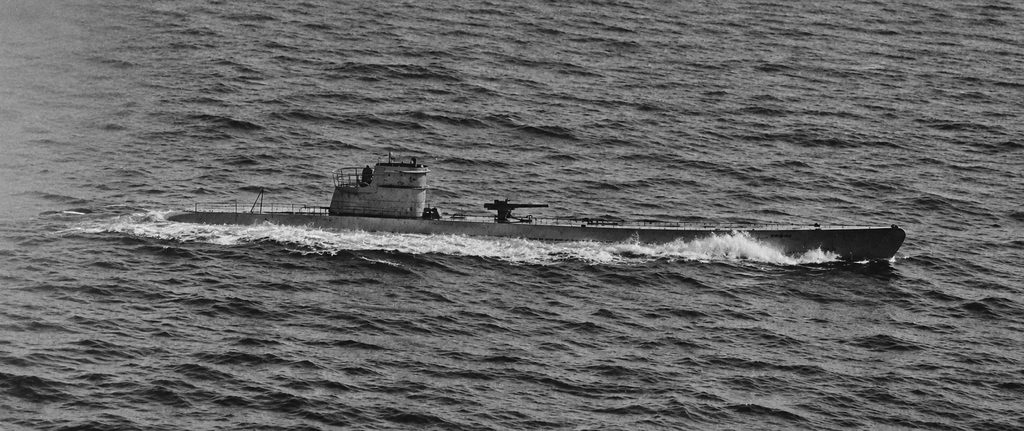
    U-109 off the coast of Cape Canaveral. It sank the SS Laertes and the SS Ocean Venus off the Cape Canaveral coast.
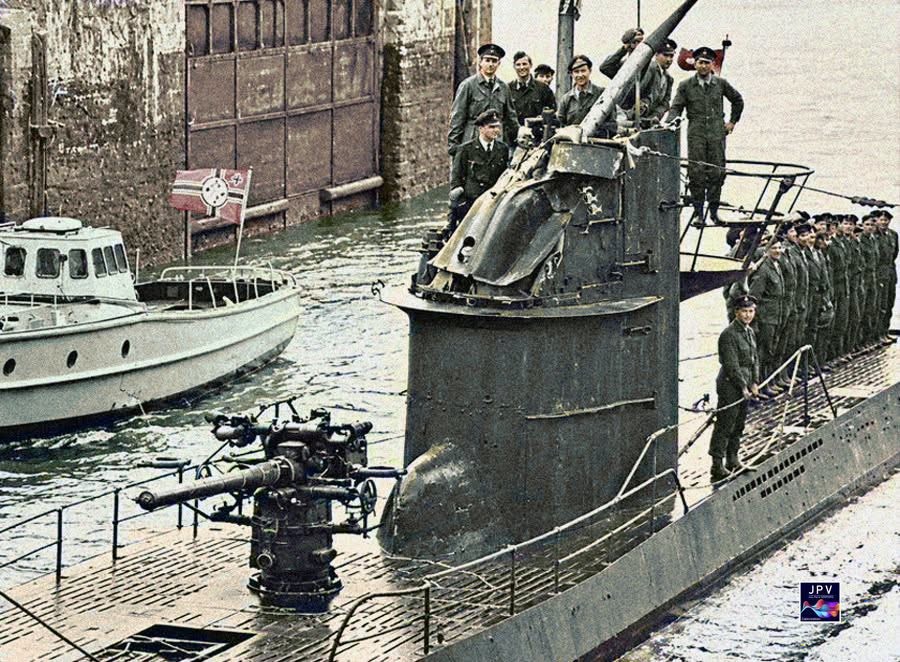
    U-333 back in port, battered after a fight at sea. U-333 sank the SS Amazone and the SS Halsey off the Palm Beach coast.

    Fourteen of the Amazone’s thirty-four men were lost in the water that night. The Halsey was carrying naphtha, which caught fire until the tanker exploded and broke in two. People along the shore could see the glow for miles. Many of them never forgot it for the rest of their lives.
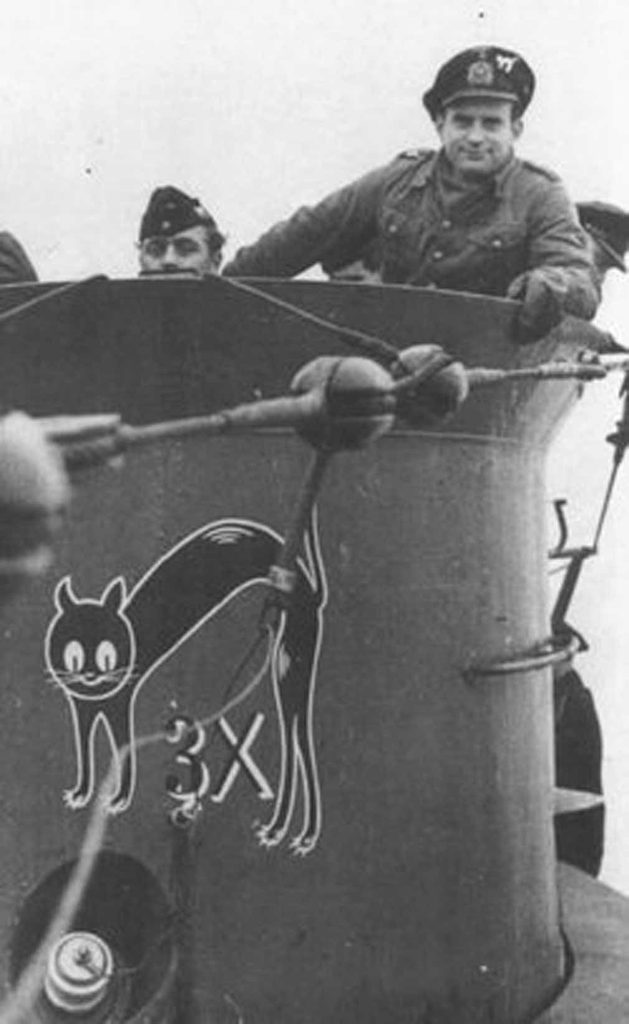
    Commander Reinhard “Teddy” Suhren, on the tower of U-564, the U-Boat that sank the SS Ohioan off the coast of Boynton Beach. The 3X “Black Cats” painted below him was the boat’s “Good Luck” sign.

    Through the Periscope

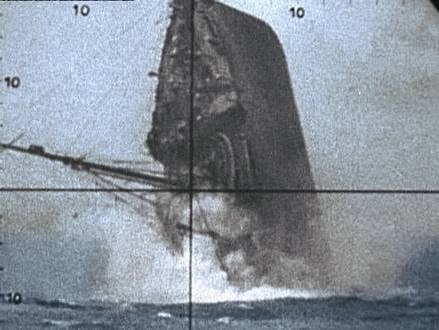
    The view a U-Boat commander had of a sinking ship somewhere off the coast of south Florida.

    Most of the men aboard those U-boats were very young, many of them only eighteen or nineteen years old. They were proud and sure of themselves when they left their bases in France. Out here they lived for weeks in a steel tube that smelled of diesel, sweat and spoiled food. For many of them that confidence lasted only until they watched their first ship burn with men still in the water.
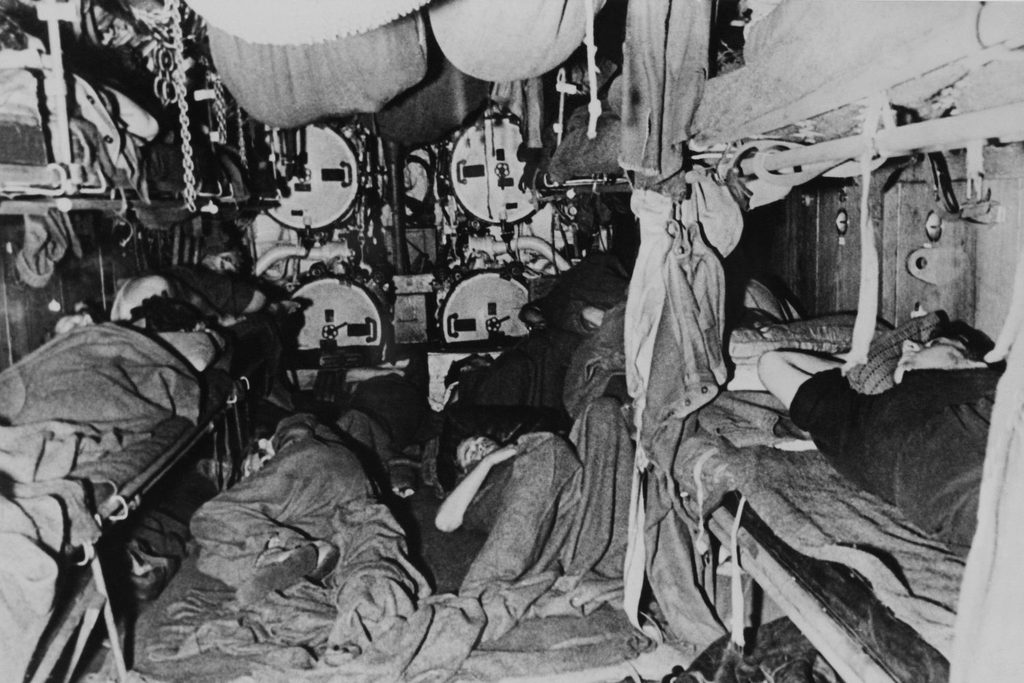
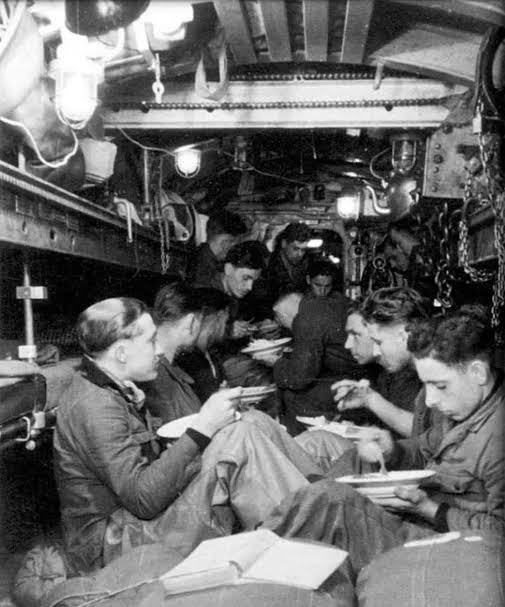
    Off-duty men slept wherever they could find room, even among the torpedo tubes.
    Crewmen eat a meal in the cramped space below deck of a U-Boat.

    My grandparents told me stories about those days when I was a boy. My grandpa was sure the German sailors fished coconuts out of the water when they surfaced at night. He also believed many of those young sailors wanted to slip ashore near Palm Beach, where some of them had family already living here. He told me too that the German sailors feared the long trip over here and back more than anything they faced once they got here. I have never found these stories in the official record, but I have never forgotten them either.
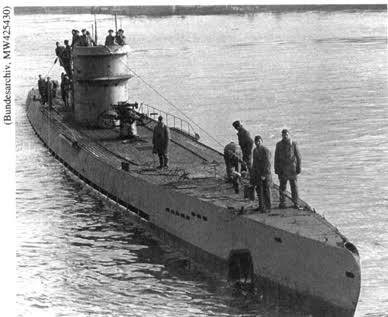
    A U-Boat crew on deck.

    Hunting the Hunters

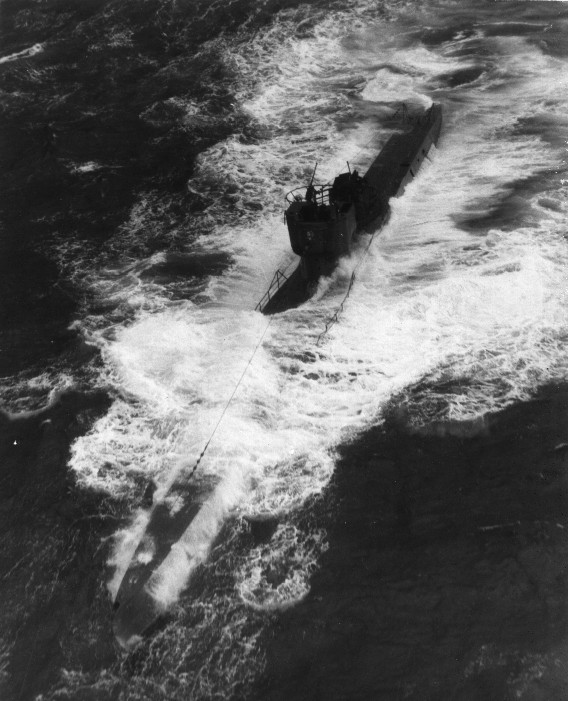
    A U-Boat caught on the surface by a patrol plane off of the coast of Jupiter.

    Before long the tide began to turn. The Navy started sending ships in convoys with escorts, while planes and blimps watched the coast from the air. On May 18, 1942, the Coast Guard cutter Nike reported that it may have hit a U-boat off the Jupiter Lighthouse. No U-boat was ever confirmed lost off Florida, so what really happened that day is still a mystery.

    Some of the first hunters were our own neighbors. Civilian pilots flew their own small planes, nicknamed puddle jumpers, out of the little airport at Lantana. They patrolled as far as 60 miles out to sea between Palm Beach and Cape Canaveral, searching for U-boats while guiding rescue boats to sinking ships. Years later, in 1948, 53 of those local fliers received the Air Medal.

    Life on the Home Front
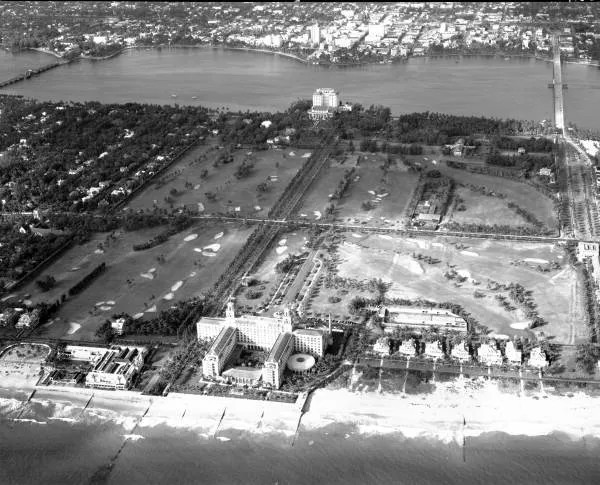
    The Breakers, on the beaches of Palm Beach, Florida, which the Army ran as the Ream General Hospital from 1942 to 1944.

    Back on land, life in Palm Beach changed quickly. Windows facing the ocean were covered with blackout curtains, while wardens walked the streets after dark. Gas and sugar were rationed. Before the year was out, the Army had even taken over The Breakers and turned it into Ream General Hospital, where wounded soldiers came to heal.

    The Coast Guard also put men on the beaches. Before long they were riding horses along the sand at night, with trained dogs at their side. Across the country the Beach Patrol grew to more than 3,000 horses and 2,000 dogs.

    The U-boats even brought spies to Florida. On June 16, 1942, the U-584 put four German saboteurs ashore at Ponte Vedra Beach near Jacksonville, wearing bathing suits and German Navy caps. They were caught within weeks, and all four were later executed.
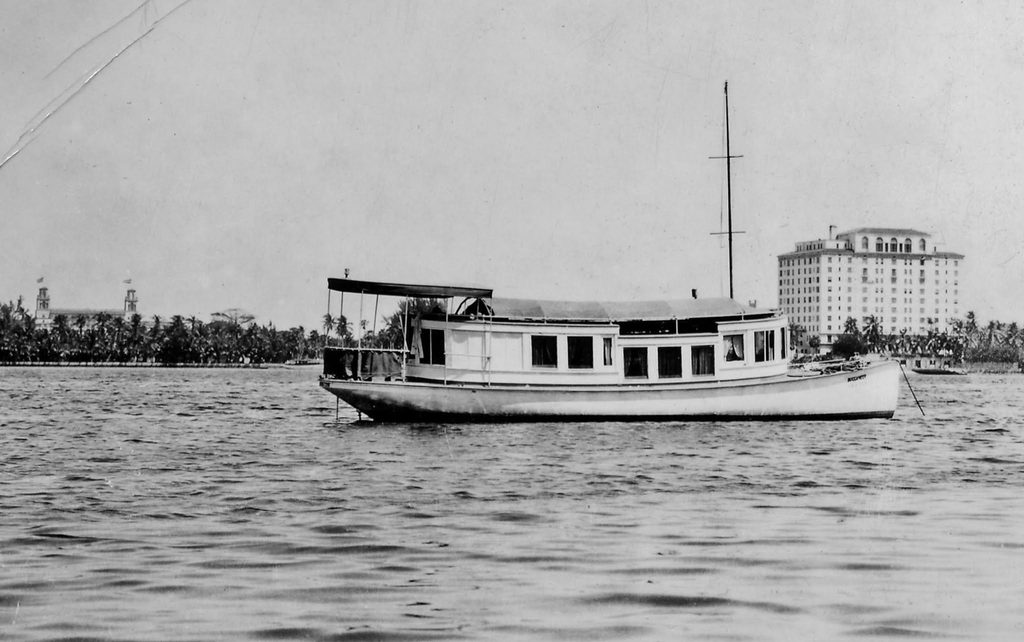
    A houseboat at anchor on Lake Worth Inlet on quieter days.

    Old photos like this one show how calm life on Lake Worth used to be. In 1942 the boats still rocked at anchor between Palm Beach and West Palm Beach, but now everyone kept one eye on the ocean. Nobody could say for sure what was waiting just beyond the reef.

    Why It Still Matters

    Today most people lying on our beaches have no idea how close the war once came to Palm Beach County. Many merchant sailors, American and foreign, lost their lives off our coast in 1942. Some of the wrecks still lie on the bottom offshore, where divers visit them to this day.

    The U.S. government agency for wartime information and propaganda created in June 1942 was called the OWI (Office of War Information). It has been very well documented that all along the coasts, from Portland, Maine to Miami, Florida, newspapers and other media outlets was denied the ability and ordered not to print the truth, and many times false information was given out to mislead the people on the war events of that time.

    That is why I wrote my U-Boats in Paradise series. The first book, Fire Off Jupiter, is out now in eBook and paperback at Amazon or Barnes & Noble. Book Two, Lights Out, picks up the story in the spring of 1942, when the lights finally went out along our coast. The books are fiction, but the burning ships, the brave sailors and the young men in those submarines were all very real.
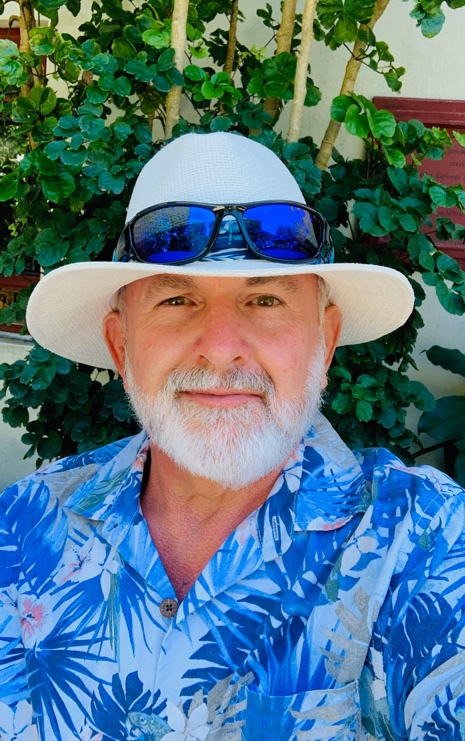
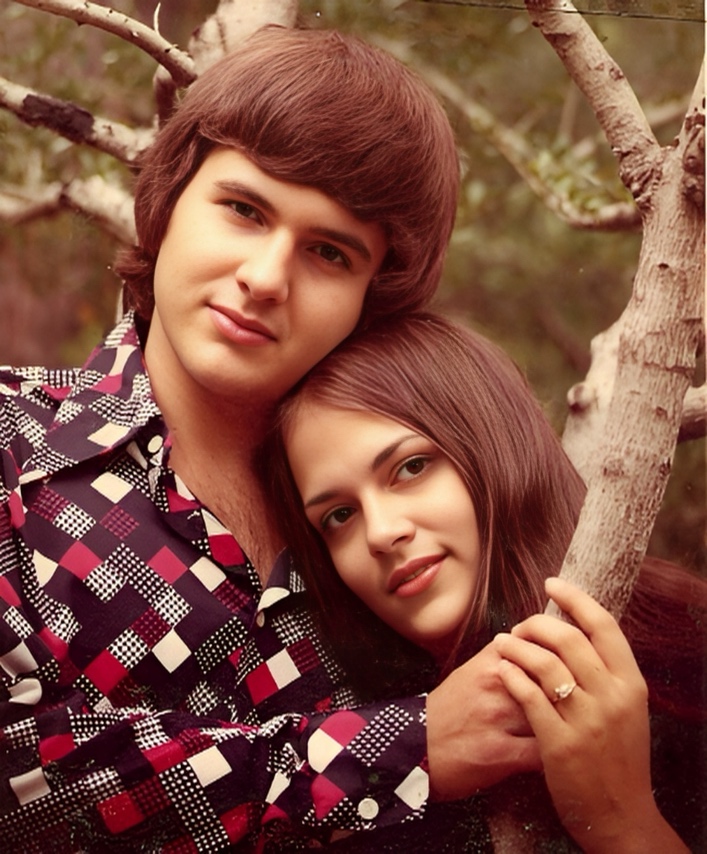
  • Getting Older Changes More Than the Mirror

    Getting Older Changes More Than the Mirror

    Getting older changes us in ways that are easy to see, and in ways that are much harder to explain. The physical changes usually come first and announce themselves without much hesitation. Our hair changes color, our faces begin to show the years, our bodies become less forgiving, and things that once seemed effortless sometimes require more patience and care. Those changes are obvious because we can see them in the mirror and feel them when we get out of bed in the morning. What I have come to understand, though, is that aging changes much more than the body. It changes the way we think, the way we remember, the way we value time, and perhaps most importantly, the way we look at the people we love.

             As I have gotten older, I have found myself thinking about the past more often, not because I want to live there, but because there is simply more of it behind me now. There are more people to remember, more places that no longer look the way they once did, and more moments that seemed ordinary at the time but now carry a meaning I could never have understood when they were happening. A song can take me back decades in a matter of seconds, an old photograph can bring back a voice I have not heard in years, and a familiar place can suddenly remind me of someone who is no longer here. Age seems to sharpen certain memories even while making others more difficult to reach, and that can be both comforting and painful.

             When we are younger, we tend to believe there will always be more time. We tell ourselves we can make that phone call tomorrow, visit someone next week, apologize later, or say the things we really mean when the moment feels right. We assume there will be another holiday, another birthday, another dinner together, another chance to make things right. As we grow older, we begin to understand that time does not make those promises, and that realization can change a person deeply. We become more aware that every year passes more quickly than the one before it, and we start to understand how precious ordinary moments really are.

             One of the biggest changes that can come with age is the way our priorities shift. Things that once seemed terribly important often lose their power over us, while things we may have taken for granted become more valuable. A quiet morning, a conversation with someone we love, a visit from one of our children, or a simple family gathering can mean more than many of the things we once worked so hard to achieve. We begin to understand that possessions come and go, careers eventually end, houses change hands, and material things rarely become the memories we hold closest. What stays with us are people, relationships, laughter, shared experiences, and the feeling of having mattered to someone.

             Getting older also brings a different kind of honesty. We begin to look back at our own lives with fewer excuses and perhaps a little more humility. We remember decisions we made, things we said, moments when we were impatient, and times when we could have handled something differently. We may remember occasions when we worked too much, worried too much, spoke too quickly, or failed to recognize what someone needed from us. Those memories can be difficult because age often gives us the wisdom to understand situations that we did not fully understand when we were living through them.

             I believe this is especially true when we think about raising our children. Most of us are still very young ourselves when that first child comes into our lives. We may technically be adults, but in many ways we are still kids trying to understand who we are, how the world works, how to build a life, and how to make good decisions. Then suddenly there is another human being depending on us for everything, and somehow we are expected to know exactly what to do. No one truly prepares us for that moment, and no one prepares us for all the things that come with it. A baby does not arrive with an instruction manual, and despite the way the world works today, there is no QR code we can scan that tells us what to do next.

             That may sound humorous, but there is a great deal of truth behind it. We are handed this enormous responsibility and expected to learn as we go. We have to figure out how to protect a child without smothering them, how to discipline them without damaging them, how to encourage them without placing too much pressure on them, and how to love them in a way they can actually feel and understand. We make choices about education, health, money, discipline, friendships, safety, and values while often wondering privately whether we are making the right decisions. Most parents are learning parenthood at exactly the same time their children are learning childhood.

             The older I get, the more I think about how little most of us are actually taught about life before we are expected to live it. Schools teach us reading, writing, mathematics, history, science, and sports, and those things certainly have value. Yet I have often felt that education fails us in one very important way because it does not spend nearly enough time teaching young people how to live in the real world. How to have a bank account and balance a checkbook or how to make and stay on a budget. How to get insurance and what types we need. We are taught how to solve equations, but not always how to handle disappointment. We learn how to pass a test, but not how to recover from failure. We may learn about historical events, but not how to build a healthy marriage, raise a family, manage money responsibly, deal with grief, choose trustworthy friends, recognize a bad relationship, handle anger, apologize sincerely, forgive someone, or understand that life will sometimes be unfair no matter how hard we try.

             Those are not minor subjects. In many ways, they are the subjects that determine whether we build a stable and meaningful life. Young people eventually need to understand credit, debt, taxes, mortgages, insurance, contracts, employment, relationships, parenting, loss, responsibility, and the emotional consequences of the decisions they make. They need to know that not every mistake can be erased, not every broken relationship can be repaired, and not every opportunity will return. They need to understand how to treat people, how to recognize when they are wrong, how to stand up for themselves without destroying someone else, and how to ask for help when they need it. Those lessons are every bit as important as anything written on a classroom chalkboard or computer screen.

             Instead, many of us entered adulthood with a diploma in our hands and very little understanding of the life waiting outside the school doors. Then we became parents and were suddenly expected to teach our children lessons that no one had ever properly taught us. We relied on what our own parents had shown us, sometimes repeating the good things they did and sometimes unintentionally repeating the mistakes. We picked up advice from relatives, friends, books, doctors, and anyone else who seemed to know more than we did, but much of the time we were simply doing our best and hoping our instincts were good enough.

             When we become parents, we are expected to guide another human being through life, yet most of us are still trying to figure out life ourselves. We make decisions based on what we know at the time, on what we learned from our own parents, and on what we believe is best for our families. Sometimes we get it right, and sometimes we do not. We may have been too strict when we should have been more patient, or too worried when we should have trusted more. We may have tried so hard to protect our children that we did not always realize what they needed most was simply to be heard and understood.

             Looking back, I think most parents can identify things they would do differently if they had the chance. There may be conversations we wish we had handled another way, times when we should have listened longer, and moments when we should have said “I love you” more clearly. There are probably occasions when our children were hurting and we did not fully understand what they were trying to tell us. At the time, we may have believed we were doing what was best, but with age comes the uncomfortable realization that good intentions do not always guarantee perfect results.

             That is one of the hardest parts of getting older. We cannot go back and fix everything. We can learn from the past, we can apologize when necessary, and we can try to become better people, but we cannot rewrite the years that have already passed. We can only hope that the people we love will see us as a whole person rather than judging us only by our worst moments. We can hope they remember that we were learning too, that we had fears they may never have known about, and that many of our mistakes were made while trying to do what we believed was right.

             As a parent gets older, I think there is a natural tendency to wonder how our children will remember us someday. We may wonder what stories they will tell about us, which memories will stay with them, and whether they will understand us differently after we are gone. We hope they will remember the good times, the laughter, the holidays, the ordinary dinners, and all the little things that seemed insignificant at the time but ultimately made up a life together. We hope they will remember that even when we made mistakes, the love behind those mistakes was real.
             I also hope our children will learn to forgive us for the times when we fell short. Forgiveness does not mean pretending mistakes never happened, and it does not erase hurt. What it can do is allow us to remember a person as more than one bad moment, one bad decision, or one period of life when things were difficult. Every family carries memories of disagreements, misunderstandings, and things that could have been handled better. With enough time, many of those old conflicts begin to look smaller, and we start to understand that very few arguments are worth carrying forever.

             There are things our children may never know about us because parents often carry their worries quietly. They may never know how many nights we stayed awake wondering whether they were safe, whether they were happy, or whether we were doing enough for them. They may never know how often we worried about their futures, how proud we were of them, or how deeply we felt their successes and disappointments. They may not remember every sacrifice because many of those sacrifices were made without being announced. That is often the nature of love. It exists in ways that are not always visible at the time.

    As I grow older, I understand more clearly that what matters in the end is not whether we lived perfectly, because none of us does. What matters is whether we loved people, whether we tried to do better, whether we learned from our mistakes, and whether we were willing to forgive others and ourselves. Age has taught me that there is very little value in carrying anger for years, especially when the person we are angry with may someday no longer be there. There comes a point when being right matters far less than preserving a relationship.

    I hope my children learn that lesson earlier than I did. I hope they forgive one another, forgive themselves, and forgive me where forgiveness is needed. I hope that years from now, when they look back on my life, they do not remember only the times I was wrong or the moments when I failed to understand something. I hope they remember that I was human, that I was learning, and that behind everything was a father who loved them, even when he did not always know the best way to express it.

    The older I get, the more I think about what we actually leave behind. We may leave possessions, photographs, books, or keepsakes, but the real legacy is much harder to measure. It lives in the stories people tell, the memories they carry, the values they pass along, and the way they remember how we made them feel. Someday, a child or grandchild may repeat something we used to say, laugh at a familiar family story, or recognize one of our habits in themselves. In those small ways, a part of us continues.

    I do not expect to be remembered as perfect, because I was not. I would much rather be remembered honestly and kindly, as someone who tried, who loved his family, who made mistakes, and who understood more about life at the end than he did at the beginning. I would hope my children could look back and see the whole picture, not just the parts where I fell short. I would hope they remember the laughter along with the disagreements, the good days along with the difficult ones, and the love that was always there even when it was not always expressed perfectly.

    Perhaps that is one of the greatest changes that comes with getting older. We begin to care less about how successful we appeared and more about how we will be remembered by the people who knew us best. We begin to understand that time is limited, relationships are fragile, and love should never be assumed. We become more aware of the words we wish we had said sooner and the apologies we wish we had offered more quickly. We learn that pride can cost us time we can never get back.

    Getting older changes the body, but the deeper changes happen inside us. We become more reflective, more aware of our mistakes, and hopefully more willing to appreciate what truly matters. We begin to understand that life was never about getting everything right. It was about loving people, learning, forgiving, being forgiven, and trying to leave behind more good memories than painful ones.

    If my children think of me many years from now, I hope they remember me with warmth rather than judgment. I hope they can forgive the things I got wrong and understand that I was doing the best I knew how to do at the time. I hope they realize that when they were young, I was still learning how to be a parent, just as they were learning how to be children, and that there were no perfect answers waiting for either of us. Most of all, I hope they remember that they were loved, that they were always a source of pride, and that whatever mistakes I made along the way never changed the depth of that love. If they can look back someday and smile when they think of me, then I cannot imagine a better way to be remembered.

    Howard Mark Hines

    www.howardmarkhines.com

  • Every Life Leaves a Story

    Every Life Leaves a Story

    There is something about a cemetery that makes the world slow down. My wife (Janet) and I have spent many hours walking through cemeteries all around Palm Beach County and beyond. Sometimes we are looking for one particular grave, sometimes we are cleaning a headstone for someone who asked for our help, and sometimes we are simply exploring a place we have never been before. What started as something we did now and then has become one of the most meaningful things we do together.

    People often reach out to us because someone they love is buried here and they are not able to visit. Many of them live hundreds or even thousands of miles away. Some are getting older and can no longer travel, and some have never stood at the grave at all. When we can, we find the grave, carefully clean the headstone, and take photographs so the family can see that their loved one’s resting place has not been forgotten and always include the GPS coordinates so they can search the location on Google Maps or other maps. It may seem like a small thing, but I have learned that to the person waiting on the other end, that photograph can mean the world.

    We also spend a good deal of time finding and photographing graves for Find a Grave and BillionGraves. These websites let people all over the world search for parents, grandparents, veterans, old friends and ancestors they never had the chance to meet. Sometimes a photograph we take is the very first time a descendant ever sees the resting place of someone they have spent years trying to find. Knowing that a few minutes of our time might help finish a family’s story makes every trip worth it to us. For us its an honor. Many people do not understand why we do this and thats ok, we do it because it makes us happy, and we do it together as a couple.

    Hidden Beneath the Grass

    Some of the graves we visit are flat bronze markers set right into the ground, and over the years they slowly vanish. Grass clippings from the mowers settle over them each time the cemetery is cut. Blowing sand and dirt pile up on top, and little by little the grass grows right across them, until one day there is nothing left to see. You could walk right over one and never know a person was resting there.

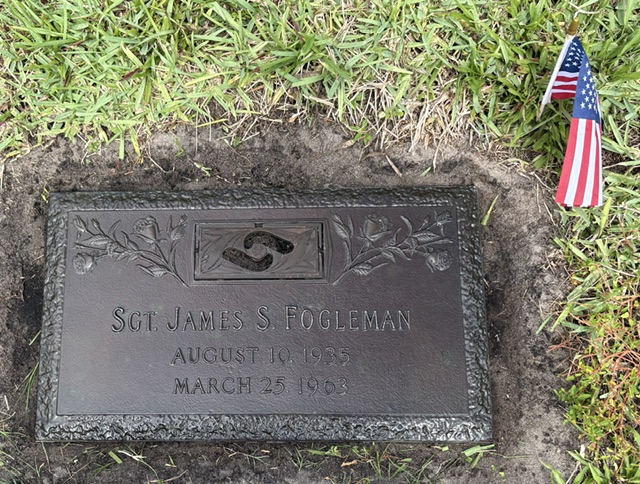
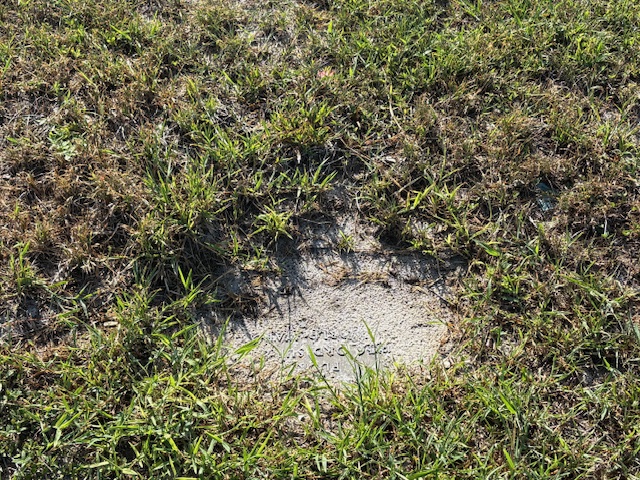
    That is exactly how we found Sgt. James S. Fogleman. At his grave there was nothing but a patch of grass, the same as all the grass around it. So we got down on our knees and started gently cutting back the sod and brushing away the dirt, a little at a time.

    Sgt. Fogleman’s grave as we found it, completely covered over
    Not a single letter of his marker could be seen

    Slowly his name began to show through. Then the dates appeared. August 10, 1935, and March 25, 1963. He was only twenty seven years old. When the last of the dirt was gone and the bronze was cleaned, a small American flag was placed beside him. For the first time in a very long while, anyone walking by could see who was resting there. I will not pretend that moment did not get to me. A young man who served his country had been lying beneath the grass, forgotten by everyone who passed, and now his name could be read again.

    Sgt. James S. Fogleman, uncovered, cleaned and honored once again

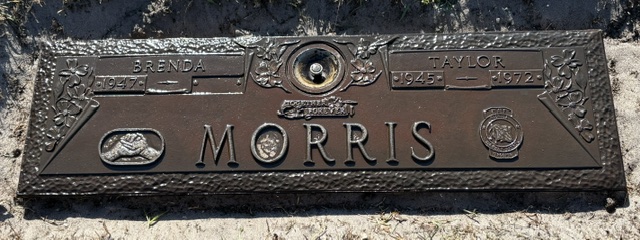
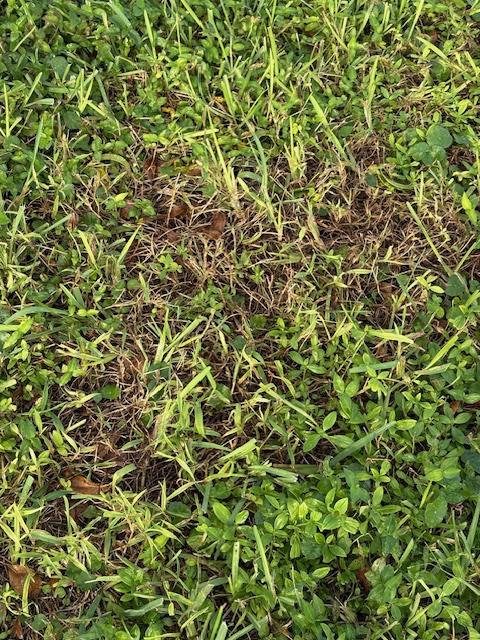
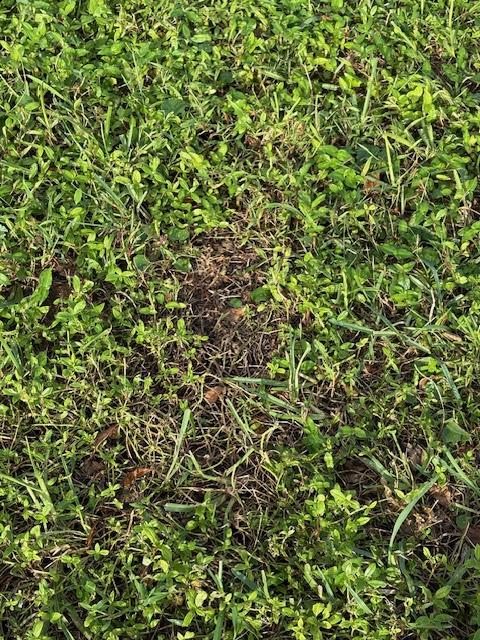
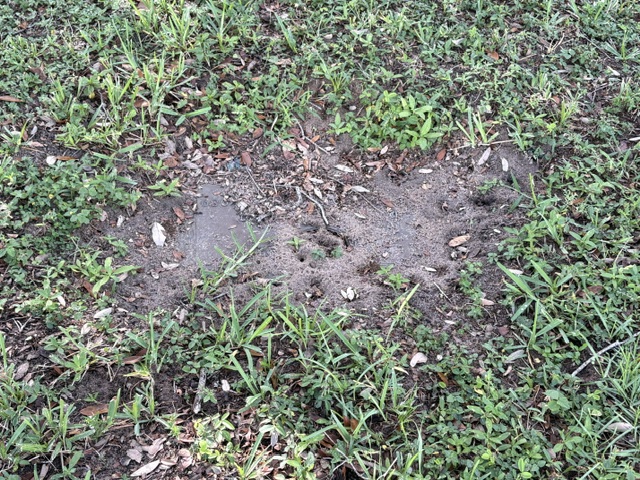
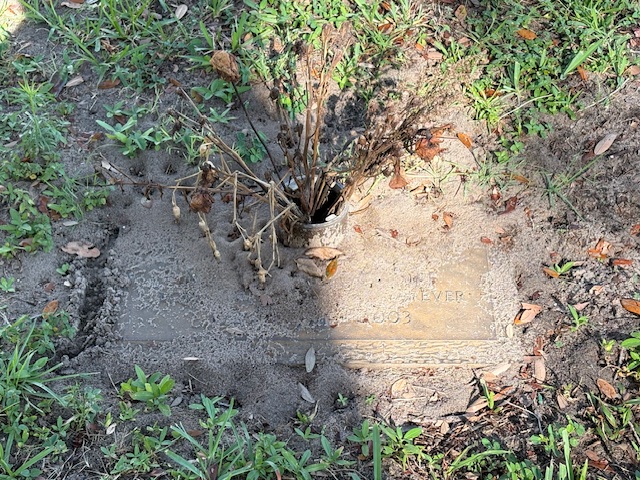
    The Morris marker was another one the grass had nearly swallowed. All that showed was a faint outline in the dirt, and it took patience and a lot of careful work to bring it back. When we finished, the bronze shined in the sun again, and the family’s name was clear for everyone to see.

    The Morris marker, barely visible through the grass
    Partway uncovered, with the outline of the bronze starting to show
    Almost there, with the bronze plaque coming back into view

    Why South Florida Is Different

    People are often surprised to learn that you cannot clean a headstone in South Florida the same way you would up north, because doing so could ruin it. Our strong sun and salty air take a real toll on stone and bronze. Over the years I have worked out a careful way of cleaning every type of headstone that suits our environment here. I start with soft brushes to remove the bulk of the dirt and debris. Then I clean with plain distilled water first, and a little Dawn dishwashing liquid after that. I use several different solutions along the way, and I let the headstone dry completely between each cleaning. On stone headstones I finish with D2 Biological Solution, a cemetery approved cleaner. On bronze markers I finish with a special cemetery approved bronze restoration oil that brings back their color and helps protect them from the weather. From start to finish, I usually spend two to three hours on each headstone before I feel it is done right.

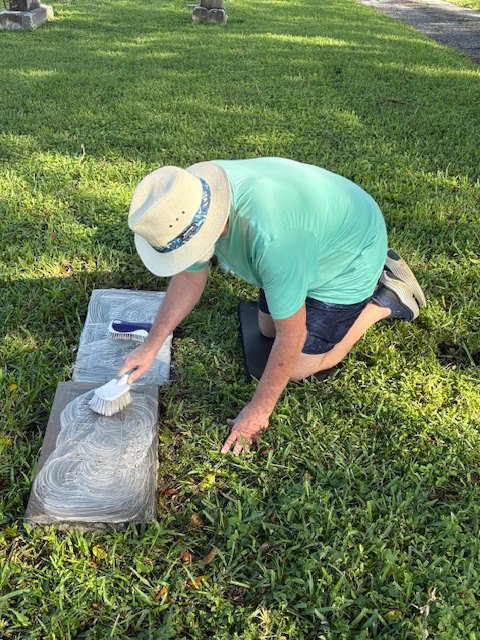
    Working the cleaner into a pair of stone markers with a soft brush
    Working the cleaner into a pair of stone markers with a soft brush
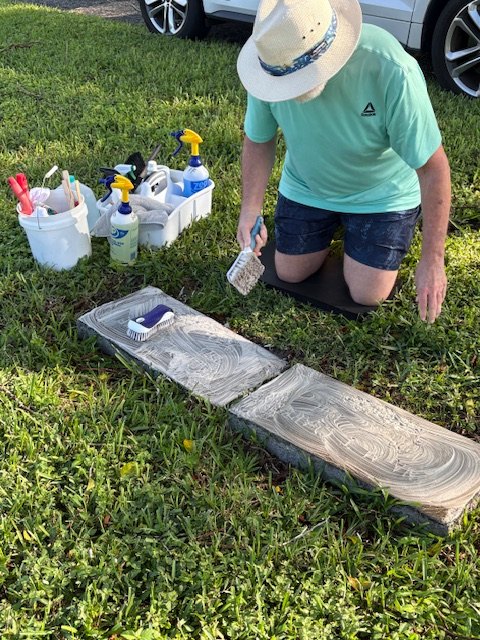
    My cleaning kit close at hand while I work
    My cleaning kit close at hand while I work

    None of this would happen without Janet. She has been my navigator for 52 years now, including every time we go looking for these headstones. She is right there with me on every trip, helping in more ways than I can count. Just as important is her moral support, which keeps me going on the long days in the sun. This work is truly something we share.

    Every Name Is a Life

    Our travels have taken us through cemeteries large and small all over the county, and every one of them has its own personality. Some are beautifully landscaped, with towering palms, old shade trees, flowers and fountains. Others are simple and quiet, with weathered stones that have stood beneath the Florida sun and rain for generations. Some sit right beside busy roads, yet the moment you walk through the gates the noise seems to fade away.

    We have found that cemeteries are not frightening or gloomy places at all. Most of them are incredibly peaceful. Birds move through the trees, squirrels dart across the grass, and sunlight filters through the branches onto names and dates that tell pieces of stories from another time. When you start reading the headstones, you realize that every name stands for a life. Someone was a mother, a father, a husband, a wife, a child, a soldier, a teacher, a neighbor or a friend. Someone once laughed with them, worried about them, held them, and one day had to say goodbye.

    That is why we do this. Cleaning a headstone or taking a photograph cannot bring anyone back, but it can help keep their memory alive. It can bring a family a little closer to its history, and it reminds us that no one should disappear just because many years have passed.

    If you have a loved one resting in a Palm Beach County cemetery and you are not able to visit, please feel free to reach out to me. If I can, I will be glad to find the grave, clean the headstone and send you a photograph.

    My wife and I have traveled many roads through Palm Beach County and beyond, searching for cemeteries and the people resting within them. Along the way we have found beautiful places, remarkable history, and a peace that is hard to describe until you feel it yourself. For us, every visit is a reminder of something simple. Every life leaves a story behind, and every story deserves to be remembered.

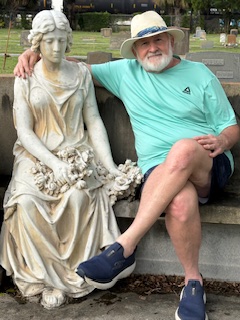
    At the end of every day in a cemetery, no matter how tired I am, I always make time to sit with an angel. There is usually one somewhere nearby, carved in stone and keeping her quiet watch over the people resting around her. I sit down beside her for a while and let the day settle. Neither of us is ever in a hurry. I always listen to the story she has to tell me, and she always listens to mine. Together we enjoy the peace and quiet of each other’s company. We listen to the sound of the palm fronds moving in the wind, in the presence of so many who have been lost and forgotten, knowing that one day one of them will be me.

    “At the end of the day, sitting with an angel, telling each other our stories”
  • A Quiet Gift: The Forgotten Artistry of Oma RLena Murphy Faulk

    A Quiet Gift: The Forgotten Artistry of Oma RLena Murphy Faulk

    Some artists spend their lives chasing galleries, exhibitions and good reviews. Others create simply because something inside them needs to, and their work ends up hanging in family homes or tucked away in boxes where only a few people ever see it.

    Oma RLena Murphy Faulk was one of those artists. Her name will never appear in a history of American art. Yet the paintings and drawings she left behind show a genuine gift, an observant eye and a delicate touch that still speak for themselves more than a century later.

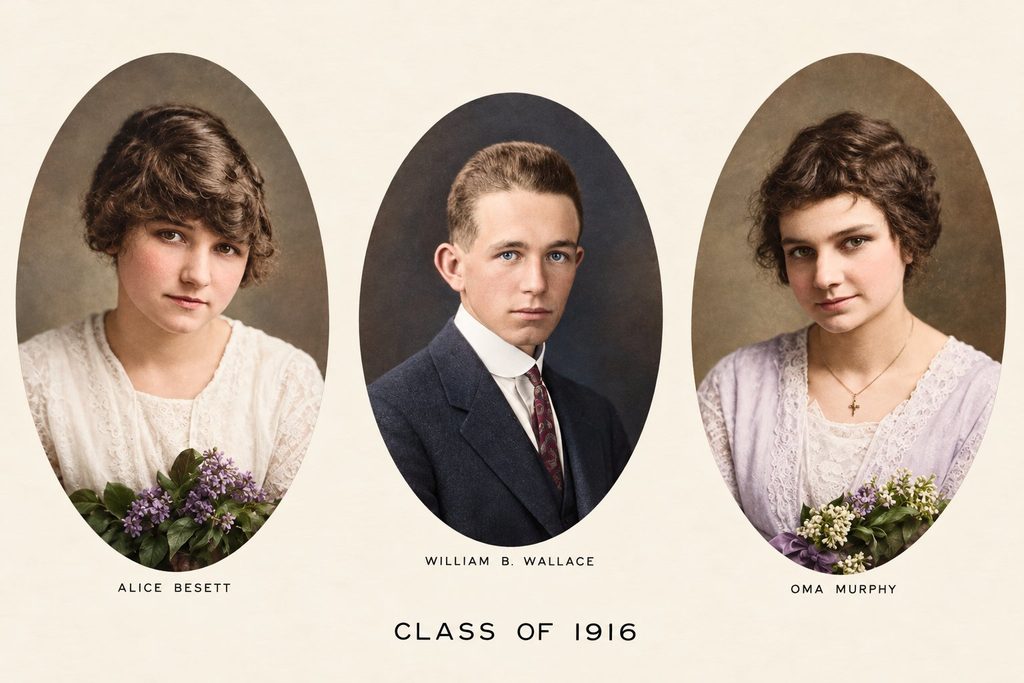
    RLena Murphy, at right, with the rest of the Ramona High School Class of 1916. There were only three of them.

    RLena was born on January 28, 1898, in Ramona, Oklahoma. Her father, Albert Lee Murphy, ran a bakery there, and she grew up in a small town surrounded by oil leases, farms, churches and families who had known one another for years.

    She loved school, which was not true of every student in those days. In 1985 she wrote an article for The Collinsville News that called Ramona “the best school in the county.” The Prairie Oil and Gas Company had a large tank farm north of town. The taxes it paid meant that every student was given books, pencils, paint and art paper free of charge. There were teachers for music, penmanship, history and foreign language. There was even a teacher for art.

    RLena played the clarinet in the school band and the mandolin in the orchestra. A young man named Joseph Faulk played the cornet and lined up at right guard on the 1917 football team. Joseph would later become her husband.

    In that same article she told a small story that says a great deal about her. She liked to paint so much that she would put water in the inkwell of her desk and paint where the teacher could not see her. That worked until the day she was caught and scolded for it. Later, that same teacher smacked her hands with a hard ruler several times, so she could not draw or write for days. Because she felt embarrassed and ashamed, she never told anyone about it except me, many years later.

    That little confession tells more about her than any record could. Long before anyone thought of her as a wife, mother or grandmother, she was a schoolgirl at a wooden desk who could not keep her paint brush still.

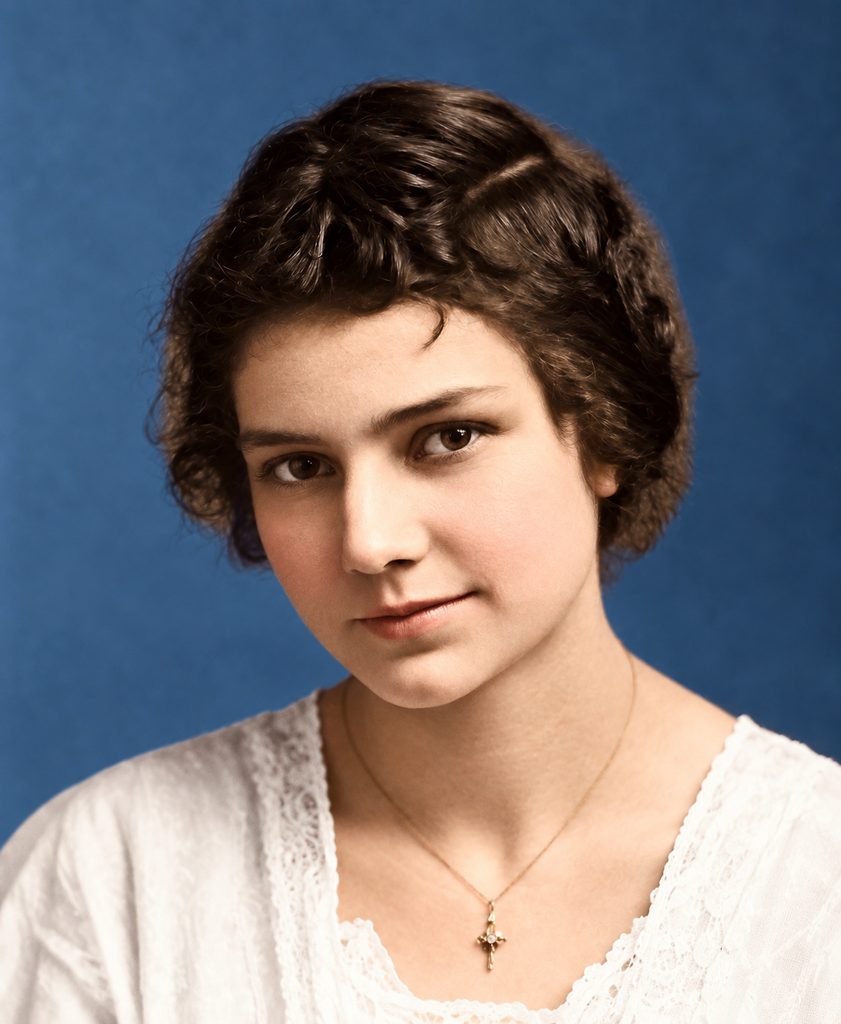
    RLena Murphy as a young woman, about 1917.

    She studied German, bookkeeping, typing, sewing and cooking at Ramona High School, but art was the subject that stayed with her. A newspaper profile written in her later years noted that she won prizes for some of her pencil drawings and oil paintings while she was a student. She still treasured two of them more than sixty years later.

    Those two paintings mattered to her. She carried them through marriage, moves, the Depression, a war and old age, which shows she understood they held an important part of who she was.

    Looking at this photograph of her as a young woman, with her dark hair and thoughtful expression, it is hard not to wonder what she imagined her life would become. She could not have known that the years ahead would bring the Great Depression, a world war, a family bakery business, teaching, newspaper writing and factory work, yet the artist was already there.

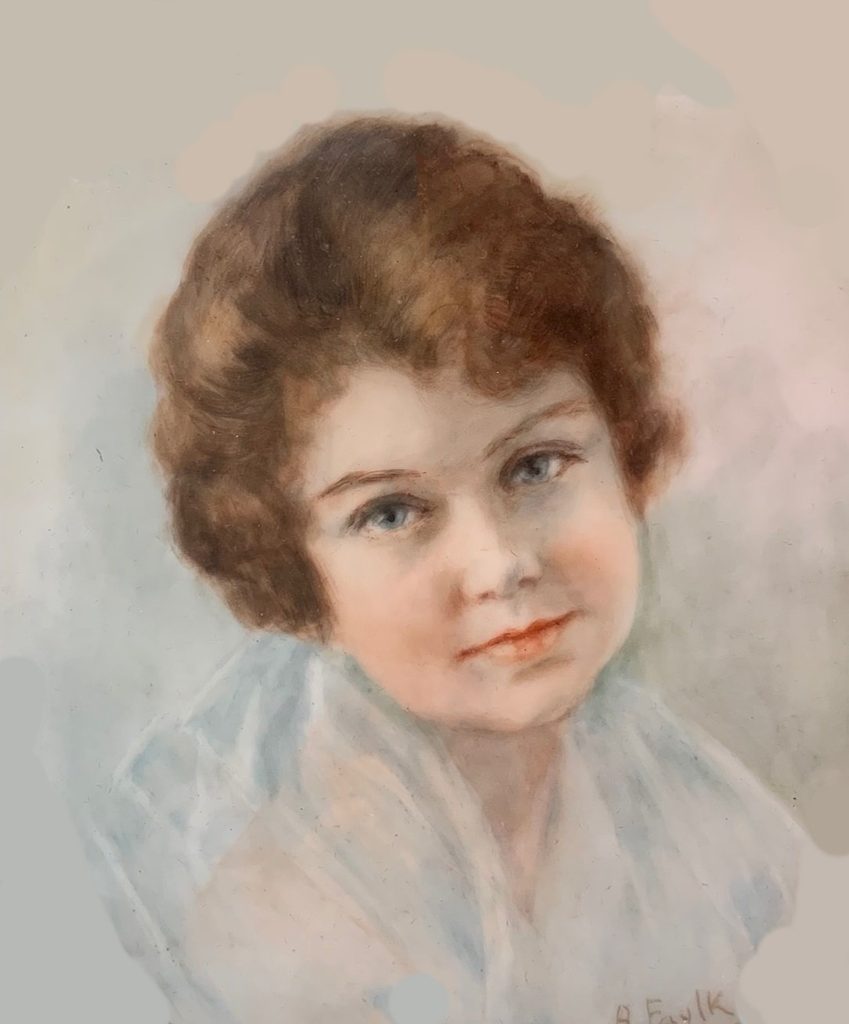
    RLena’s self-portrait, dated 1918.

    One of the most beautiful pieces she left is this self-portrait from 1918. The face is softly modeled, the eyes are clear and expressive, and the hair is drawn with a warmth that is very hard to teach. Technique can be learned in a classroom, but the ability to give a drawing a sense of life is something more rare. She had it.

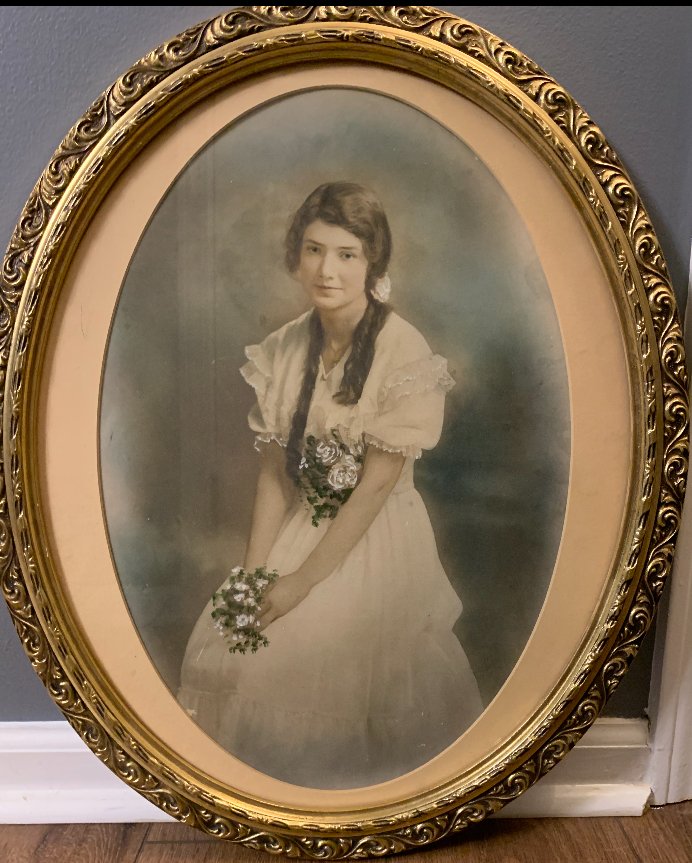
    She painted herself more than once. Another self-portrait shows her as a young woman in a white dress with long braids, holding a small bouquet of flowers. Today it is kept in an oval gold frame.

    Another of RLena’s self-portraits, in its oval gold frame.

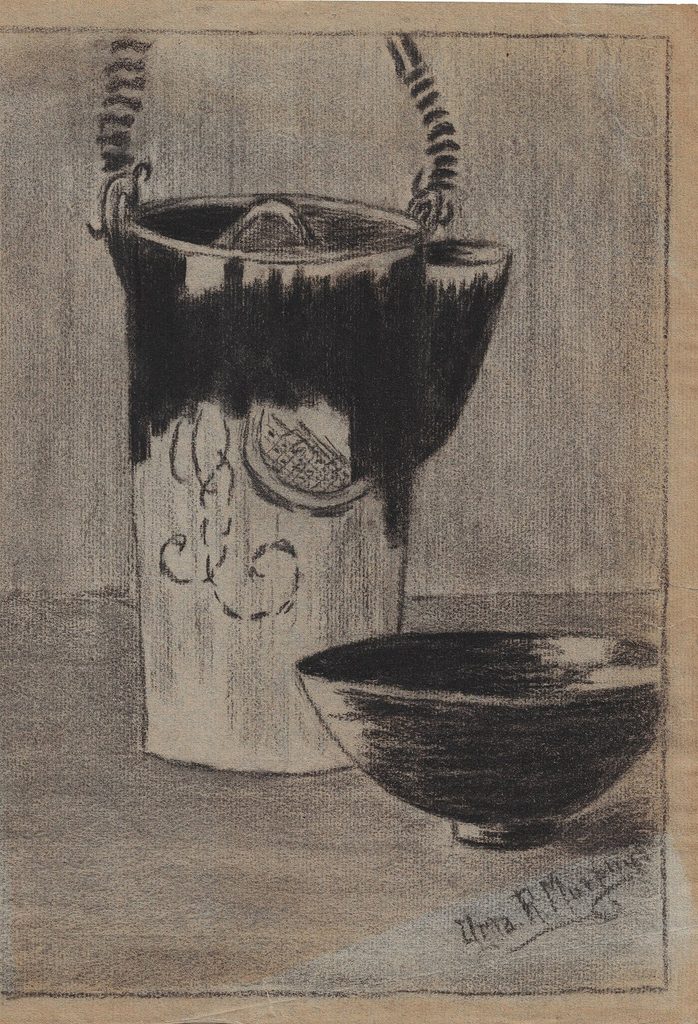
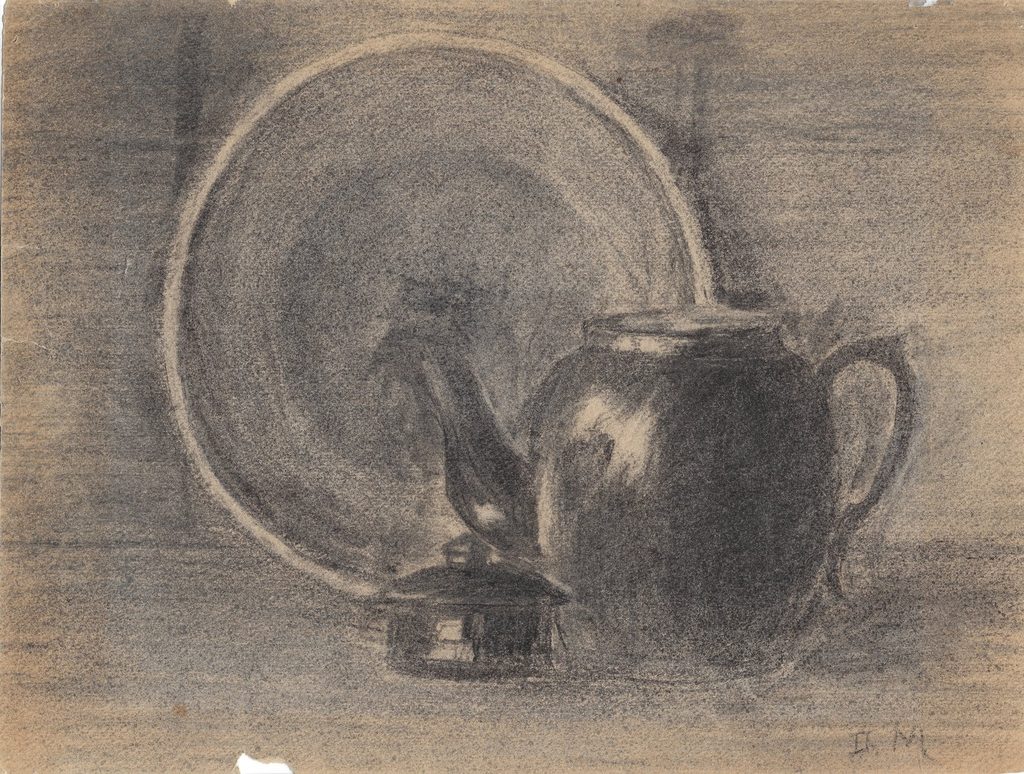
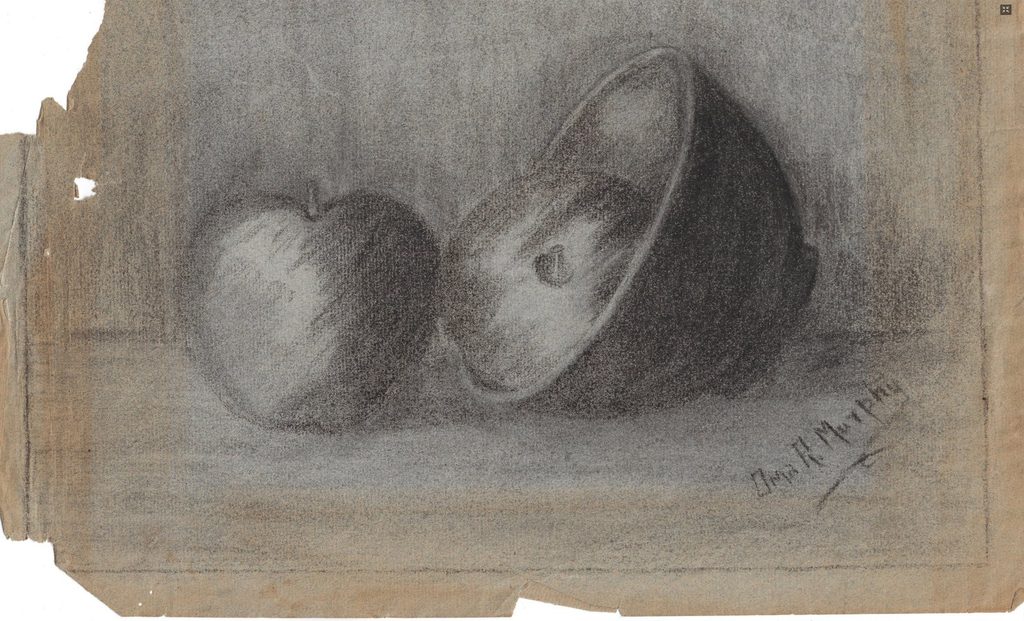
    Her surviving work shows a surprising range. There are charcoal studies of a pail and a bowl, an apple beside an overturned dish, and a pitcher set in front of a large plate. Each one is built carefully out of light and shadow until the ordinary objects have weight and depth.

    A charcoal study of a pail and a bowl, signed Oma R. Murphy.

    A charcoal study of a pitcher and plate, initialed by RLena.

    These are the careful studies of a young woman teaching herself to see. Some of them are signed in her own hand as Oma R. Murphy.

    An apple and an overturned bowl, drawn by RLena and signed Oma R. Murphy.

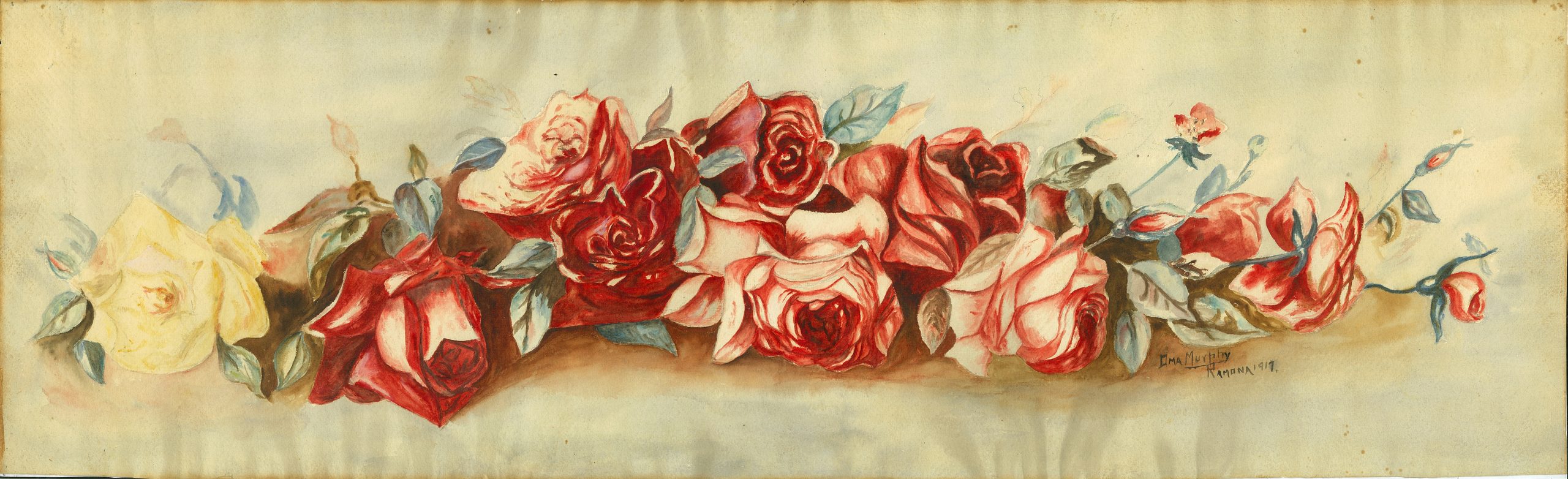
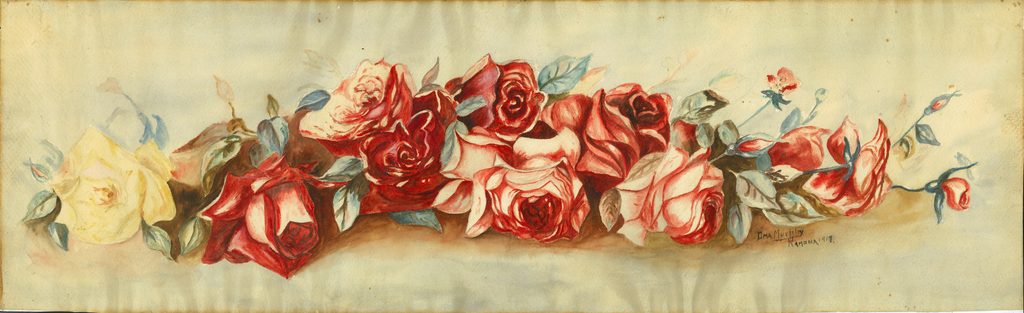
    Her gift shows most clearly in her flowers. A long painting of roses has survived in remarkable condition, with red, pink, cream and pale yellow blossoms stretched across the canvas among delicate leaves and stems. The flowers each have their own shape and personality. The painting as a whole has an elegance that feels timeless.

    Roses, painted by RLena Murphy Faulk.

    It is easy to imagine a painting like this hanging in a home for decades, admired every day by people who know who painted it without ever stopping to think about how good she was. That happens to many talented people. It happened to her. One day someone looks at the painting again with fresh eyes and realizes that the woman who made those roses was extraordinarily gifted.

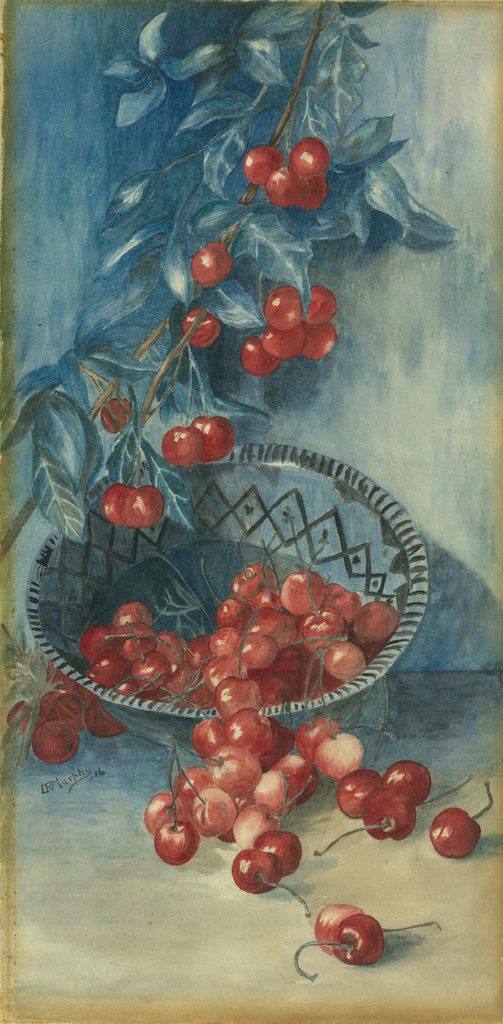
    Another painting shows bright red cherries spilling from a basket against a cool blue and green background. The red fruit catches the eye immediately while the cooler colors behind it give the picture depth. The cherries tumble down the canvas with a natural looseness that makes the whole scene feel alive.

    Cherries, painted by RLena.

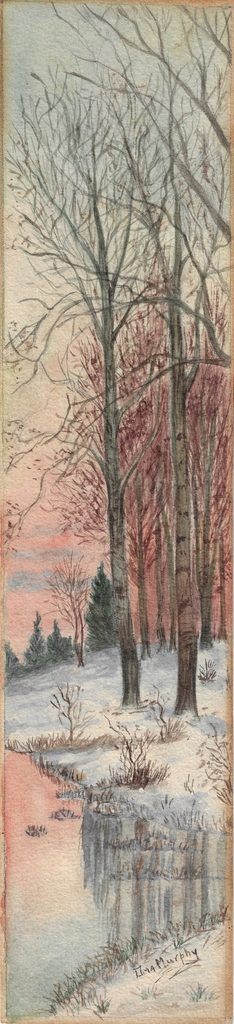
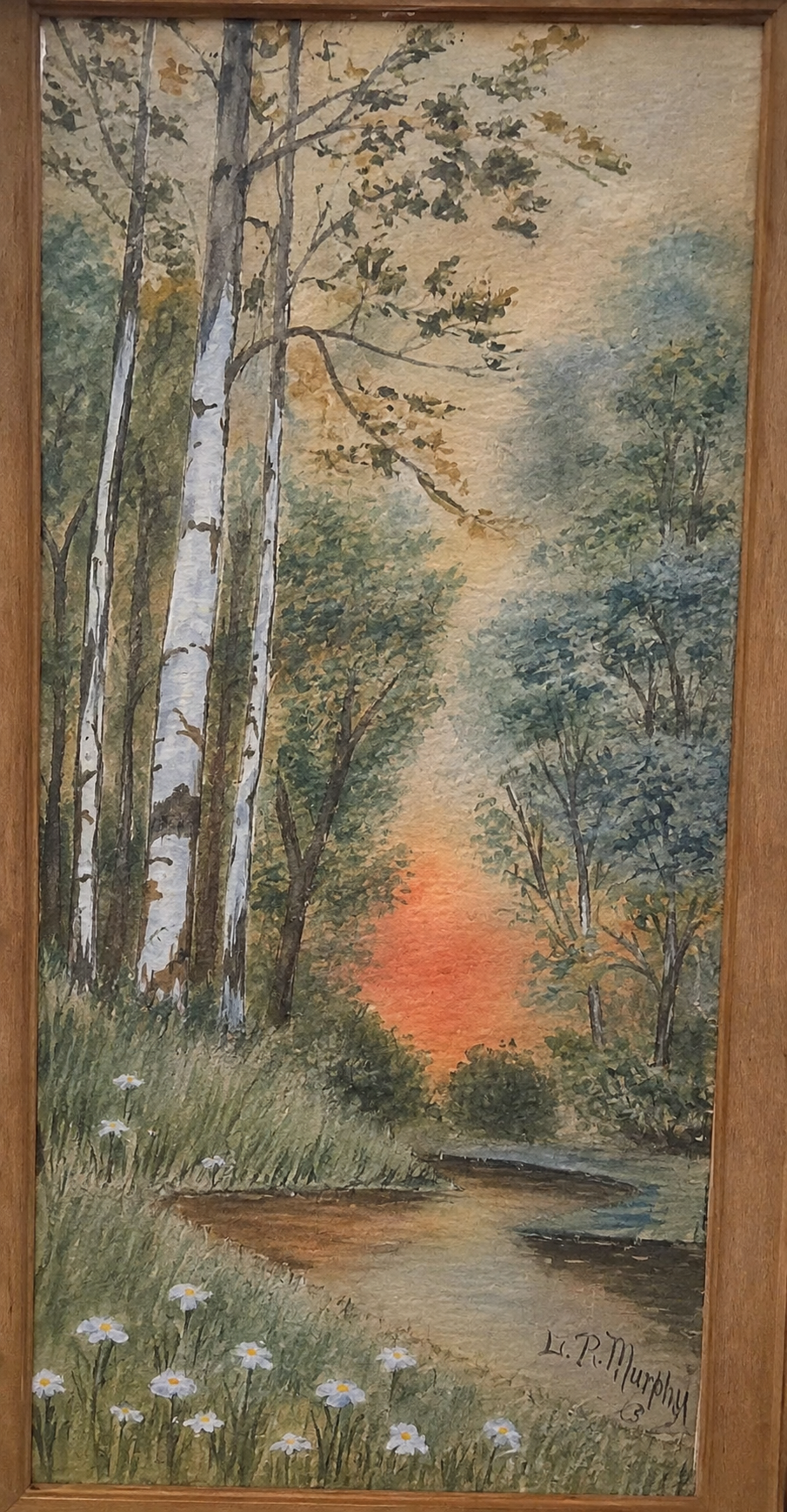
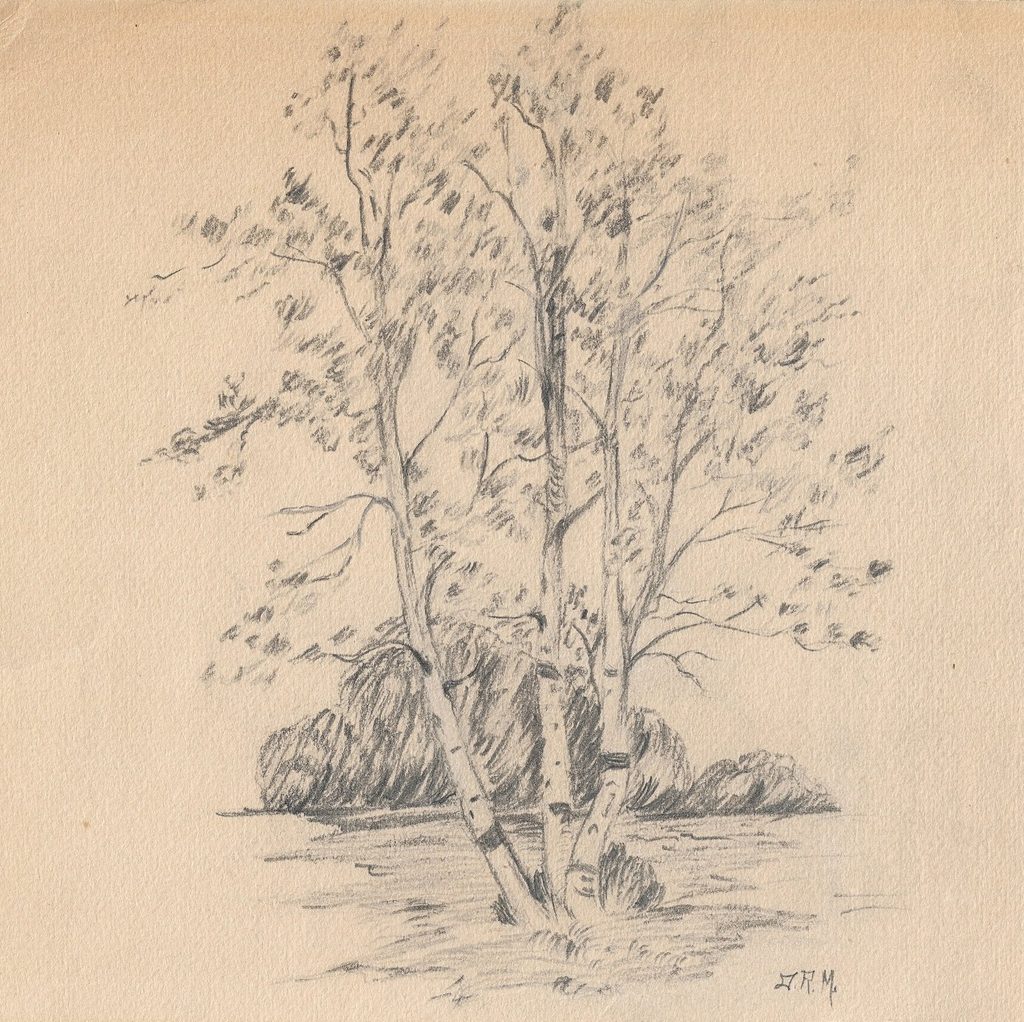
    She also drew and painted the outdoors. There are trees sketched in pencil with loose, confident lines, a snowy winter woodland in soft color, and a quiet forest scene with a stream running through it.

    A pencil study of trees, initialed by RLena.

    A snowy winter woodland in soft color by RLena.

    A woodland scene by RLena.

    Her art was only one part of a much larger life. After graduating in 1916 she stayed on for postgraduate courses at the school, did some substitute teaching while she was still a student, and later taught at the Quaker Mission School in Hillside, north of Skiatook. She also worked in Bartlesville for the Empire Oil and Gas Company as a cartographer and interpreter for foreign dignitaries and workers for what was later to be known as Phillips 66.

    She married Joseph Faulk in Bartlesville on November 11, 1919. Together they took over the bakery from her father in Ramona. Over the years they also ran bakeries in Barnsdall, Skiatook and Collinsville, until the Depression and the arrival of larger grocery stores made it impossible for small family bakeries to survive.

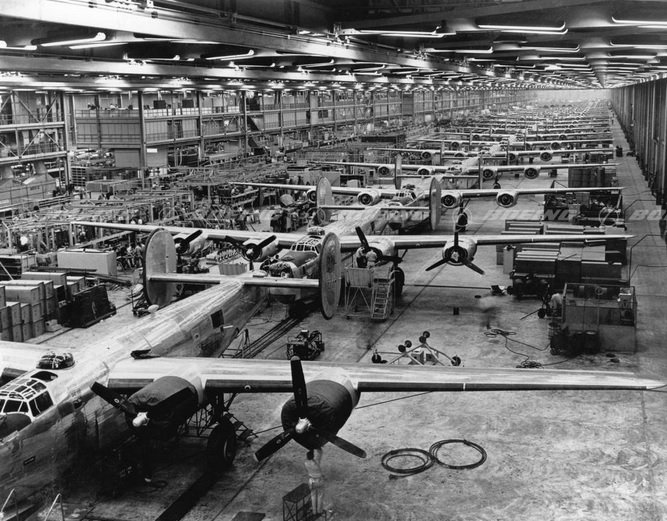
    During the war years she did something that made her especially proud. While living in Collinsville she went to work on the aircraft assembly lines at the Tulsa bomber plant, where B-24 bombers were built. She rode the train from Collinsville to the plant and back six days a week. There was a train station on the south side of the plant just for the workers.

    B-24 bombers on the assembly floor at the Tulsa bomber plant, where RLena worked.

    It is hard to picture the gentle woman of her later years working on an aircraft assembly line, and maybe that is exactly why her story is so moving. Human lives rarely fit into a single description, and hers certainly did not.

    She was an artist, a teacher, an interpreter, a baker’s daughter and a baker herself, an aircraft worker, a writer and a gardener. She was also a homemaker who canned what her husband grew and embroidered in her spare time. Through all of it she kept that same creative eye.

    RLena with her sisters Georgia and Leona.

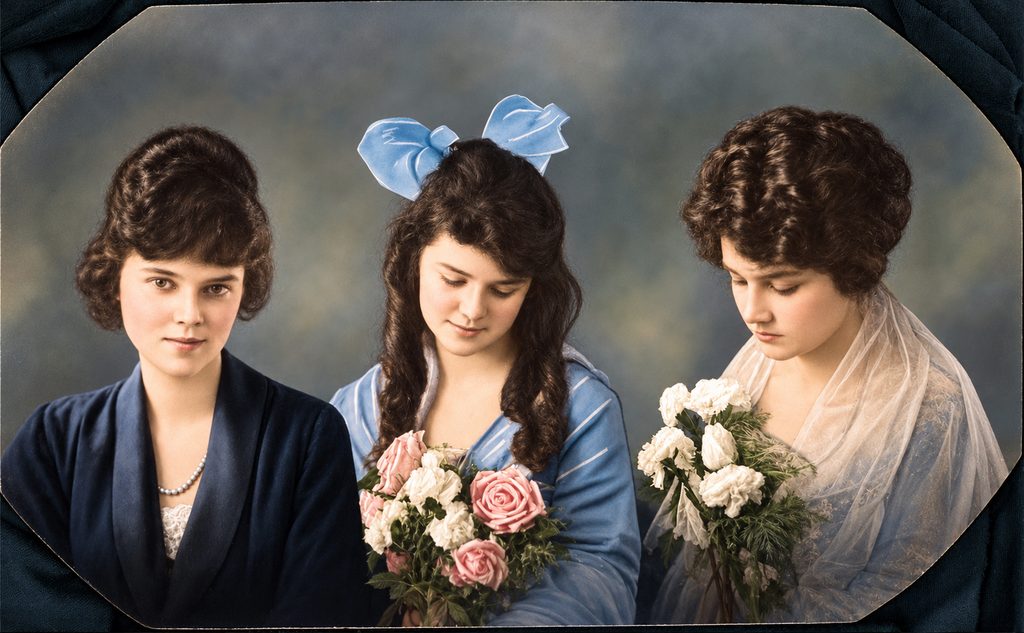
    Family meant everything to her, and she was proud of every one of her brothers and sisters. Many photographs of her as a young woman have survived, along with self-portraits, often showing her with her sisters. Together they show a lively young woman who loved drawing and painting the people closest to her.

    She also cared deeply about history. In her later years she wrote articles for The Collinsville News and the Skiatook Journal about early Ramona, Barnsdall, Hillside, Skiatook and Collinsville. Her memories of teachers, neighbors, school parties and the early oil days preserved details that could easily have been lost with her generation.

    There is something fitting about an artist becoming a keeper of history, because both require the same kind of attention. An artist notices the shadow beneath a bowl or the curl of a rose petal, and a historian notices the small things everyone else forgets. RLena did both.

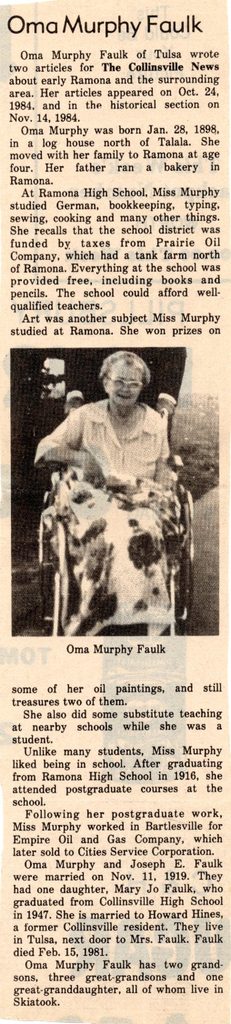
    A newspaper profile of Oma Murphy Faulk, which noted her art prizes and the two early oil paintings she still treasured.

    Those who knew her in her later years remember a quiet, gentle woman, small in stature, who almost always wore an apron around the house. There was usually something cooking or baking, and the smell of fresh bread seemed to belong to her home. She never acted like someone who expected recognition, which is likely a big reason her artistic talent stayed largely unknown outside her family.

    She painted for the simple joy of it, the way a girl in a small Oklahoma town paints when she has a gift and loves using it. She kept that joy long after most people would have put the brushes away.

    Time has not been equally kind to every piece. Some of the drawings have faded, the paper has yellowed and some of the corners have worn away. Yet the images remain, and with them remains something of the woman who made them.

    That is one of the more remarkable things about art. A voice eventually goes silent, memories grow less clear, and the towns we knew change until we hardly recognize them, but the mark a hand once made on paper with a simple pencil or a handmade brush is still there.

    More than a hundred years later we can still look at her work and see the choices she made, where she darkened a shadow, softened a face, shaped a flower or placed a tree. For a moment the distance between her world and ours becomes very small.

    RLena passed away on December 27, 1988, in Collinsville, Oklahoma, at the age of eighty-nine. She rests at Ridgelawn Cemetery beside her husband, Joseph, and their daughter, Mary Jo.

    Her paintings may never hang in a major museum, and they do not need to. They are still here, more than a century after she first picked up a pencil and brush. She felt the pain of doing so, yet she was determined to continue, and perhaps the greatest tribute we can give an unknown artist is simply to look again.

    I have looked at her paintings and drawings many times, and I will keep looking for as long as I can. Oma RLena Murphy Faulk was my grandmother, and she was truly an angel to me in my life, a bright, shining light just as her name was meant to say. I hope that some of her artistic talent, and a little of her DNA, has been passed down to the generations of our family who come after me. Grandma, I wish I had told you more often while you were here just how much I loved you and how proud I was of you. I hope you somehow know that now.

    You would be so proud of your grandchildren and of the families they have built. Your love, your strength, your talent and the life you created continue through all of them. I know you would be, as I am, proud of the people they have become and the generations that will follow.

  • These Two Sand Pumps are  Quietly Protecting Palm Beach County’s Beaches

    These Two Sand Pumps are Quietly Protecting Palm Beach County’s Beaches

    Most people visiting the beaches of Palm Beach County never give much thought to where all that beautiful sand comes from…or where it goes.

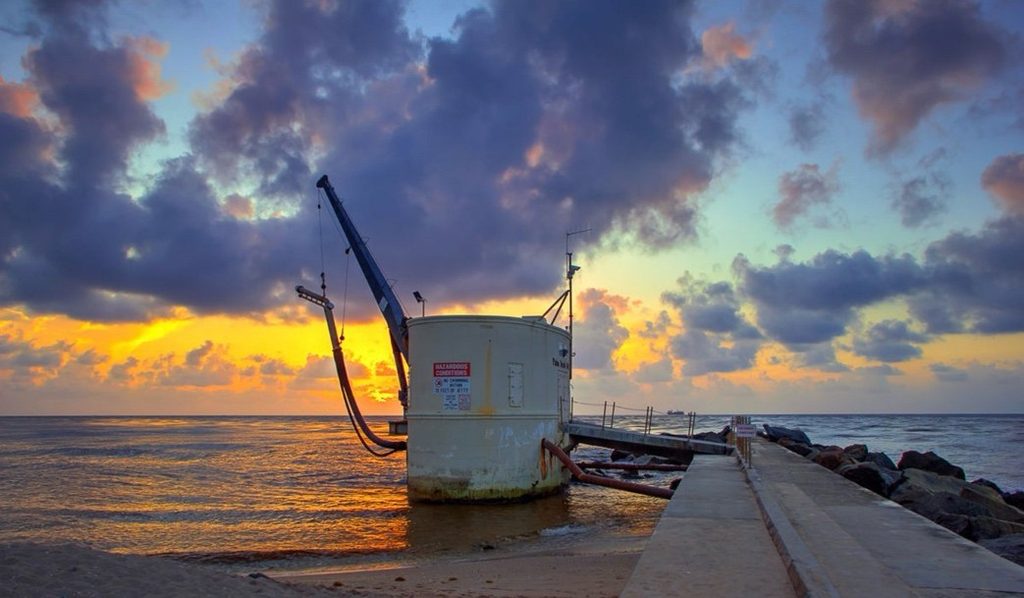
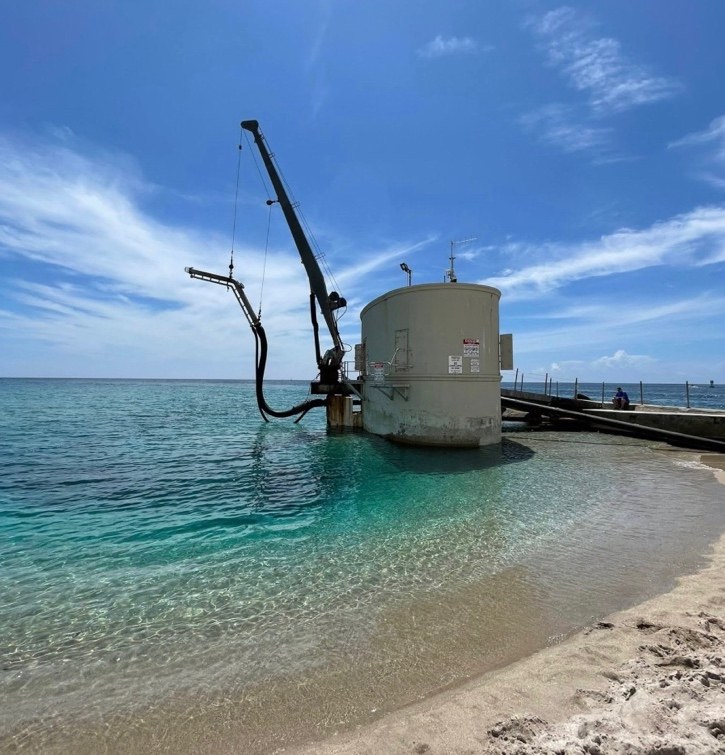
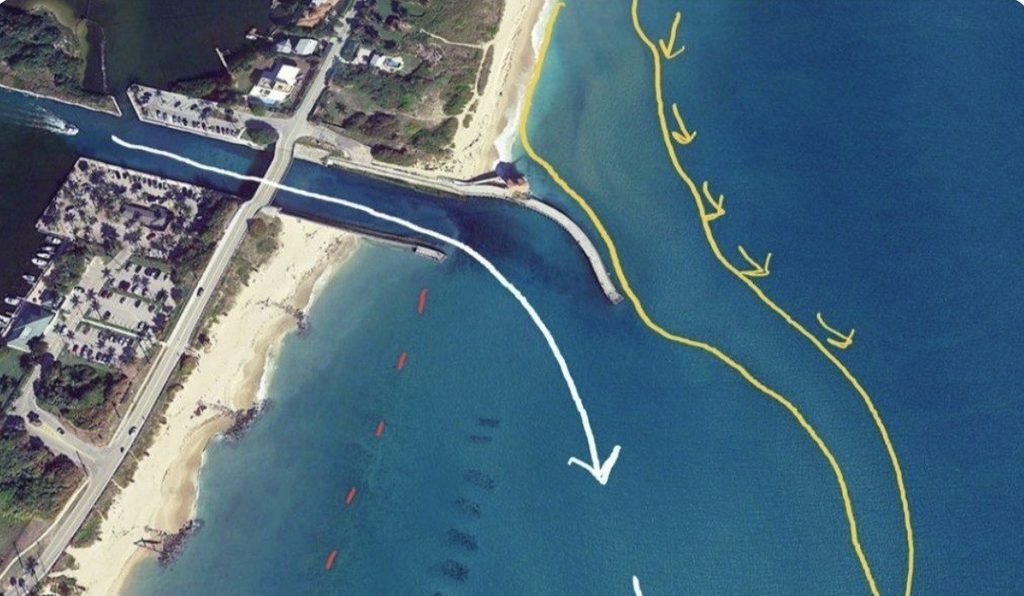
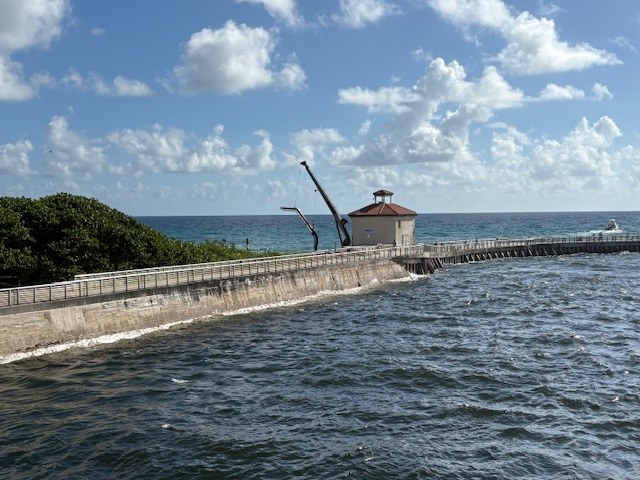
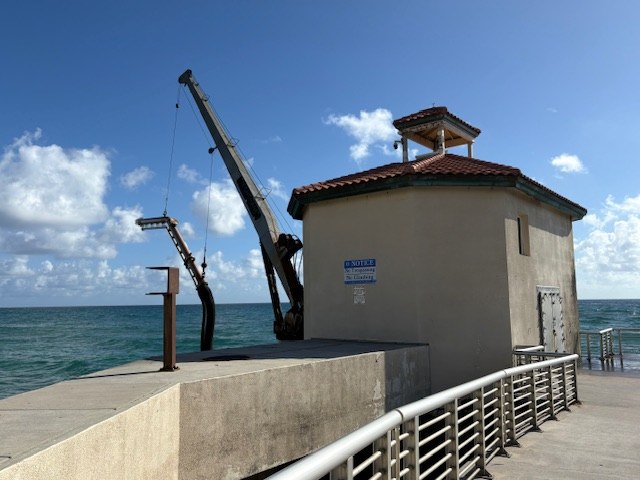
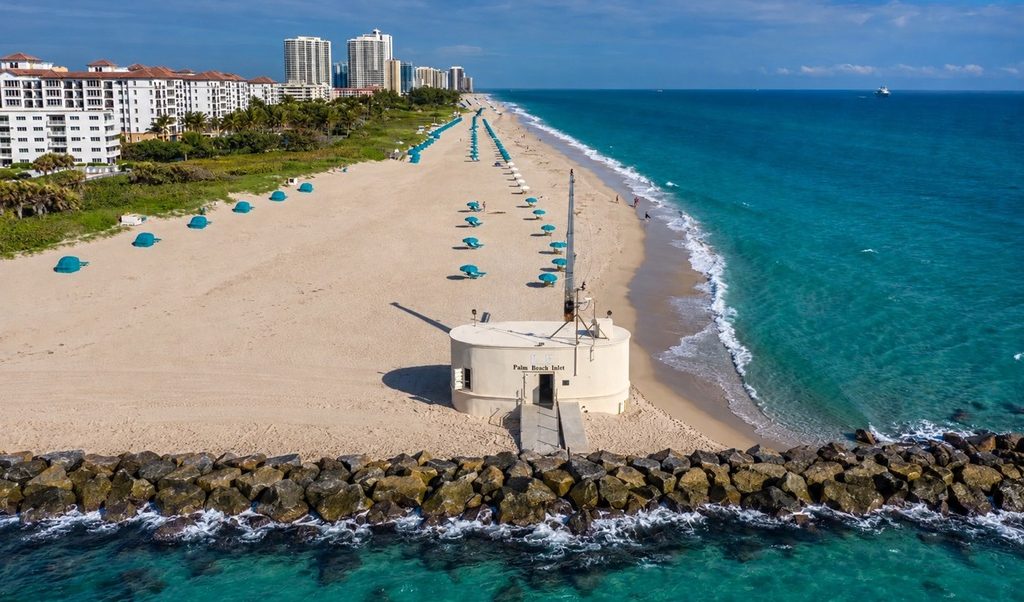
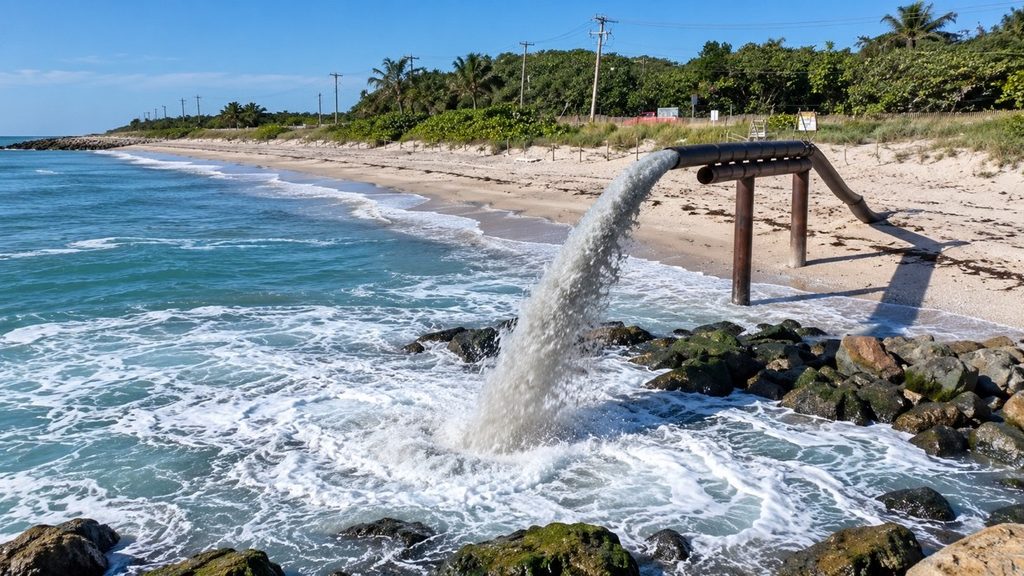
    But along our coastline are two unusual pieces of machinery that have been quietly working for decades to help keep sand moving in the direction nature intended. They are known as sand transfer plants, or more simply, sand pumps, and Palm Beach County has two permanent ones, one at the Lake Worth Inlet, commonly called the Palm Beach Inlet, and another at the South Lake Worth Inlet, better known as the Boynton Inlet.

    And what you might not know is that these two permanent sand pumps are the only two in the state of Florida.

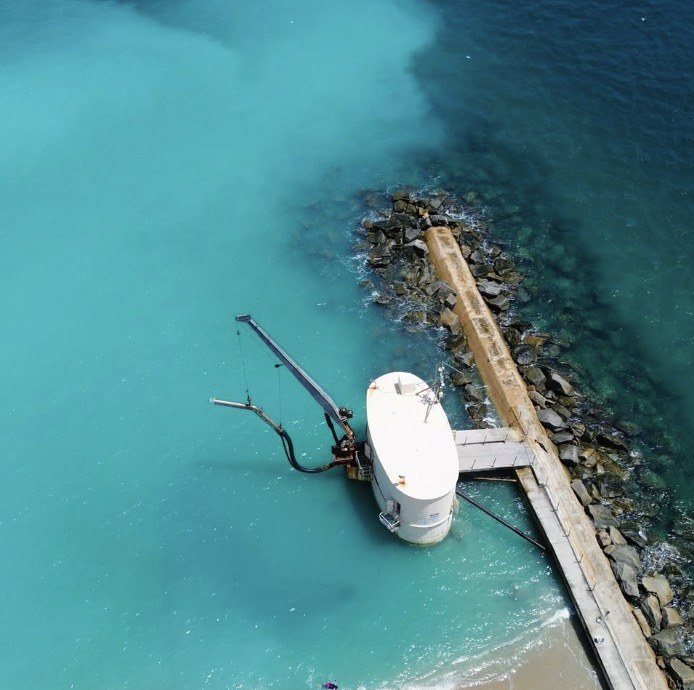
    Their job sounds simple. Pick up sand on one side of an inlet and pump it to the other.

    But the reason they exist tells an interesting story about what happened when people began changing Florida’s coastline.

    Sand along Palm Beach County’s Atlantic shore is constantly on the move. Waves, wind and currents carry it in both directions, but the predominant movement here is toward the south. Think of the shoreline as a slow-moving river of sand.

    Then humans built and stabilized inlets.

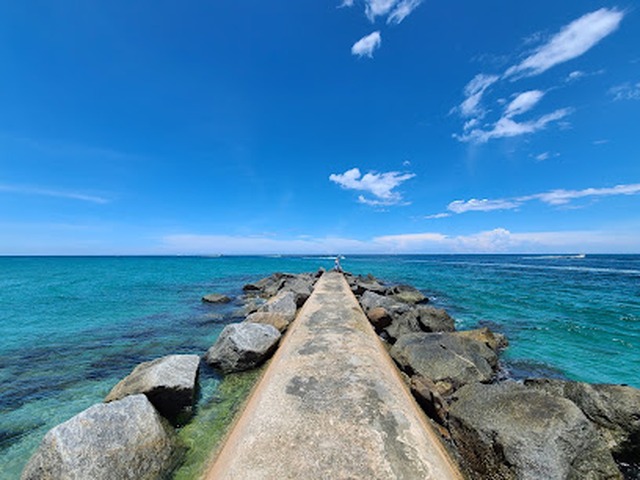
    Rock jetties extending into the ocean interrupted that natural movement. Sand began piling up on the north side of the inlets, while beaches immediately to the south were deprived of sand they would normally have received. Over time, those southern beaches could erode.

    Engineers needed a way to get the sand around the obstruction.

    The answer was the sand pump.

    A Palm Beach County First

    The South Lake Worth Inlet at Boynton Beach has an especially fascinating history. The man-made inlet was completed in 1927, connecting the Intracoastal with the Atlantic Ocean. Just ten years later, in 1937, a permanent sand transfer plant was constructed on its north side.

    That Boynton Inlet facility is widely recognized as the first fixed sand transfer plant of its kind in the world.

    Its purpose was straightforward. Sand collecting against the north jetty could be sucked up, mixed with water, moved through a pipeline, and discharged onto the beach south of the inlet.

    The original plant was rebuilt in 1967, and Palm Beach County constructed a new modern facility in 2011. Today, the county reports that the plant transfers approximately 70,000 cubic yards of sand each year to beaches south of Boynton Inlet.

    That is a remarkable amount of sand quietly being returned to the coastal system.

    The Palm Beach Inlet Pump

    Farther north, another permanent sand transfer plant operates at the Lake Worth, or Palm Beach, Inlet located in Palm Beach Shores on Singer Island.

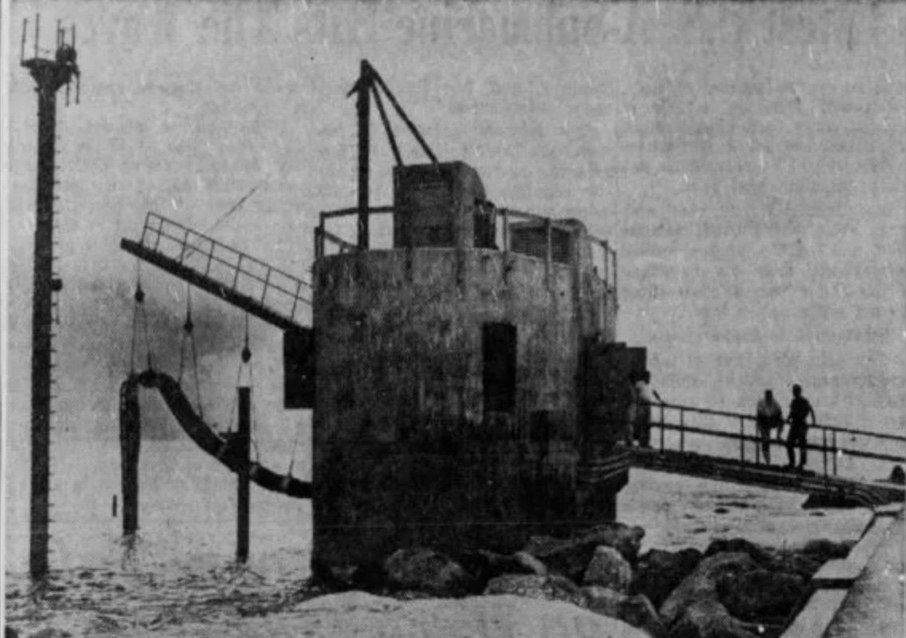
    The facility began operating in 1958 along the north jetty. Like its Boynton counterpart, it collects sand that would otherwise accumulate on the north side and sends it beneath or around the inlet to the shoreline on the south side. Historical records show that the plant has been moving sand around the Palm Beach Inlet for more than six decades.

    These systems do more than make our beaches look pretty.

    Keeping sand moving helps protect roads, buildings and coastal property from storms. Wider beaches provide recreational space and important habitat, including nesting areas for sea turtles. Moving accumulated sand can also help prevent it from becoming trapped in inlet shoals and interfering with navigation.

    That is what makes these two machines so interesting to me. 

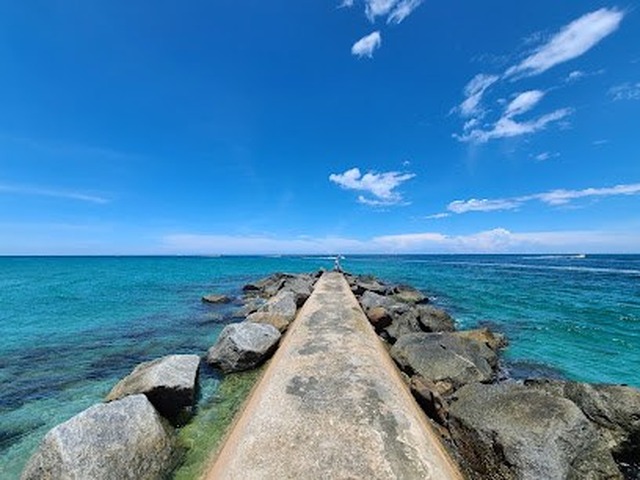
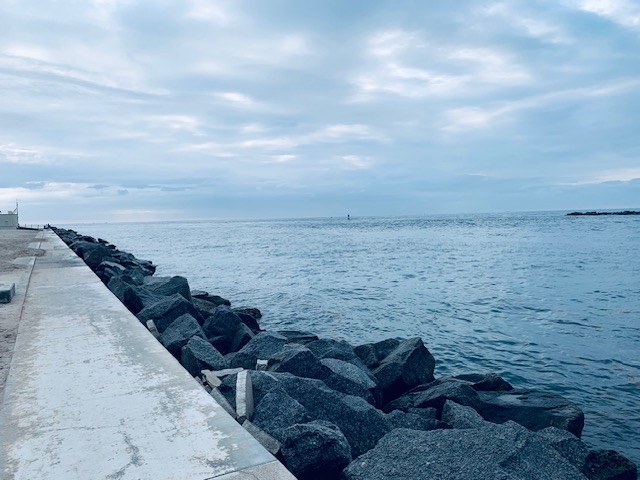
    Thousands of people cross the Boynton Inlet bridge, travel through the Palm Beach Inlet, fish from nearby jetties, or spend the day on these beaches without realizing that an engineering system is working nearby to imitate a natural process interrupted nearly a century ago.

    The sand pumps literally pump sand mixed with water through pipes, and at the Palm Beach Inlet the pipe runs right UNDER the inlet. The Boynton plant alone moves about 70,000 cubic yards of sand a year, every year. To put this in perspective, that is roughly 7,000 dump truck loads of sand moved without a single truck ever hitting the road.

    They are not famous landmarks.

    They do not appear on many tourist brochures.

    But grain by grain, year after year, Palm Beach County’s two permanent sand pumps continue doing their part to keep our coastline moving…and to preserve the beaches generations of South Floridians have come to love.

    Another interesting fact about the sand pump on Singer Island is that it is said to sit near the easternmost point of Florida.

  • He Wore the Badge for Five Weeks

    He Wore the Badge for Five Weeks

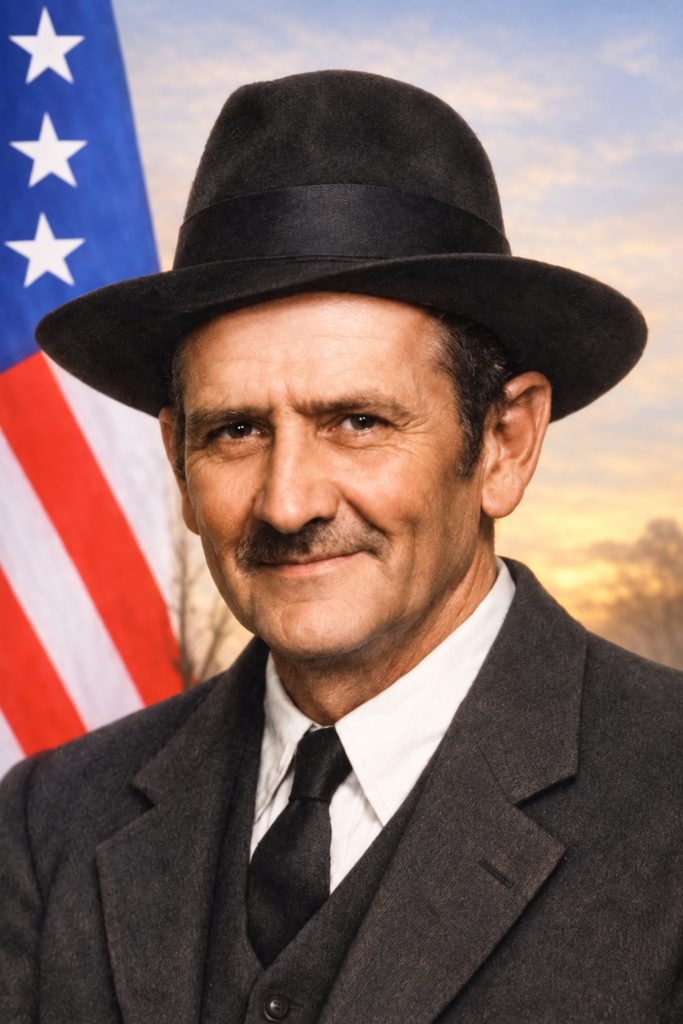
    Some names belong in history books, and others belong in the hearts of the communities they served. Deputy George Clement “Clem” Douglas belongs in both.

    He was born on January 15, 1871, in Sylacauga, Alabama, and he was never a man who spent his life chasing a badge. Law enforcement came to him late in life. Long before anyone called him Deputy, he was a husband and father, a farmer and beekeeper, a baseball coach and a good neighbor.

    By 1920 Clem had brought his family south to a small settlement on the southern shore of Lake Okeechobee called Bare Beach. It was a rough, isolated place where people leaned heavily on one another. Clem kept twenty-eight hives of honeybees that worked the orange groves around the settlement, and he threw himself into the life of the community. He coached baseball and served on the local advisory board, and he earned a reputation as a man you could count on when something needed doing.

    That reputation is what led his neighbors to ask him to become their deputy. Clem did not go looking for the job. He took it because his community needed someone they trusted, and on July 19, 1921, at fifty years old, George Clement Douglas took the oath of office as a Palm Beach County deputy. Only five weeks later, he would give his life keeping that oath.

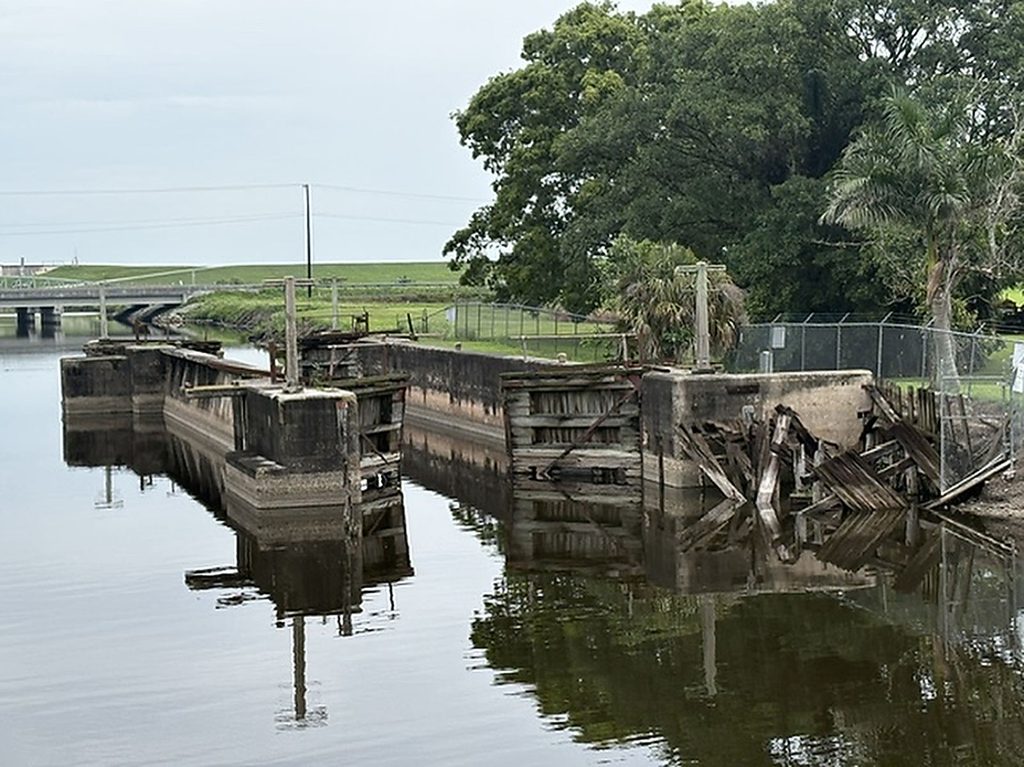
    On Saturday, August 27, 1921, Clem was over in Moore Haven coaching the Bare Beach baseball team when word reached him of trouble at the canal locks in Lake Harbor. A laborer named Sam Wells was accused of cheating another man out of his paycheck in a card game.

    Clem had no one to back him up. He borrowed a Model T pickup and an old World War I pistol a neighbor gave him, and he headed for the work camp with his seventeen-year-old son, Howard, riding beside him.

    Father and son reached the camp late that afternoon. Clem walked up to the small shack where Wells was believed to be hiding, and words were exchanged. Then a rifle fired, and Clem fell.

    Howard ran to his father, and a second shot hit the boy in the back and pierced his lung. Badly wounded, he pressed the corner of his shirt into the bullet hole, and that may well have saved his life. He was rushed across Lake Okeechobee by boat to Good Samaritan Hospital in West Palm Beach, and somehow he survived. His father did not.

    Sam Wells vanished into the vast swamps around the lake. In spite of posses, rewards and long searches, he was never caught.

    Clem’s death sent shockwaves through the young county. He had worn the badge for only a matter of weeks, but he had already shown the quality that defined his whole life, a sense of responsibility to the people around him.

    He was buried at Bare Beach, the community he served and called home. In the years that followed, hurricanes, rising water and the changing shoreline of Lake Okeechobee slowly erased most of that settlement. Even the old graveyard and Clem’s resting place were lost to time.

    But his name was not. Deputy George Clement “Clem” Douglas is remembered as the first Palm Beach County deputy to die in the line of duty, and more than a century later his story still matters.

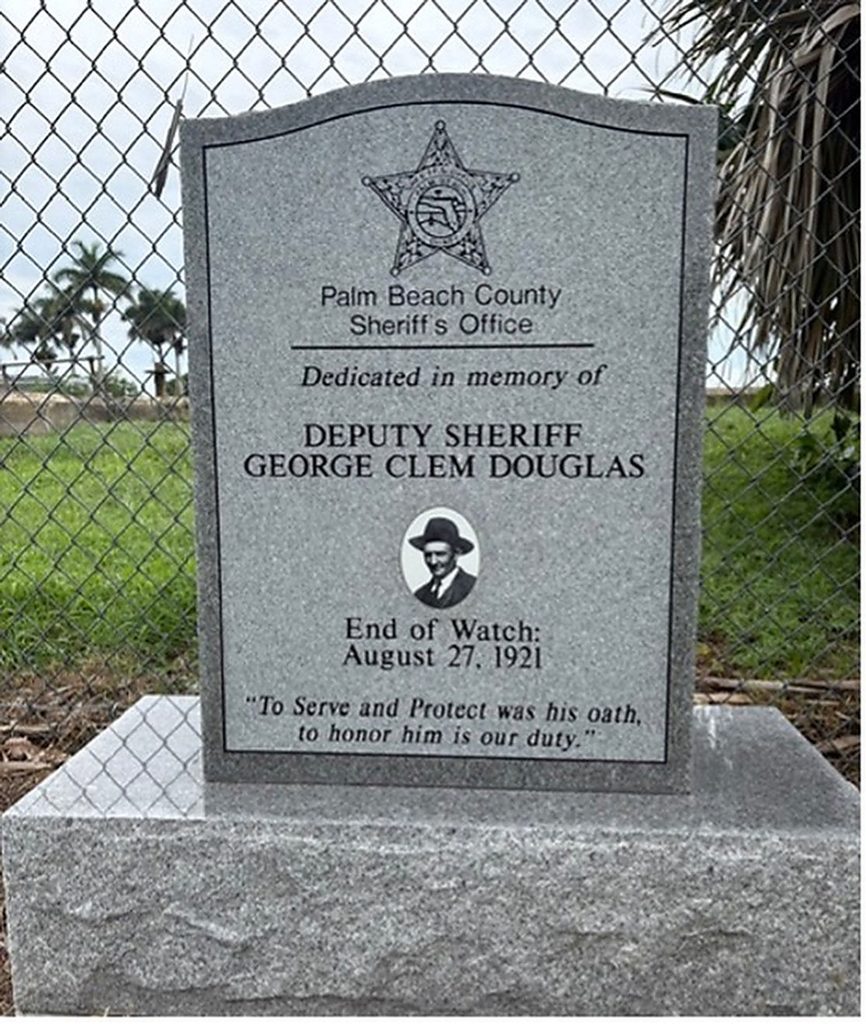
    When I look at his photograph or stand beside the memorial that bears his name, I don’t simply see a lawman from 1921. I see a husband and a father, a beekeeper and a baseball coach, and a neighbor who answered when his community asked him to serve. Every time I clean and care for his memorial, I feel honored to do it.

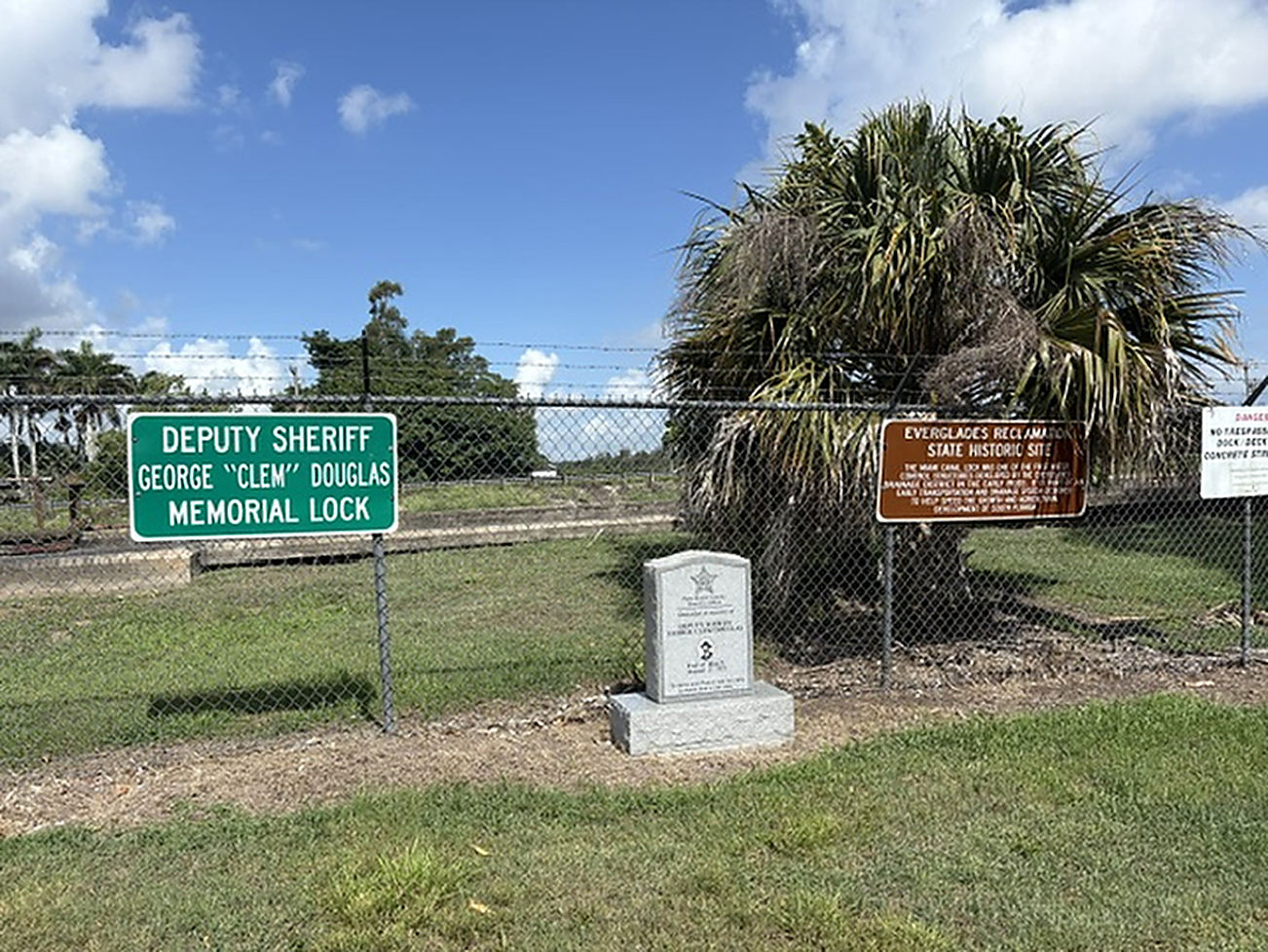
    If you ever drive along the south side of Lake Okeechobee on Highway 27, I hope you’ll stop in Lake Harbor and pay your respects to this brave man. His memorial stands at the fence line beside the old canal locks, near where he fell, at GPS coordinates 26.693673, -80.806997.

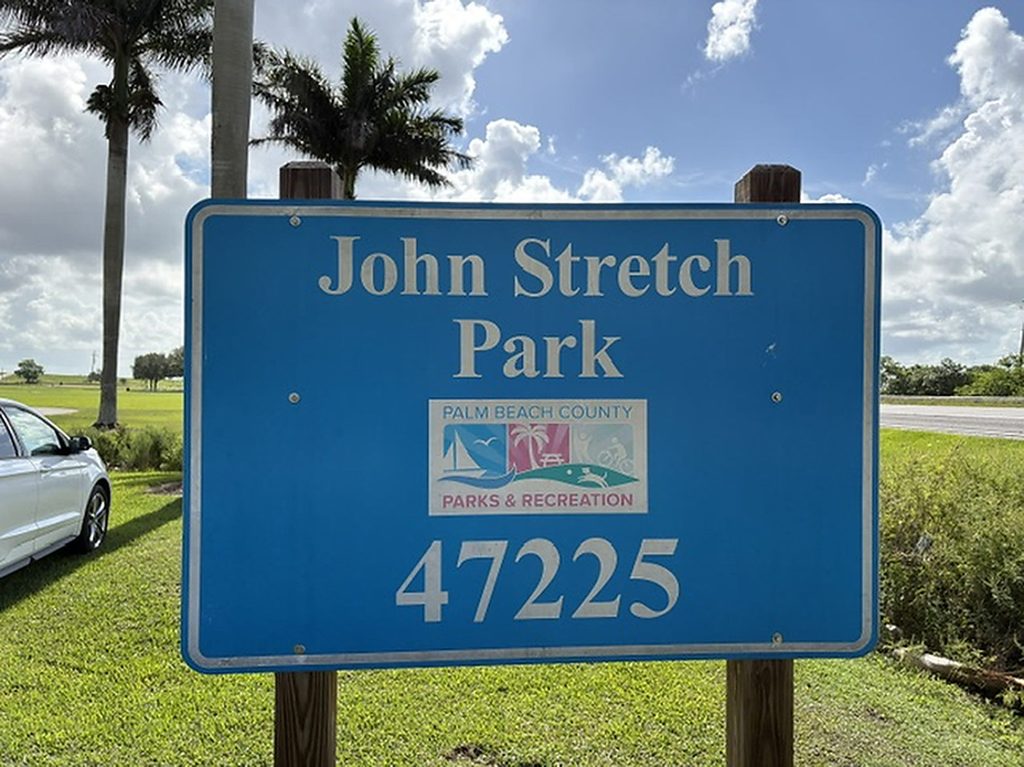
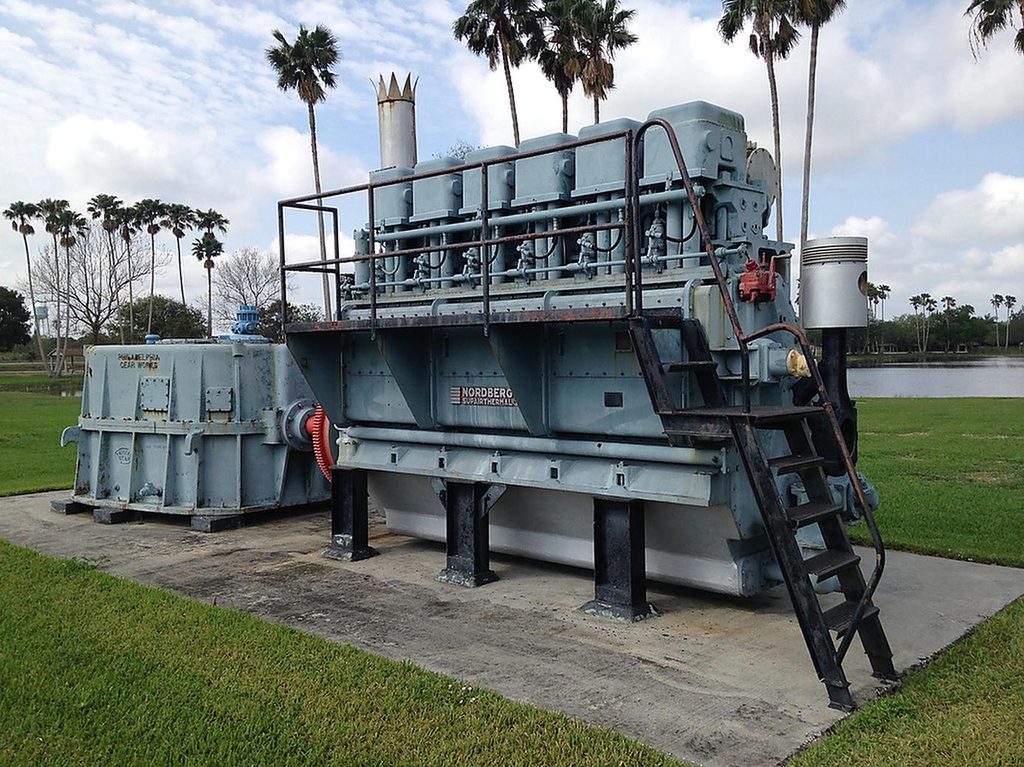
    While you’re there, take a little time to enjoy John Stretch Park at 47225 U.S. Highway 27. It’s a pretty little park right on the lake, with shady picnic shelters and grills, a playground and a walking path along the Lake Okeechobee Scenic Trail. You’ll also find a piece of Glades history on display, a giant old Nordberg diesel engine that once drove the pumps holding back the water so this farmland could exist. It’s a peaceful spot for a picnic, and a fitting place to sit for a minute and think about a man who gave everything for his neighbors.

    He wore the badge for only five weeks, but his sacrifice has lasted more than one hundred years.

    To Serve and Protect was his oath. To honor him is our duty.

    10-42. End of Watch.

    Rest in peace, Deputy George Clement “Clem” Douglas.

    One more note. If you’d like to read about more of the brave officers who gave their lives in the line of duty, please take a look at my book series Tears of Blue. Book One, Tears of Blue on the Gold Coast, honors the law enforcement officers of the Palm Beach County area who made the ultimate sacrifice. You will find some amazing facts about some amazing people I am sure you will enjoy.

  • Keeping Watch Over Two Little Graves on Via Mizner

    Keeping Watch Over Two Little Graves on Via Mizner

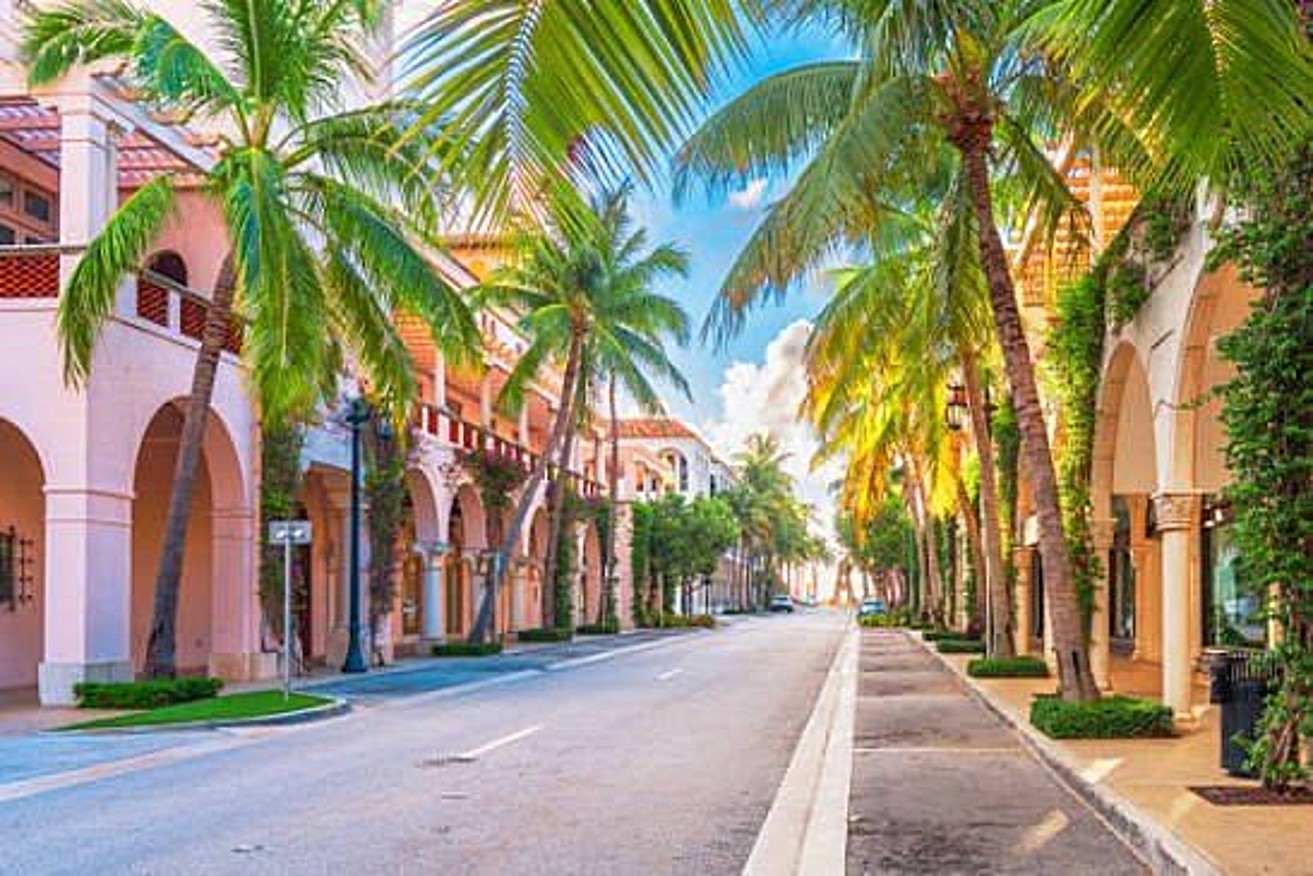
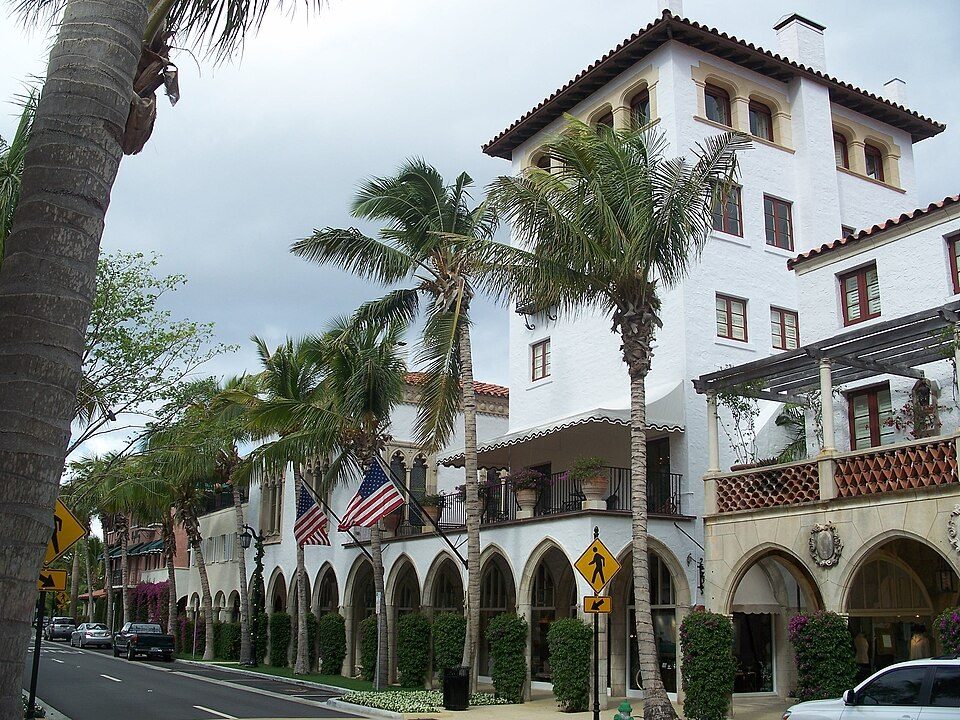
    Palm Beach is famous for the shops along Worth Avenue. Tiffany, Gucci, Louis Vuitton and Loro Piana all sit within a stone’s throw of one another, and on most afternoons the sidewalks are busy with shoppers, window browsers and visitors stopping to take pictures.

    Palm trees along Worth Avenue in Palm Beach
    Worth Avenue, lined with palms and some of the most famous shops in the world

    But there are places in Palm Beach where you can walk only a few steps and feel as though you have traveled much farther, maybe even back in time. For my wife and me, one of those places is Via Mizner, just off Worth Avenue.

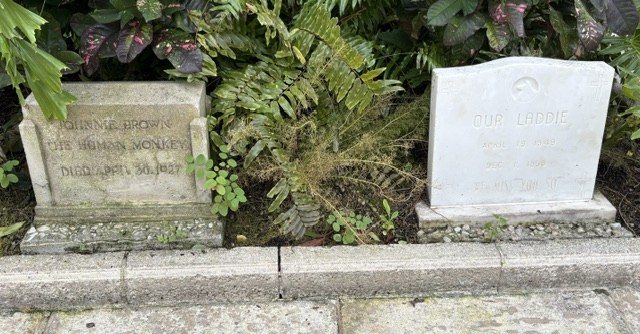
    Tucked among the courtyards, old stucco walls, archways, flowers and tropical greenery are two small headstones that most people walk right past without ever noticing. They belong to Johnnie Brown and Our Laddie.

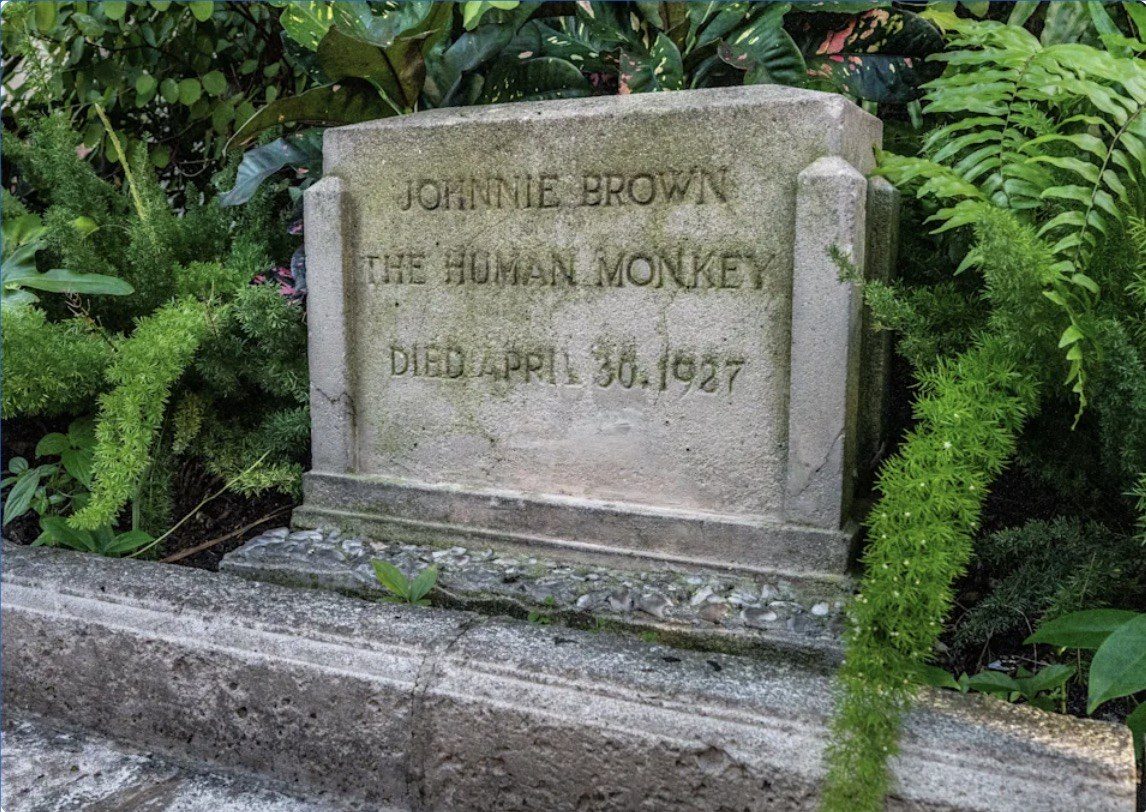
    Johnnie Brown was the beloved spider monkey of Addison Mizner, the famed architect whose imagination gave so much of old Palm Beach its unmistakable character. Johnnie was Mizner’s constant companion, and people around town often saw him riding on the architect’s shoulder. When Johnnie died on April 30, 1927, Mizner buried him near his home on Via Mizner. His headstone still calls him “The Human Monkey,” which tells you a good deal about how Mizner felt about him.

    Headstone reading Johnnie Brown, The Human Monkey, Died April 30, 1927
    Johnnie Brown’s headstone, “The Human Monkey,” who died April 30, 1927

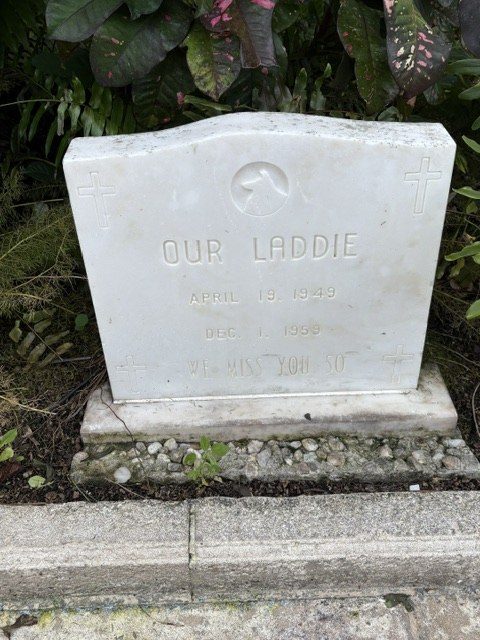
    Years later, Rose and Morton Sachs, who came to live in the villa, buried their dog Laddie beside him. Laddie’s white marble stone has a small dog’s head carved at the top and the words “Our Laddie” beneath it. He was born April 19, 1949, and died December 1, 1959, and at the bottom his family added four simple words, “We Miss You So.” Together those two small graves have become one of the most unusual and endearing pieces of Palm Beach history.

    White marble headstone reading Our Laddie, April 19, 1949, Dec. 1, 1959, We Miss You So
    Our Laddie, April 19, 1949, to December 1, 1959, “We Miss You So”

    My wife and I have taken it upon ourselves to help care for these two little headstones. They are among several headstones and monuments in the area that we help maintain.

    There is something meaningful about it that is hard to put into words. We know Johnnie Brown and Laddie were animals, but those two stones stand for something very human, and that is love, companionship and remembrance. Someone cared enough about each of them to make sure their lives would be remembered. Nearly a century later, we feel that history still deserves to be cared for.

    If you would like to visit them yourself, the headstones are located at GPS coordinates 26.701191, -80.040476. Please treat the spot gently when you go. These are graves, after all, and the courtyard around them belongs to the people who live and work there.

    The setting makes it even more special. Walking through the vias along Worth Avenue is one of my favorite things to do in Palm Beach. Via Mizner and Via Parigi were the original vias Addison Mizner designed in the 1920s. He laid them out with narrow pedestrian passages, courtyards, arches, fountains and lush plantings, all meant to give visitors the feeling of wandering through an old Mediterranean village.
    Mizner's Mediterranean style tower building on Worth Avenue
    The Mizner buildings on Worth Avenue at the entrance to Via Mizner

    But when I walk through them, I feel something a little different. To me it feels almost like stepping into Paris or Buenos Aires in the 1950s.

    You leave the traffic and the busy world behind, and suddenly you are walking along narrow passageways past little shops and elegant boutiques. Around one corner is a quiet courtyard. Nearby there are tables set out for a sidewalk café, and on another corner sits a small bistro. Flowers spill over walls and balconies, fountains break the silence, and old archways lead to another little passage you didn’t notice before.

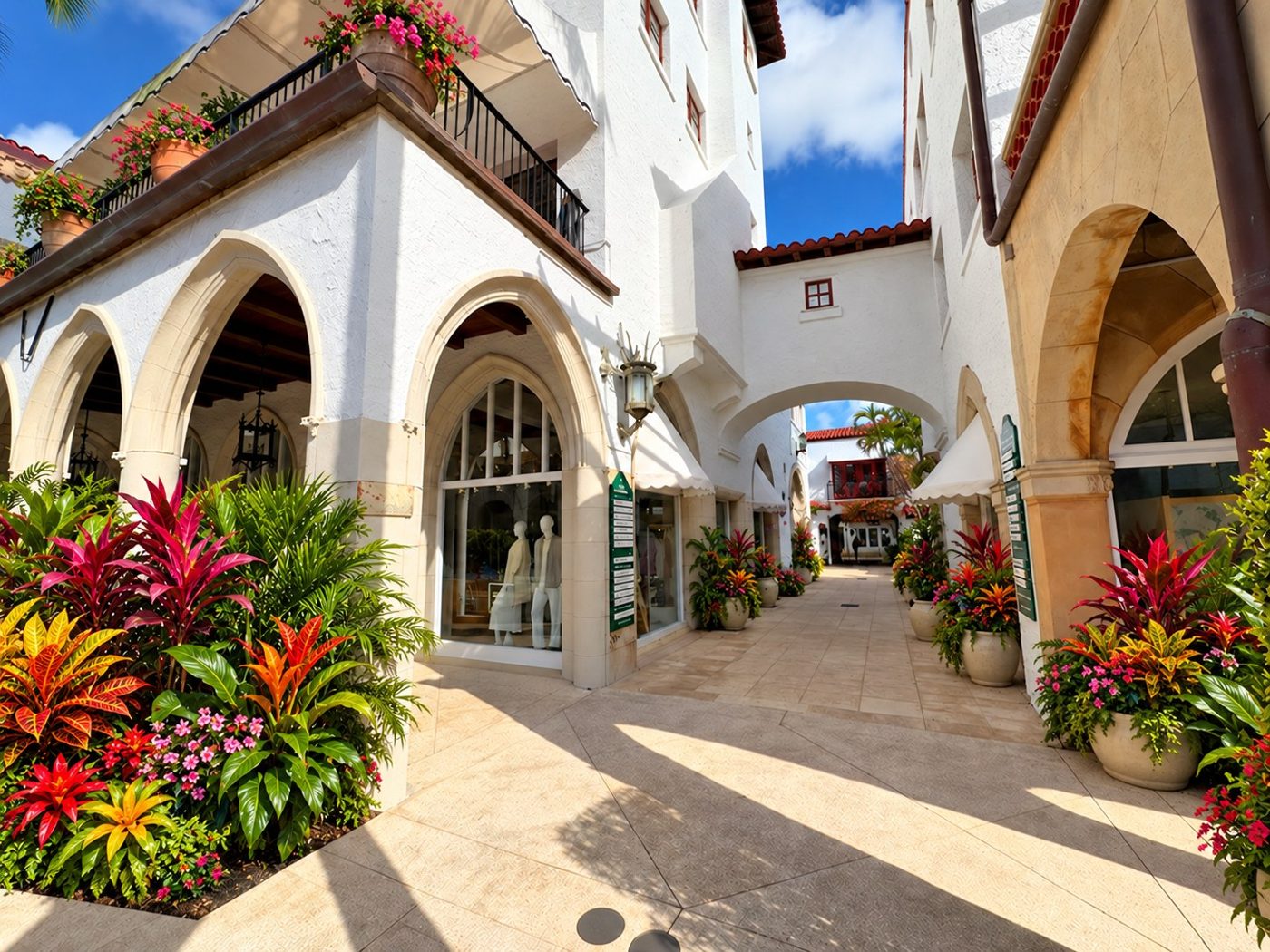
    Arched walkway and flower planters along one of the Worth Avenue vias
    Arches, flowers and a narrow passage that seems to lead somewhere older
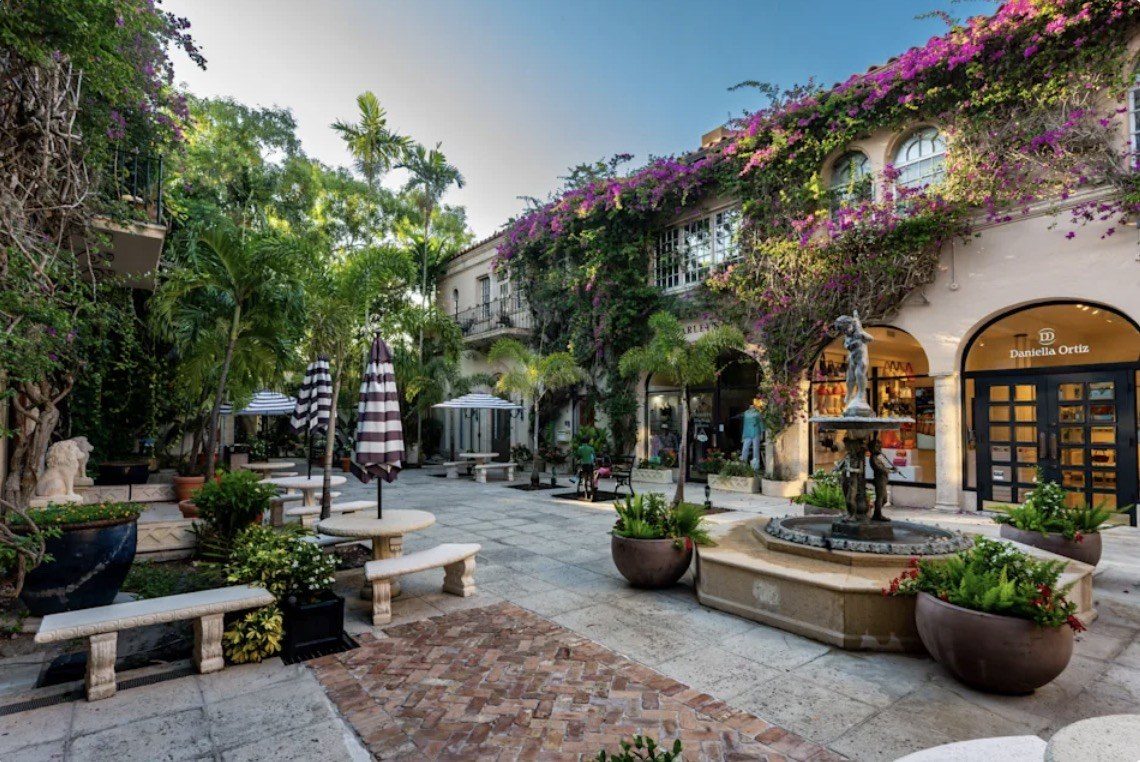
    Courtyard with a fountain, cafe tables and bougainvillea off Worth Avenue
    A quiet courtyard with a fountain, café tables and bougainvillea spilling down the walls

    Even on a warm South Florida day, the shaded vias feel cooler and quieter. You slow down without realizing it, and for a little while there is nowhere you need to be.

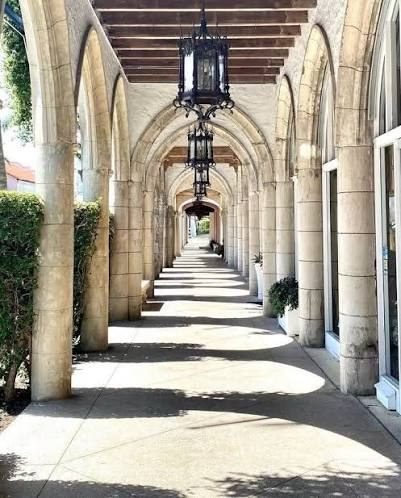
    Shaded arcade with hanging iron lanterns
    The shaded arcade, where the lanterns hang and the afternoon slows down

    That is part of what makes caring for Johnnie Brown and Our Laddie so special to us. Their little resting place belongs to an older Palm Beach, the one hidden behind the storefronts and beneath the bougainvillea. It is the Palm Beach of Addison Mizner walking his vias with a monkey on his shoulder, and it is still there for anyone who takes the time to look.

    My wife and I aren’t doing anything grand when we care for those headstones. We are simply looking after two small pieces of history that might otherwise be overlooked.

    And sometimes preserving history begins exactly that way, by noticing something that everyone else walks past.

  • Caring for a Forgotten Piece of West Palm Beach History

    Caring for a Forgotten Piece of West Palm Beach History

    There are places in a city that everyone knows, and then there are places that quietly hold their history while the rest of the world hurries past. I like to think of them as hidden gems.

    For my wife and me, one of those places is the old home plate site of Connie Mack Field in West Palm Beach.

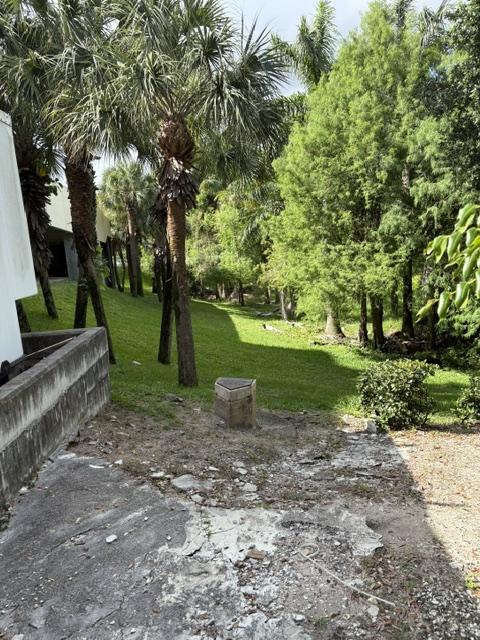
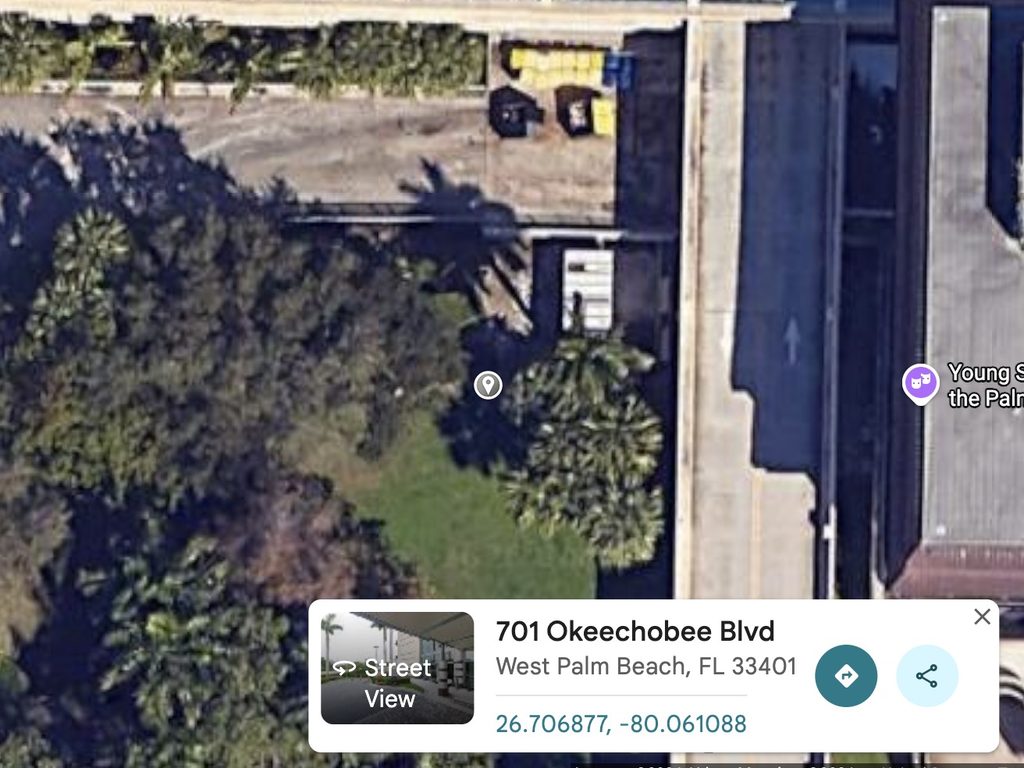
    Today there is no grandstand, no outfield fence and no crowd waiting on the next pitch. Most of the old ballpark has disappeared beneath modern West Palm Beach, near the corner of Tamarind Avenue and Okeechobee Boulevard. The grandstand area is now part of the Kravis Center parking garage, and a portion of the old infield has become a stormwater retention area. Thousands of people drive past it every week on their way to a show, and most of them have no idea what used to be there.

    But one important piece remains.

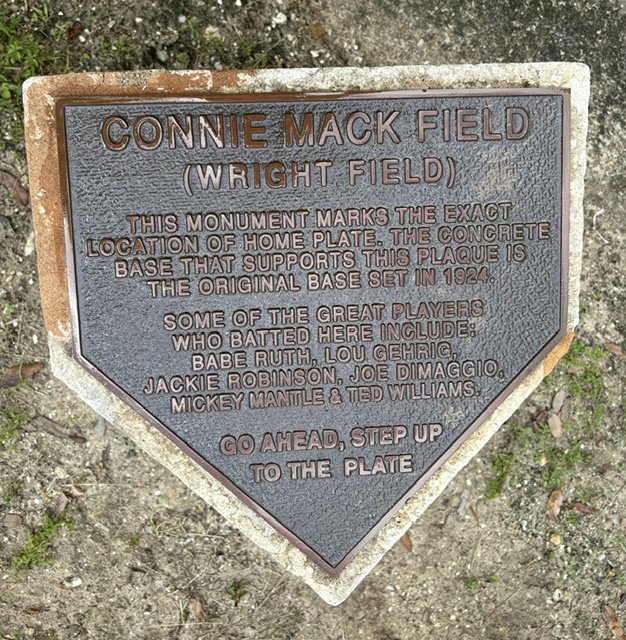
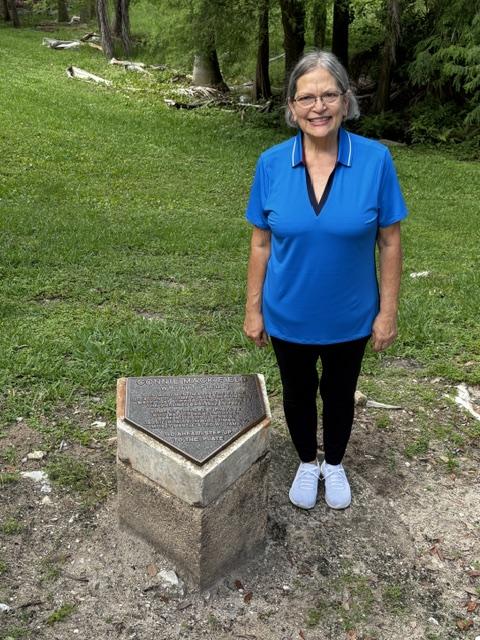
    A small monument marks the exact spot where home plate sat, and beneath it is the original concrete base set there in 1924. My wife and I have spent endless hours cleaning and caring for that little patch of ground every month, because we believe history deserves better than to simply fade away.

    The home plate marker as it is today…forgotten.

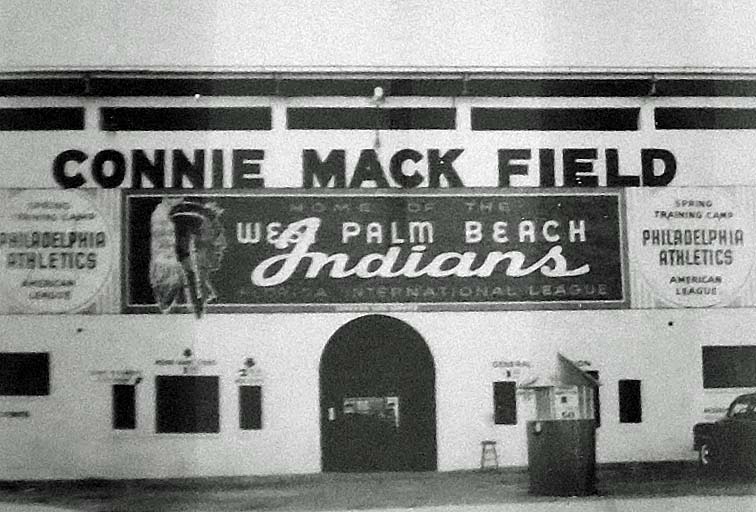
    The field opened in October 1924 as Municipal Athletic Field. In 1927 it was renamed Wright Field for George C. Wright, the city manager at the time. In 1952 it became Connie Mack Field, in honor of the legendary manager who led the Philadelphia Athletics for fifty years.

    Major league teams came south every spring to get ready for the season there. The St. Louis Browns trained at the field from 1928 to 1936. After the war, the Athletics made it their spring home from 1946 to 1962, first as the Philadelphia Athletics and later as the Kansas City Athletics. Alongside them, local teams such as the West Palm Beach Indians filled the summers with baseball and gave the town a team to call its own.

    The names connected to this ground are remarkable.

    Babe Ruth. Lou Gehrig. Jackie Robinson. Joe DiMaggio. Mickey Mantle. Ted Williams.

    Every one of them stepped into the batter’s box at the very spot where that marker stands today, and their names are right there on the marker for anyone who stops to read it.

    One afternoon stands out above the rest. On March 20, 1949, a record crowd of 6,988 people packed into the little ballpark to watch the Athletics take on Jackie Robinson and the Brooklyn Dodgers. General George C. Marshall was in the stands that day, and the A’s won 6 to 0.

    It was a proud day for the field, but it came at a time when Black fans still had to enter through a separate gate and sit in a small section out in the right field corner. Robinson was changing the game, and the ballpark still had a long way to go. That is part of the story too, and it deserves to be remembered as honestly as the rest.

    Connie Mack Field was never only about famous players, though. It belonged to the people of West Palm Beach who came through the gates, worked around the ballpark, cheered from the stands and supported their teams. Together they built a baseball tradition that lasted for generations.

    In February 1992 the bulldozers came, and the field gave way to the parking garage for the new Kravis Center. Years later, the Remembering Connie Mack Field Committee helped keep that history alive with photographs and displays inside the garage, on the first level near the main elevator. If you park there for a show, take a few minutes to look. It is worth it.

    That matters to us. It should matter to you. It’s our history, and it’s your history too.

    When my wife and I clean around that old home plate, we are not just sweeping leaves, clearing debris or cleaning the bronze plaque. We are standing where baseball legends once stood and where generations of local families made memories they carried for the rest of their lives.

    We cannot bring Connie Mack Field back.

    But we can care for what remains.

    As long as someone remembers the story, a piece of Connie Mack Field will always belong to West Palm Beach. My wife and I, for our part, plan to keep it going for as long as we can.

    The next time you are near Tamarind and Okeechobee, stop by and stand at home plate for a moment. You will be standing on history…our history.

    Map showing the home plate site behind the Kravis Center garage
    Home plate sits just behind the Kravis Center garage, near Tamarind Avenue and Okeechobee Boulevard.
  • Welcome to Palm Beach Notes

    Welcome to Palm Beach Notes

    There is something about Florida that has always stayed with me.

    Maybe it is the way the morning light settles over the water, the sound of palm fronds moving in a warm breeze, or the long stretches of sawgrass where the horizon seems to go on forever. Maybe it is the old neighborhoods, forgotten cemeteries, back roads, small towns, and places most people drive past without ever wondering what happened there before.

    I have always wondered.

    That curiosity is at the heart of my writing.

    Over the years, I have written stories about law enforcement, forgotten history, family, mystery, loss, courage, and the secrets that can hide behind even the most beautiful places. Florida has provided the perfect backdrop for many of them because this state has always been more than beaches and sunshine. Beneath the surface are generations of stories waiting to be remembered.

    That is one of the reasons I decided to start this blog.

    Here, I want to go beyond the pages of my books. I want to share the stories behind the stories, the real places that inspire me, pieces of Florida history, photographs, research discoveries, memories, and some of the unusual things I come across while working on a new book.

    I may also share stories and photos of the cemetery headstones I find and clean for people. It can be a real adventure sometimes.

    I will also share news about my writing, upcoming books, current projects, and occasionally a look at how an idea grows from a simple thought into a finished story.

    Most of all, I want this to be a place where readers can stop for a few minutes and discover something interesting.

    Some posts may take us deep into the Everglades. Others may lead to an old cemetery, a forgotten South Florida neighborhood, a hidden Palm Beach via, a historic building, or a story that deserves to be told again.

    Florida has changed tremendously over the years, but its stories are still here.

    You just have to know where to look.

    I hope you will join me as we search for them.

    Again…Welcome to my blog…Palm Beach Notes.

    I am glad you are here.

    Howard Mark Hines