
There are places in a city that everyone knows, and then there are places that quietly hold their history while the rest of the world hurries past. I like to think of them as hidden gems.
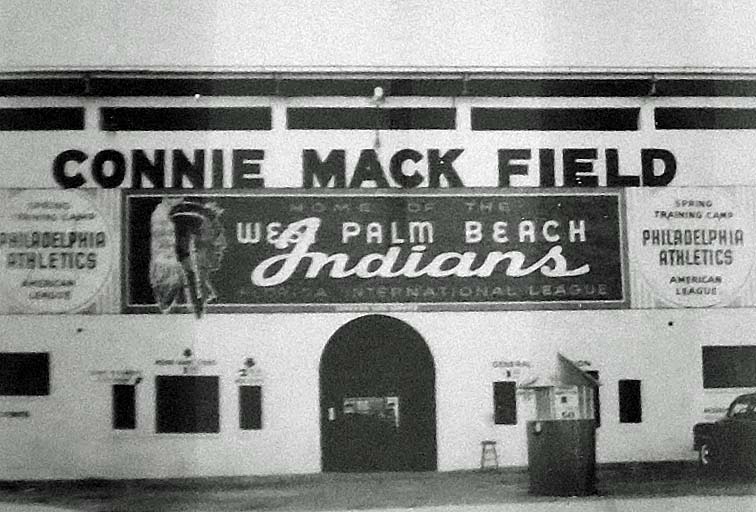
For my wife and me, one of those places is the old home plate site of Connie Mack Field in West Palm Beach.
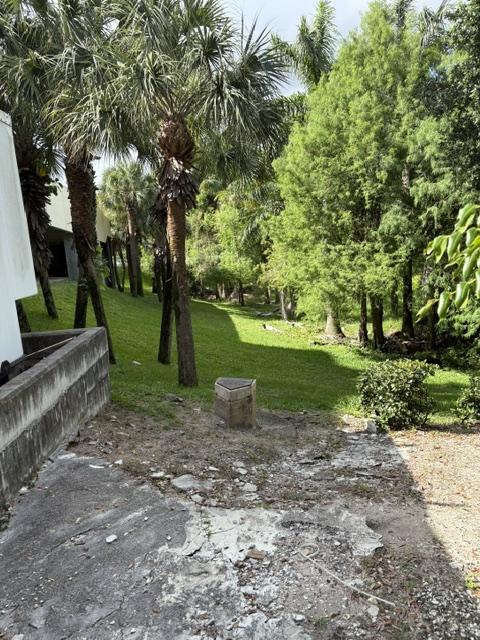
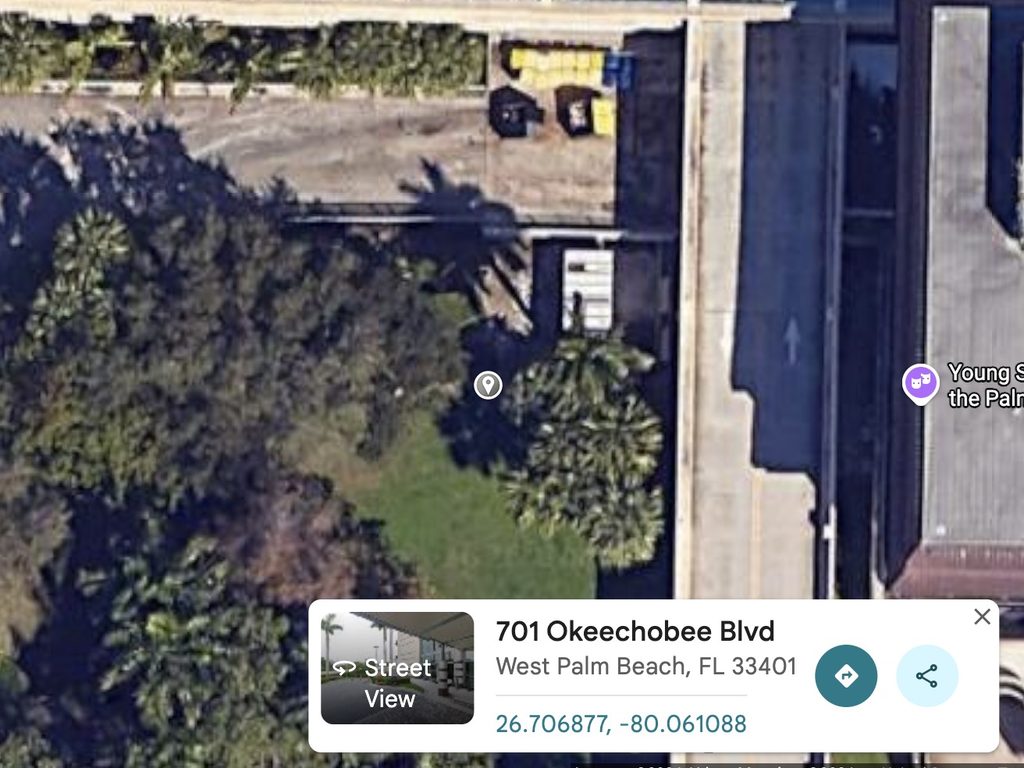
Today there is no grandstand, no outfield fence and no crowd waiting on the next pitch. Most of the old ballpark has disappeared beneath modern West Palm Beach, near the corner of Tamarind Avenue and Okeechobee Boulevard. The grandstand area is now part of the Kravis Center parking garage, and a portion of the old infield has become a stormwater retention area. Thousands of people drive past it every week on their way to a show, and most of them have no idea what used to be there.
But one important piece remains.
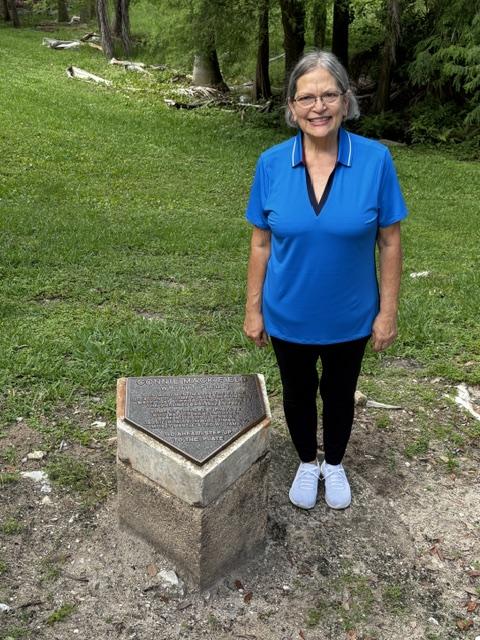
A small monument marks the exact spot where home plate sat, and beneath it is the original concrete base set there in 1924. My wife and I have spent endless hours cleaning and caring for that little patch of ground every month, because we believe history deserves better than to simply fade away.
The field opened in October 1924 as Municipal Athletic Field. In 1927 it was renamed Wright Field for George C. Wright, the city manager at the time. In 1952 it became Connie Mack Field, in honor of the legendary manager who led the Philadelphia Athletics for fifty years.
Major league teams came south every spring to get ready for the season there. The St. Louis Browns trained at the field from 1928 to 1936. After the war, the Athletics made it their spring home from 1946 to 1962, first as the Philadelphia Athletics and later as the Kansas City Athletics. Alongside them, local teams such as the West Palm Beach Indians filled the summers with baseball and gave the town a team to call its own.
The names connected to this ground are remarkable.
Babe Ruth. Lou Gehrig. Jackie Robinson. Joe DiMaggio. Mickey Mantle. Ted Williams.
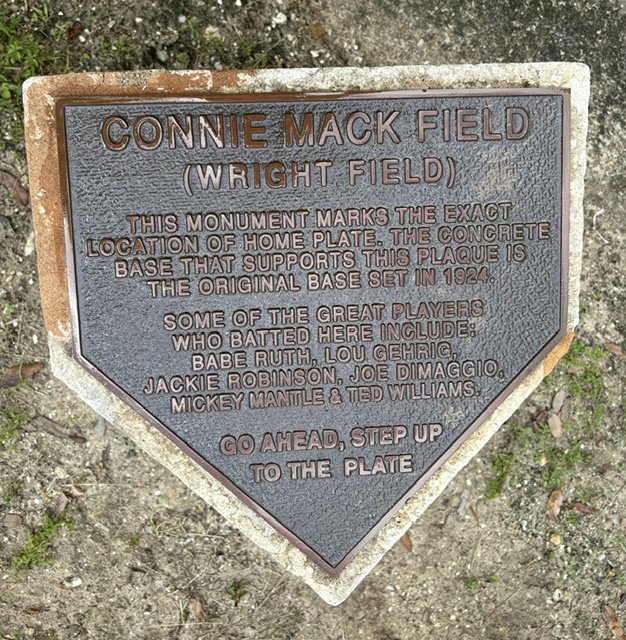
Every one of them stepped into the batter’s box at the very spot where that marker stands today, and their names are right there on the marker for anyone who stops to read it.
One afternoon stands out above the rest. On March 20, 1949, a record crowd of 6,988 people packed into the little ballpark to watch the Athletics take on Jackie Robinson and the Brooklyn Dodgers. General George C. Marshall was in the stands that day, and the A’s won 6 to 0.
It was a proud day for the field, but it came at a time when Black fans still had to enter through a separate gate and sit in a small section out in the right field corner. Robinson was changing the game, and the ballpark still had a long way to go. That is part of the story too, and it deserves to be remembered as honestly as the rest.
Connie Mack Field was never only about famous players, though. It belonged to the people of West Palm Beach who came through the gates, worked around the ballpark, cheered from the stands and supported their teams. Together they built a baseball tradition that lasted for generations.
In February 1992 the bulldozers came, and the field gave way to the parking garage for the new Kravis Center. Years later, the Remembering Connie Mack Field Committee helped keep that history alive with photographs and displays inside the garage, on the first level near the main elevator. If you park there for a show, take a few minutes to look. It is worth it.
That matters to us. It should matter to you. It’s our history, and it’s your history too.
When my wife and I clean around that old home plate, we are not just sweeping leaves, clearing debris or cleaning the bronze plaque. We are standing where baseball legends once stood and where generations of local families made memories they carried for the rest of their lives.
We cannot bring Connie Mack Field back.
But we can care for what remains.
As long as someone remembers the story, a piece of Connie Mack Field will always belong to West Palm Beach. My wife and I, for our part, plan to keep it going for as long as we can.
The next time you are near Tamarind and Okeechobee, stop by and stand at home plate for a moment. You will be standing on history…our history.

Leave a Reply