
Palm Beach is famous for the shops along Worth Avenue. Tiffany, Gucci, Louis Vuitton and Loro Piana all sit within a stone’s throw of one another, and on most afternoons the sidewalks are busy with shoppers, window browsers and visitors stopping to take pictures.
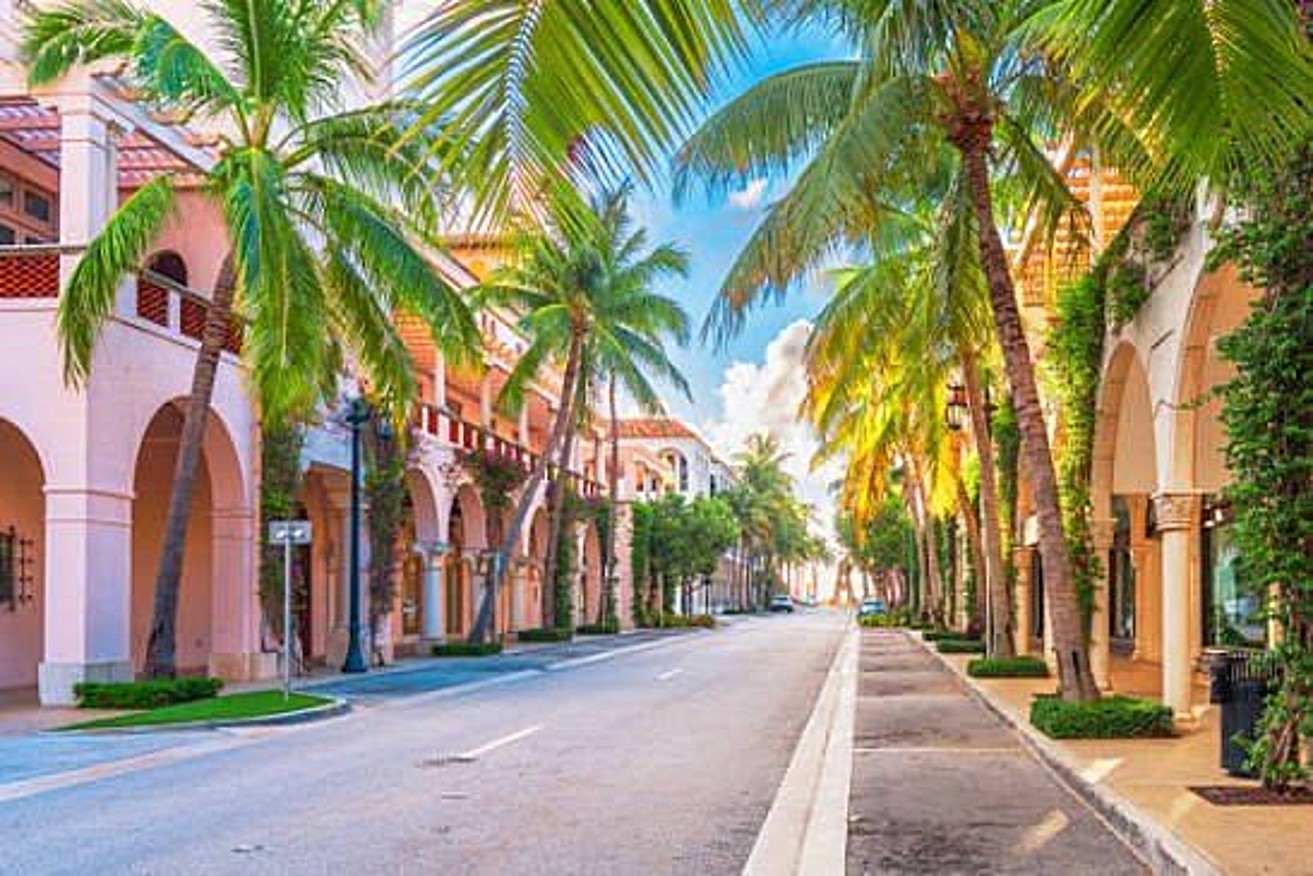
But there are places in Palm Beach where you can walk only a few steps and feel as though you have traveled much farther, maybe even back in time. For my wife and me, one of those places is Via Mizner, just off Worth Avenue.
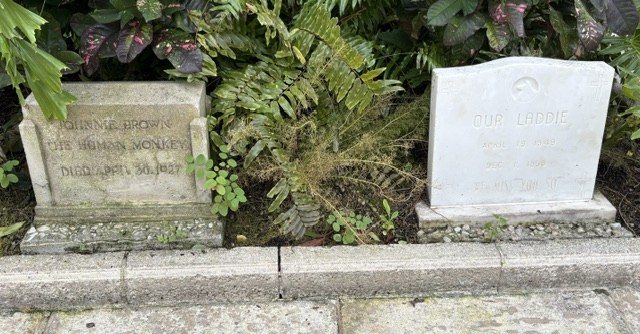
Tucked among the courtyards, old stucco walls, archways, flowers and tropical greenery are two small headstones that most people walk right past without ever noticing. They belong to Johnnie Brown and Our Laddie.
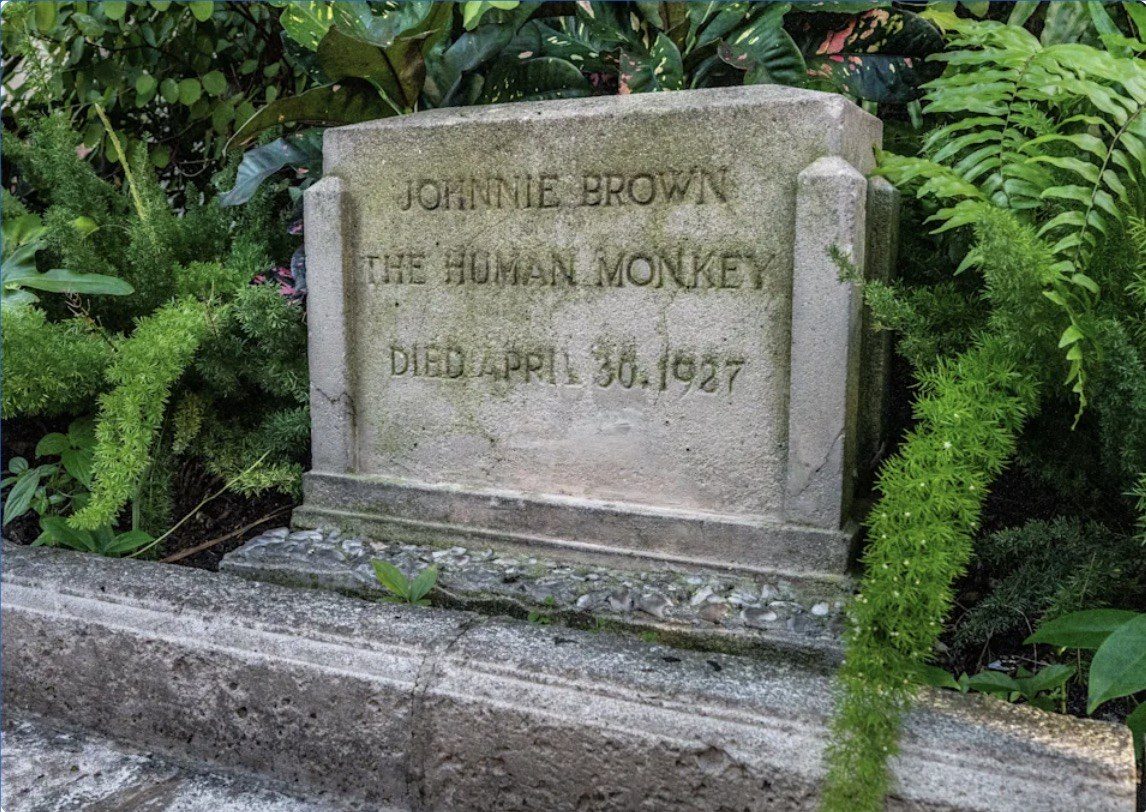
Johnnie Brown was the beloved spider monkey of Addison Mizner, the famed architect whose imagination gave so much of old Palm Beach its unmistakable character. Johnnie was Mizner’s constant companion, and people around town often saw him riding on the architect’s shoulder. When Johnnie died on April 30, 1927, Mizner buried him near his home on Via Mizner. His headstone still calls him “The Human Monkey,” which tells you a good deal about how Mizner felt about him.
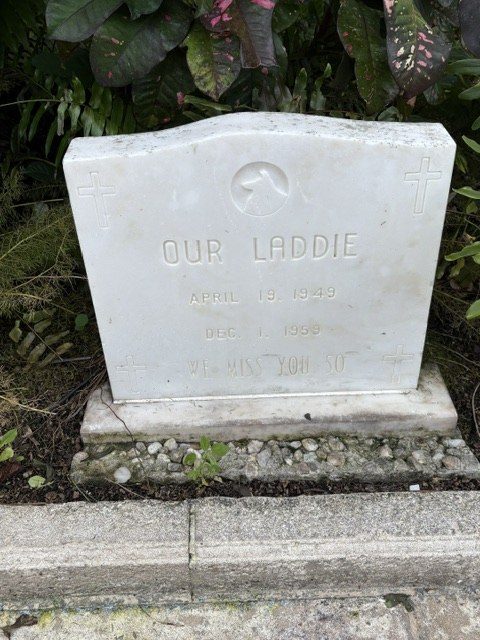
Years later, Rose and Morton Sachs, who came to live in the villa, buried their dog Laddie beside him. Laddie’s white marble stone has a small dog’s head carved at the top and the words “Our Laddie” beneath it. He was born April 19, 1949, and died December 1, 1959, and at the bottom his family added four simple words, “We Miss You So.” Together those two small graves have become one of the most unusual and endearing pieces of Palm Beach history.
My wife and I have taken it upon ourselves to help care for these two little headstones. They are among several headstones and monuments in the area that we help maintain.
There is something meaningful about it that is hard to put into words. We know Johnnie Brown and Laddie were animals, but those two stones stand for something very human, and that is love, companionship and remembrance. Someone cared enough about each of them to make sure their lives would be remembered. Nearly a century later, we feel that history still deserves to be cared for.
If you would like to visit them yourself, the headstones are located at GPS coordinates 26.701191, -80.040476. Please treat the spot gently when you go. These are graves, after all, and the courtyard around them belongs to the people who live and work there.
The setting makes it even more special. Walking through the vias along Worth Avenue is one of my favorite things to do in Palm Beach. Via Mizner and Via Parigi were the original vias Addison Mizner designed in the 1920s. He laid them out with narrow pedestrian passages, courtyards, arches, fountains and lush plantings, all meant to give visitors the feeling of wandering through an old Mediterranean village.
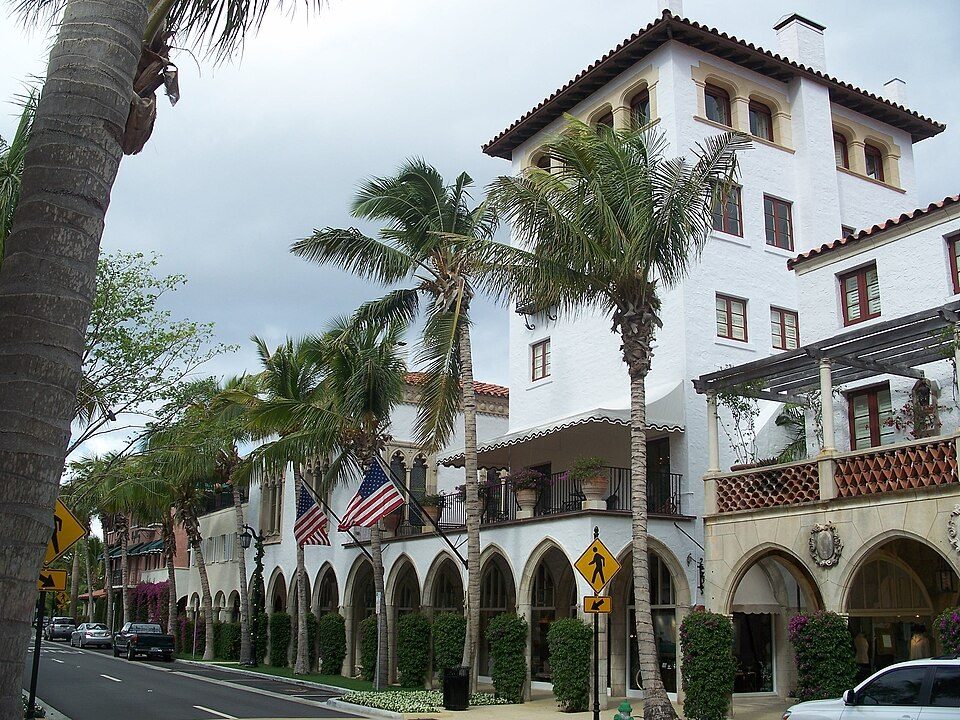
But when I walk through them, I feel something a little different. To me it feels almost like stepping into Paris or Buenos Aires in the 1950s.
You leave the traffic and the busy world behind, and suddenly you are walking along narrow passageways past little shops and elegant boutiques. Around one corner is a quiet courtyard. Nearby there are tables set out for a sidewalk café, and on another corner sits a small bistro. Flowers spill over walls and balconies, fountains break the silence, and old archways lead to another little passage you didn’t notice before.
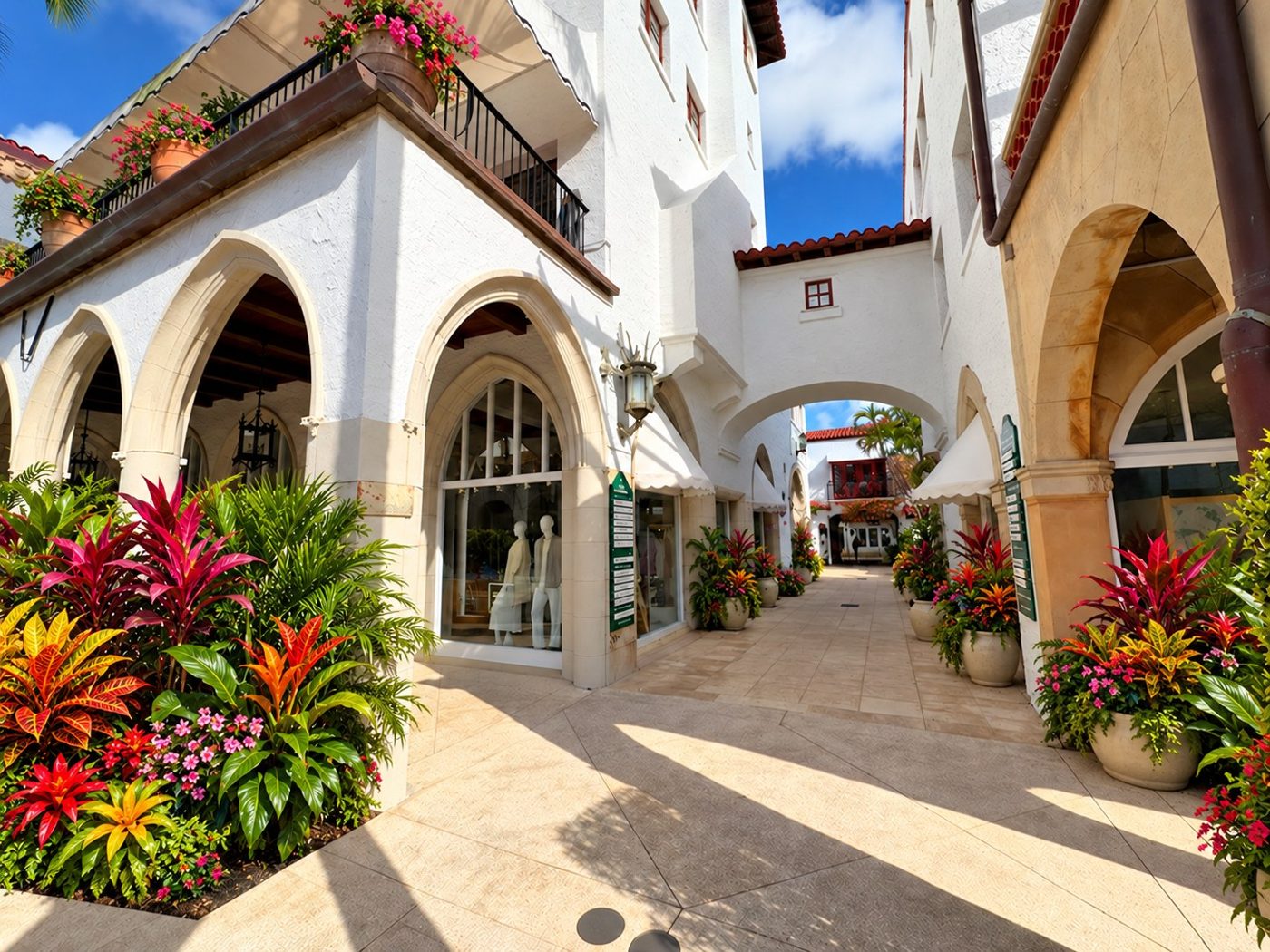
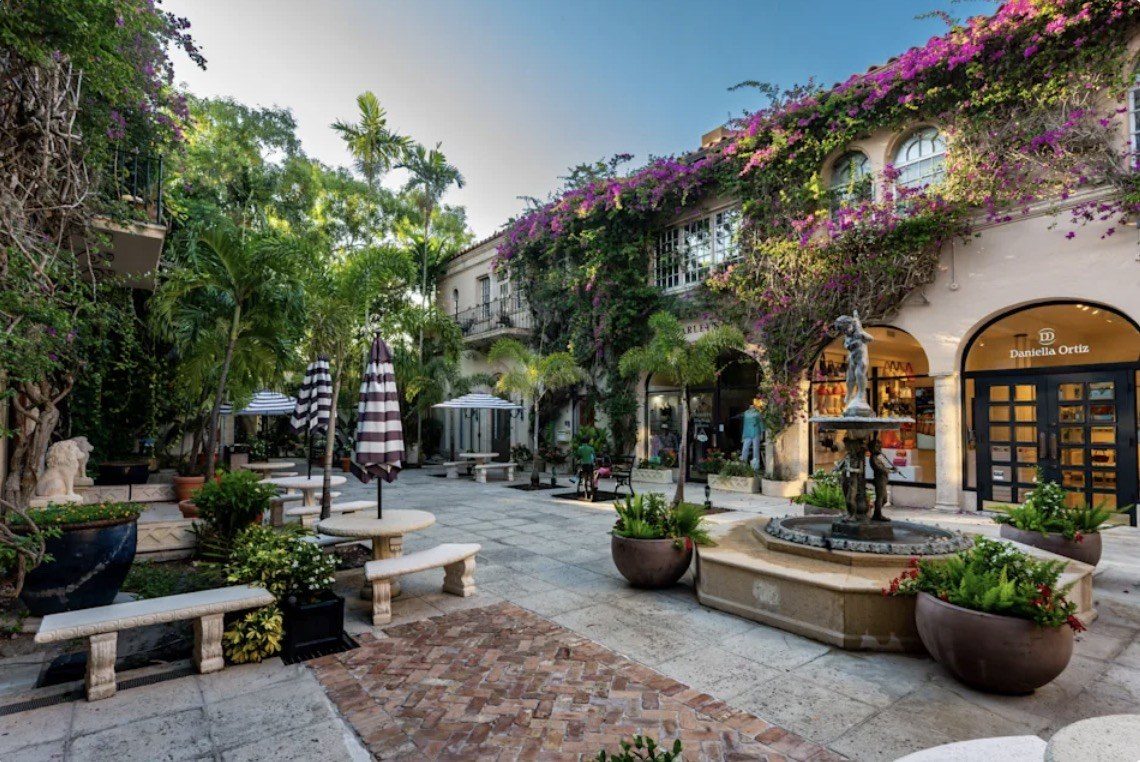
Even on a warm South Florida day, the shaded vias feel cooler and quieter. You slow down without realizing it, and for a little while there is nowhere you need to be.
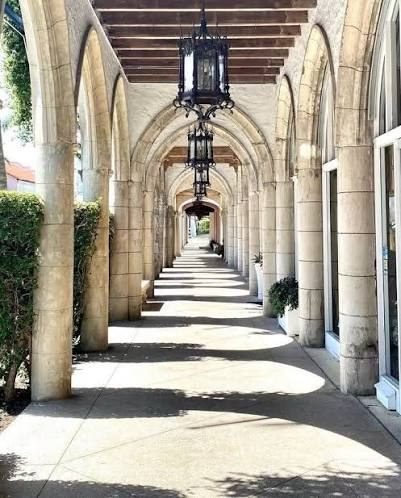
That is part of what makes caring for Johnnie Brown and Our Laddie so special to us. Their little resting place belongs to an older Palm Beach, the one hidden behind the storefronts and beneath the bougainvillea. It is the Palm Beach of Addison Mizner walking his vias with a monkey on his shoulder, and it is still there for anyone who takes the time to look.
My wife and I aren’t doing anything grand when we care for those headstones. We are simply looking after two small pieces of history that might otherwise be overlooked.
And sometimes preserving history begins exactly that way, by noticing something that everyone else walks past.

Leave a Reply